A clothing factory's production capacity can be checked with three numbers — machines on the floor, standard allowed minutes per style, and operator efficiency — and a 30-operator line running at 65% efficiency with a 25-minute style produces roughly 468 garments a day. Anything a supplier claims beyond that arithmetic is a promise, not capacity.
Buyers routinely commit to delivery dates built on a supplier's claimed monthly output, then discover in week three that the lines running their style are also running two others. The problem is rarely lying; it is that "we can make 50,000 pieces a month" describes a peak the factory has hit before under different conditions, not a reservation. GorgeousBen manufactures menswear in Shishi, Fujian, with more than 20 years of OEM and ODM experience serving buyers in 47 countries, and the capacity conversations that end well are the ones where both sides argue in units, minutes and percentages.
Why a Monthly Output Number Proves Nothing by Itself
A monthly output claim compresses every variable that actually determines whether your order ships on time: how many sewing lines the factory runs, how many minutes of work your style takes per garment, how efficiently each line converts working hours into finished pieces, and how many of those hours are already sold to other customers. Two factories can both say "50,000 pieces a month" and mean completely different things — one is a 20-line plant quoting its annual peak on basic tees, the other a 4-line workshop quoting its best month on shorts. The number means nothing until it is decomposed.
The Three Numbers Behind Real Capacity
Production capacity in a clothing factory is built from three inputs. Any planner inside the factory works with these daily; a buyer who asks for them signals that marketing numbers will not be enough.
| Input |
What it is |
What to ask for |
| Line configuration |
Number of sewing lines, operators per line, and machine types on each |
Lines and headcount relevant to your category, not the whole plant |
| SAM per style |
Standard allowed minutes: the engineered time to sew one garment of your style |
The SAM or estimated minutes for your specific style, not a generic garment |
| Operator efficiency |
The share of available minutes converted into standard minutes of output |
The efficiency actually achieved on similar styles in recent months |
A style's SAM is driven by its construction, and the same garment can vary widely: the jacket below carries a zip, snap hardware, topstitched seams and interlining, each adding standard minutes that a plain tee does not have.
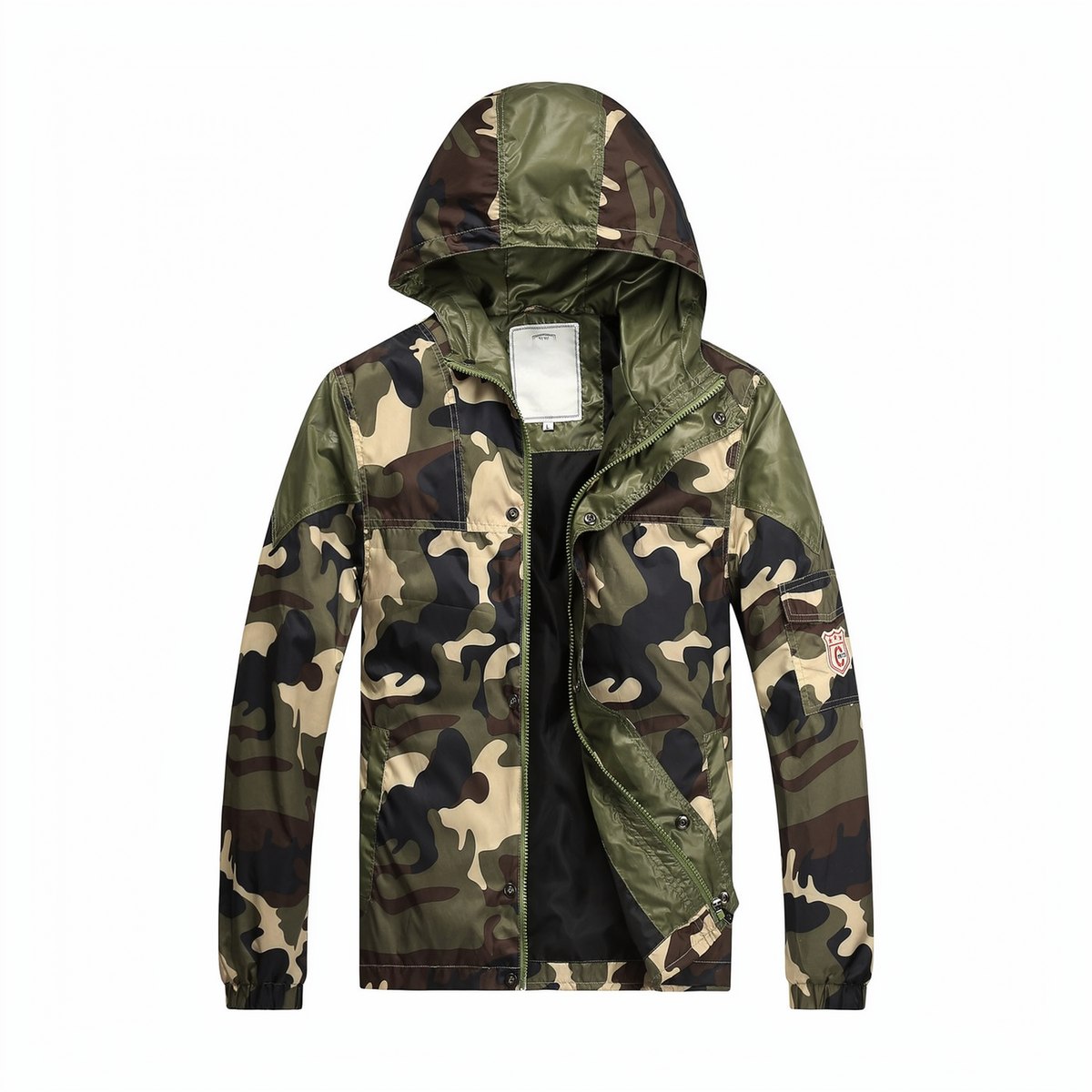
Construction detail, not marketing, decides how many minutes each garment consumes.
The Capacity Formula: A Worked Example
The standard calculation used across the industry is:
Daily capacity = (operators × working minutes per day × efficiency) ÷ SAM
A worked example for a typical mid-weight garment: a 30-operator line, one 10-hour shift (600 minutes), 65% efficiency, and a 25-minute SAM — the range many cargo pants styles fall into — gives 30 × 600 × 0.65 ÷ 25 = 468 garments per day. At 26 working days, that line yields roughly 12,000 pieces a month on one style. If the buyer's program needs 10,000 pieces a month, one dedicated line covers it; if it needs 30,000, the buyer should hear exactly which other lines will carry the balance, and when.
The same arithmetic exposes unrealistic claims immediately. If a factory of four lines offers 200,000 pieces a month on 25-minute garments, the implied output per operator per day would exceed what any real line sustains, because the maximum theoretical output of that example line — at 100% efficiency — is only 720 pieces a day. Asking a supplier to walk through the formula for your style is the single fastest capacity check available, and it costs one email.
What Quietly Reduces the Theoretical Number
- Style changeovers. When a line switches styles, operators relearn the sequence and output dips for the first day or two; a month split across several styles never equals one style × days.
- Absenteeism and seasonality. Headcount before and after major holidays differs from the brochure; the line photograph on the website may have been taken at peak.
- Mixed styles on one line. A line running your jacket alongside another customer's trousers loses minutes at every bundle boundary.
- Downstream bottlenecks. Sewing capacity means little if cutting, pressing or the packing floor shown below cannot absorb the same volume — the line only produces what the next station can process.
- Rework and repairs. Every defective garment consumes a second pass of standard minutes; the defect allowance a buyer accepts in the AQL inspection plan is also a capacity cost.
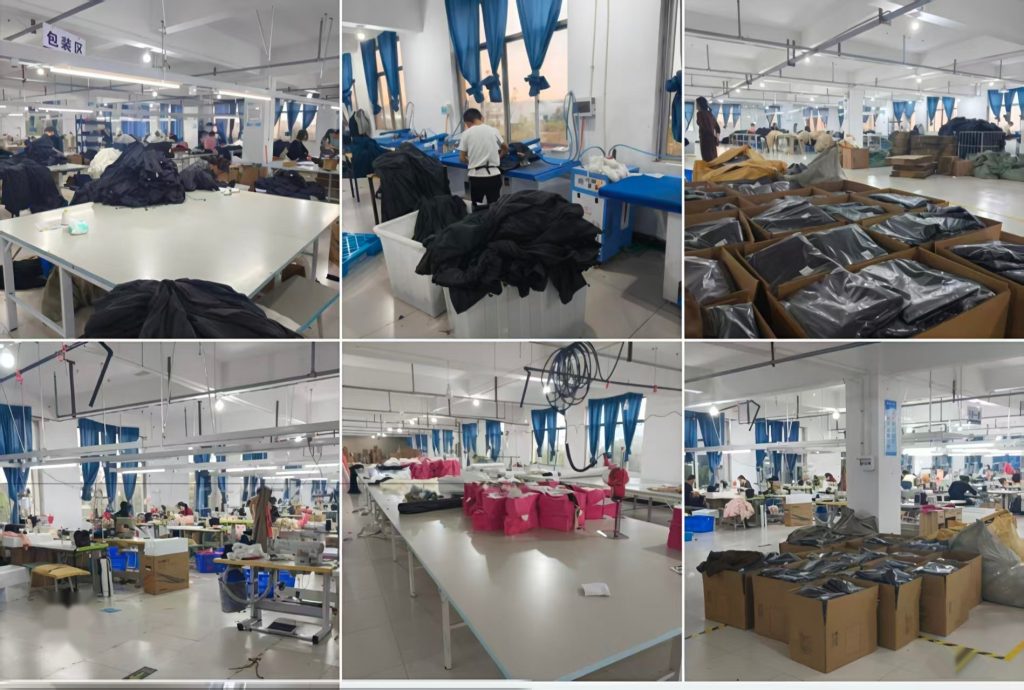
Output is only real once it is packed and counted — the floor tells the truth.
How to Verify the Claim on a Factory Visit
Whether during a scheduled audit or a walk-through, the following check takes about an hour and tests the claimed numbers against the floor. The factory audit red-flag checklist covers general warning signs; these seven points target capacity specifically.
- Count the sewing lines and machines actually installed, and note which machine types sit on each line — your style needs the right equipment mix, not just a headcount.
- Count operators present on the floor against the claimed headcount, ideally on a random weekday rather than a guided visit.
- Ask for daily output records by line for the last three months, and compare the average with the claim — the records shown below the sewing floor are what the line really delivered.
- Walk the line and observe work in progress at each operation; heavy piles before one station reveal a bottleneck the average output number hides.
- Ask what share of current lines runs your product category, and what the other lines are making — your program competes with whatever is on the machines today.
- Ask how long a style changeover takes and how many changeovers the line did last month; this converts "monthly capacity" into usable capacity for your order.
- Ask which months are already heavily booked and how capacity is reserved — the answer tells you whether a delivery date was planned or improvised.
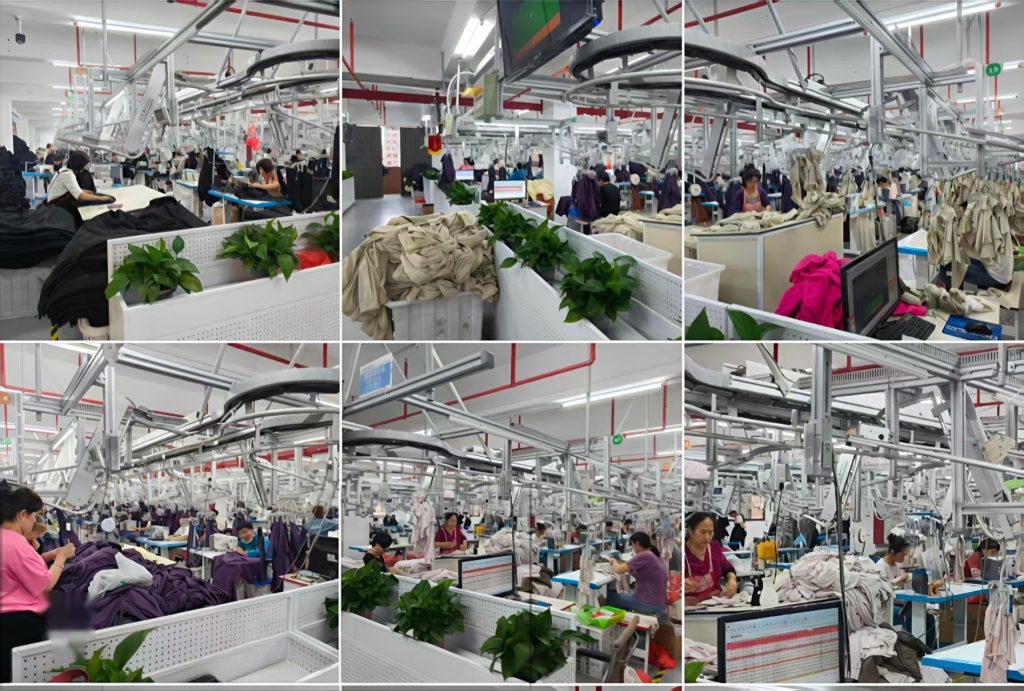
A running line, counted and timed, beats any brochure figure.
Booking Capacity Before You Need It
Capacity, unlike fabric, cannot be bought late. Factories allocate lines months ahead around predictable peaks, and buyers who place orders into an already-full calendar inherit whatever slot is left — usually the one that slips. The practical sequence: verify capacity with the method above, then reserve the line with a booking that includes quantity, style and delivery window, and anchor the whole schedule with a realistic production lead time rather than a hoped-for one. Before predictable crunches — the pre-peak autumn build-up and the run-up to Chinese New Year, when the calendar compresses for reasons covered in the pre-CNY production timeline — move the booking conversation earlier by weeks, not days.
Frequently Asked Questions
How is production capacity calculated in a clothing factory?
Multiply the number of operators by working minutes per day and by efficiency, then divide by the standard allowed minutes (SAM) of the style. A 30-operator line at 600 minutes and 65% efficiency with a 25-minute SAM produces about 468 garments a day, or roughly 12,000 a month at 26 working days.
How many garments can one sewing line make per day?
It depends almost entirely on the style's SAM. A basic tee at 8–10 minutes can reach well over a thousand pieces a day on a 30-operator line; a detailed jacket at 40 minutes may deliver under 300. Always ask for the figure for your specific style, not a factory-wide average.
What efficiency should I assume when a factory quotes capacity?
Lines in well-run factories commonly sustain roughly 60–80% efficiency on familiar styles. A claim built on 100% efficiency is theoretical and will not survive contact with changeovers and absenteeism; an average far below 50% signals process problems worth investigating before ordering.
How far in advance should production capacity be booked?
For seasonal programs, several weeks to a few months ahead of the build-up, and earlier around industry-wide crunches such as the pre-Chinese New Year period. A booking should state quantity, style and delivery window so the factory reserves a specific line rather than a vague intention.
Check the Numbers Before You Commit
Before the next order, ask each shortlisted factory three things: how many lines would carry your style, what SAM and efficiency the daily figure assumes, and which months are already booked. A supplier who answers those three questions in units, minutes and dates is planning your program; one who answers only in monthly totals is selling hope. GorgeousBen produces menswear — cargo pants as the flagship category, plus jackets, chinos, shorts and shirting — on its own cutting, sewing and packing floors in Shishi, Fujian, and quotes capacity per style with the calculation shown to the buyer. Browse the GorgeousBen product catalogue and contact the team with your styles, target quantity and delivery window to receive a capacity plan built line by line, not a brochure number.


