A final inspection report takes about 10 minutes to read properly - and it is the last chance you have to stop a bad shipment before your 70% balance leaves your account. Every year, importers pay in full for goods that fail their own customers' standards, simply because the QC report looked "fine" at a glance. In most of those cases, the warning signs were printed right there in the defect table.
GorgeousBen Fashion is a menswear manufacturer with 20+ years of OEM/ODM experience, shipping over 400,000 garments a year to buyers in Europe, the Americas, the Middle East and South Africa. We are inspected by third-party QC companies several times a month, and we see the same reading mistakes from new buyers again and again. Here is how to read a QC report the way an experienced sourcing manager does.
Why the Report Matters More Than the Sample
Your approved sample was made by the factory's best sample room, slowly, by hand. Your bulk order was made on a production line, at speed, possibly by a subcontracted workshop you have never seen. The final random inspection (FRI) is the only checkpoint that measures what you are actually paying for.
Industry data from major inspection firms suggests that around 15-20% of first-time apparel inspections fail or come back "pending" with significant findings. Buyers who read reports carefully catch these before payment. Buyers who only ask "did it pass?" usually find out at their own warehouse - where the only options left are discounts, air-freighted replacements, or legal letters.
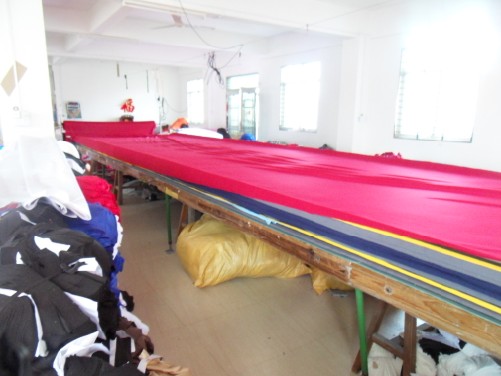
Quality starts at the cutting table. A proper inspection covers fabric, cutting, stitching, measurements and packing - not just a visual once-over of finished garments.
The Five Numbers to Check First
Open the report and find these five figures before reading anything else:
- Sample size. For a 1,000-piece order, a standard Level II inspection pulls 80 pieces. If the inspector checked 20 pieces "because the cartons were still being sealed", the inspection is not valid - ask for a re-inspection.
- Defect counts by class. Defects are grouped as critical, major and minor. Any critical defect (a broken needle fragment, a drawstring hazard) means automatic failure. Major defects (open seams, wrong measurements, stains) are the ones that kill sell-through.
- AQL result. The report states whether the defect counts fall within the Acceptable Quality Limit - typically AQL 2.5 for major and 4.0 for minor defects in apparel. "Within AQL" is the actual pass mark, not the inspector's summary paragraph.
- Measurement results. Check how many measured pieces fell outside the tolerance on the spec sheet. A report can pass on defects while 30% of garments are 2 cm off in the chest - that is a sizing disaster for your customers.
- On-site test results. Needle detection, seam pull tests, colorfastness rubs, carton drop tests. Skipped tests should be listed as "not conducted", not silently absent.
AQL in Plain Terms
AQL 2.5 does not mean "2.5% of the order can be defective". It is a statistical acceptance number tied to sample size. For an 80-piece sample at AQL 2.5 major, the inspector can find up to 5 major defects and the lot still passes. Six majors, and it fails.
The practical takeaway: a pass at AQL 2.5 still allows a small percentage of flawed pieces in your shipment - which is why brands with tight quality expectations combine AQL inspection with a defined defect allowance in the purchase contract, and reserve the right to claim for defects found later at their own warehouse.
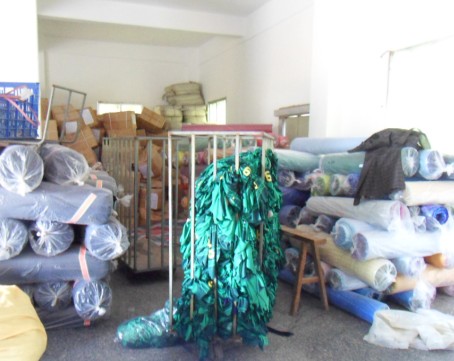
Good factories inspect fabric rolls before cutting, not just garments after sewing. Ask your supplier whether incoming fabric inspection is part of their process.
Red Flags That Deserve a Phone Call, Not an Email
- "Pending" results left unresolved. A pending result means the inspector found something the factory promised to fix. Never pay a balance against an unresolved pending report.
- Photos that don't match the defect list. Reports include defect photos. If the list mentions 12 stain defects but photos show only one angle of one garment, ask for the full set.
- Inspection done before 80% of goods were packed. Industry practice requires at least 80% of the order finished and packed before a final inspection. Earlier inspections are easier to game.
- A different factory address than contracted. This usually means subcontracting without disclosure - a serious breach in any supply agreement.
What to Do When a Report Fails
A failed report is not the end of the order - it is the start of a negotiation with written evidence. The standard sequence: the factory sorts and reworks the defective pieces at its own cost, a re-inspection is booked (also at the factory's cost, if your contract says so - and it should), and only the re-inspection result triggers the balance payment. Rework typically takes 3-7 days for a 1,000-piece menswear order, far cheaper than discovering the problem after 30 days at sea.
FAQ
What AQL level should I ask for on menswear orders?
Most menswear buyers use AQL 2.5 for major defects and 4.0 for minor defects, with zero tolerance for critical defects. Premium brands sometimes tighten majors to AQL 1.5, which increases inspection time and cost slightly.
Who pays for the inspection?
The buyer normally pays for the first inspection (roughly $200-300 per man-day with major QC firms). Well-drafted contracts make the factory pay for re-inspections after a failure, which strongly discourages factories from shipping sloppy first lots.
Can I trust a factory's own QC report instead of a third party?
In-house reports are useful for process control but should never be the only check before payment. A third-party inspector has no stake in the outcome - that independence is exactly what you are buying.
How long does a final random inspection take?
For a typical menswear order of 500-2,000 pieces, one inspector needs a single working day on site, and the written report usually arrives within 24 hours after the visit.
Working with a factory that welcomes third-party inspection saves you this entire learning curve. At GorgeousBen, every bulk order ships with full measurement records and welcomes buyer-appointed QC at any stage - because a report you can read is a report everyone sleeps well on. Contact our team to discuss your next order and inspection plan.


