# Shipping Carton Specifications for Apparel Export: CBM, Loadability & Drop Test
A poorly sized shipping carton can add 12–18% to your freight cost or leave you with a container full of crushed garments. For buyers sourcing apparel from China, carton specifications are not a back-office detail—they are a direct line item on your P&L. GorgeousBen Fashion, a menswear manufacturer with 20+ years of OEM/ODM experience, packs over 400,000 garments annually for export to 47 countries. In this guide, we break down the three numbers every buyer should verify before a PO is cut: CBM, loadability, and drop-test grade.
Why Carton Specs Matter More Than You Think
Freight typically accounts for 8–15% of the landed cost for FOB apparel orders. A carton that is 5 cm too tall can mean one less layer in a 40-foot high-cube container, translating to $800–$1,200 in wasted ocean freight per shipment. Conversely, a carton that is too weak will collapse under stack pressure, damaging 15–30% of the garments inside and triggering chargebacks from retail partners.
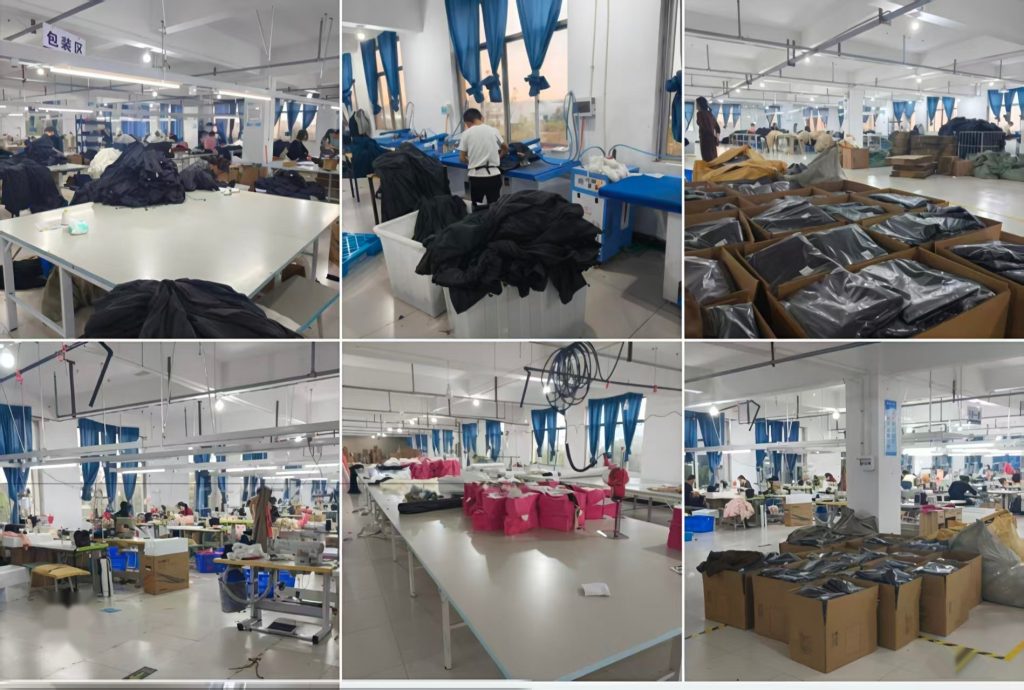
GorgeousBen packing area: cartons are stacked and staged before container loading, with weight and CBM pre-calculated for every layer.
The solution is not guesswork. It is a specification sheet that your factory and your freight forwarder both sign off on.
CBM Calculation: The Formula Buyers Should Demand
CBM (cubic meter) determines how much space your cartons occupy in a container. The formula is straightforward, but factories often round dimensions incorrectly or quote "carton CBM" without clarifying whether it is inner or outer measurement.
Standard formula:
CBM per carton = (Length × Width × Height in cm) ÷ 1,000,000
Example: A standard apparel carton measuring 60 cm × 40 cm × 30 cm = 0.072 CBM.
At GorgeousBen, every packing list includes both inner carton CBM (garment dimensions) and outer carton CBM (including flaps and padding). This prevents the 10–15% discrepancy that often surprises buyers at the port.
Pro tip: Ask for the total shipment CBM divided by the number of cartons. If the math does not match the individual carton spec, question it immediately.
Container Loadability: How Many Cartons Actually Fit
Knowing CBM is only half the battle. Container loadability depends on stack height, weight limits, and whether your cartons are floor-loaded or palletized.
Standard 40-foot HC container internal dimensions: 12.03 m × 2.35 m × 2.69 m = ~76 CBM usable volume.
However, real-world loadability is rarely above 65–68 CBM due to:
- Irregular carton sizes creating dead space
- Weight limits (max 28,000 kg gross for road haulage in EU)
- Pallet height restrictions (1.2 m max for double-stacking in many warehouses)
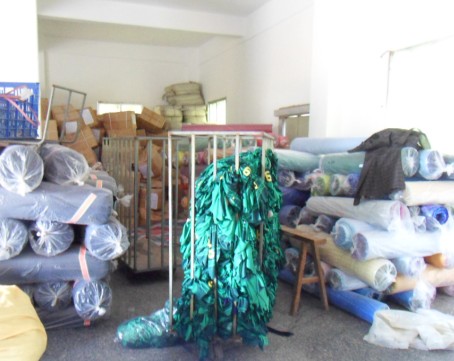
Our warehouse operates with FIFO staging: finished garments are packed, labeled, and palletized in sequence to maximize container floor space.
GorgeousBen packing standard: We optimize carton dimensions to achieve 90%+ volume utilization in 40-foot HC containers. For a recent 8,000-unit cargo-pants order to Germany, we reduced carton height from 35 cm to 28 cm by switching to vacuum-compression poly-bags inside, saving the client $1,400 in freight.
Drop Test Standards: Will Your Cartons Survive the Warehouse
A carton that looks fine in the factory may burst open after a 1.2-meter drop from a forklift. The industry-standard reference is ISTA 1A (International Safe Transit Association), which specifies:
| Test | Requirement | Pass Criteria |
|---|
| Corner drop | 1 corner, 760 mm height | No seam rupture |
| Edge drop | 3 edges, 760 mm height | No edge crush |
| Flat drop | 6 faces, 760 mm height | No burst or tear |
| Vibration | 1 hour at 1 G RMS | Contents undamaged |
At GorgeousBen, we conduct random drop tests on every production lot. Cartons are built from 5-ply BC-flute corrugated board (minimum 400 GSM outer liner) for ocean freight, or 3-ply B-flute for air freight where weight matters more than stack strength.
Red flag: If a factory quotes "standard carton" without specifying flute grade or GSM, assume it is 3-ply and unsuitable for heavy stack loads.
Carton Labeling: The Detail Customs Will Reject You For
Even perfect cartons get held at customs if labels are wrong. Every GorgeousBen export carton carries:
- Buyer PO number and style number
- Carton number (e.g., 1 of 150)
- Gross weight and net weight (kg)
- Country of origin: MADE IN CHINA
- Fumigation/IPPC stamp for wooden pallets (if applicable)
For EU-bound shipments, we also include the EORI-ready HS code (6103.42 for men's trousers, 6101.30 for jackets) on the packing list to speed customs clearance.
Cost Impact: How Smart Packing Saves Real Money
Here is a real comparison from a 2026 Q2 shipment:
| Scenario | Carton Size | Units per 40' HC | Freight Cost |
|---|
| Standard (no optimization) | 60×40×35 cm | 3,200 | $3,800 |
| GorgeousBen optimized | 60×40×28 cm | 4,100 | $3,100 |
| Savings | — | +28% loadability | -$700 (18%) |
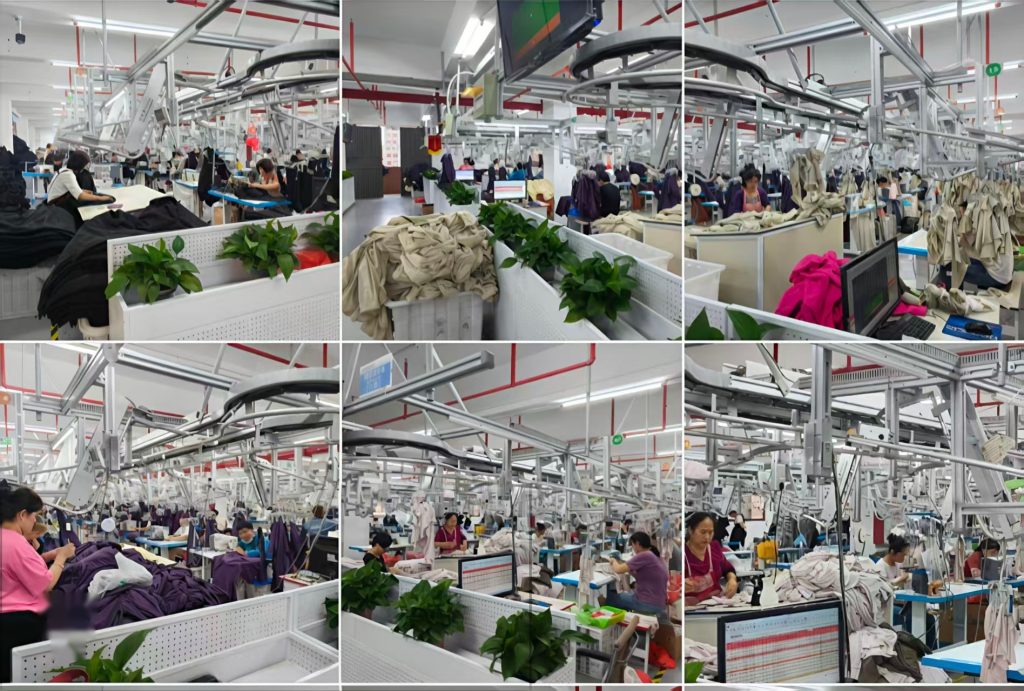
Garments pass final QC on the sewing line before entering the packing workflow—defective units are removed before they ever reach a carton.
The optimization cost us nothing—just a change in poly-bag thickness and carton height. The client saved $700 and received intact goods.
Ready to Ship Smarter? Let's Talk Specs
Carton specifications are not glamorous, but they are where experienced buyers separate themselves from novices. At GorgeousBen Fashion, we provide a packing specification sheet with every quotation, including CBM, carton grade, drop-test certification, and container load plan.
Browse our menswear product range to see the styles we pack and ship daily, or contact our team for a custom packing assessment on your next order.
Frequently Asked Questions
###
What is a typical CBM for one carton of apparel?
A standard apparel carton measuring 60 cm × 40 cm × 30 cm equals 0.072 CBM. For bulkier items like padded jackets, expect 0.09–0.12 CBM per carton depending on compression.
###
How many cartons fit in a 40-foot high-cube container?
A 40-foot HC container holds approximately 76 CBM gross volume. In practice, 55–65 CBM of apparel cartons fit depending on stack optimization. With professional packing plans, GorgeousBen consistently achieves 68+ CBM utilization.
###
What drop-test standard should apparel cartons pass?
Apparel cartons for ocean freight should pass ISTA 1A: corner, edge, and flat drops from 760 mm without seam rupture. At GorgeousBen, we use 5-ply BC-flute board (400+ GSM) and conduct random lot testing on every shipment.
###
Can I request custom carton sizes from my manufacturer?
Yes, and you should. Custom carton dimensions can improve container loadability by 15–30%. GorgeousBen provides a container load plan with every quotation, optimizing carton size to your specific product mix and destination warehouse requirements.
###
What is the difference between gross weight and net weight on a carton label?
Gross weight includes the carton, poly-bags, and all packing materials. Net weight is the garments only. Customs declarations require gross weight, while freight forwarders need both to calculate chargeable weight versus volumetric weight.
Author: Ben Lee | GorgeousBen Fashion — OEM/ODM Menswear Manufacturer Since 2004


