Home > Blog > Embroidery vs Screen Print vs DTG: A Buyer's Guide
Embroidery vs Screen Print vs DTG: A Buyer's Guide
By Ben LeeNovember 19th, 202615 views
Choose decoration by quantity, fabric and artwork, not by habit: screen printing wins for flat-colour graphics above roughly 200 pieces per design, embroidery wins for logos that must survive industrial washing, and DTG wins for photographic artwork in short runs. A typical 9 cm chest logo runs 8,000 to 12,000 stitches.
Decoration is the last thing specified and the first thing a customer notices. It is also where quotes quietly diverge: two factories can price the same hoodie 15 percent apart because one includes digitising, backing and a wash test and the other does not. This guide compares the three methods with the numbers that decide the order.
Compare the Three Methods Before You Quote
Method
Best For
Setup Per Design
Main Weak Point
Embroidery
Logos, chest and back marks, workwear, caps
Digitising file plus stitch-out approval
Machine time; fine art and small text lose detail
Screen print
Flat-colour graphics, volume runs
One screen per colour, plus colour matching
Every colour change is a new setup
DTG
Photo-real artwork, short runs, samples
File plus pretreatment
Cotton-rich only; slower per piece
Embroidery: The Method That Outlives the Garment
Embroidery is thread sewn into the fabric, so it fails only when the fabric fails. A 9 cm chest logo commonly runs 8,000 to 12,000 stitches; a full back panel can reach 20,000 to 40,000. At roughly 700 to 1,000 stitches per minute per head, a 10,000-stitch logo occupies a machine head for 10 to 15 minutes per garment — that machine time, not the thread, is what you are buying.
Three specifications decide quality. Stitch density should cover the fabric without puckering it; ask for a stitch-out on the actual shell, because the same file behaves differently on fleece and on taslan. Backing must match the fabric weight — a tear-away suited to woven shirting will distort a knit. Thread should be polyester core, matched to Pantone under daylight.
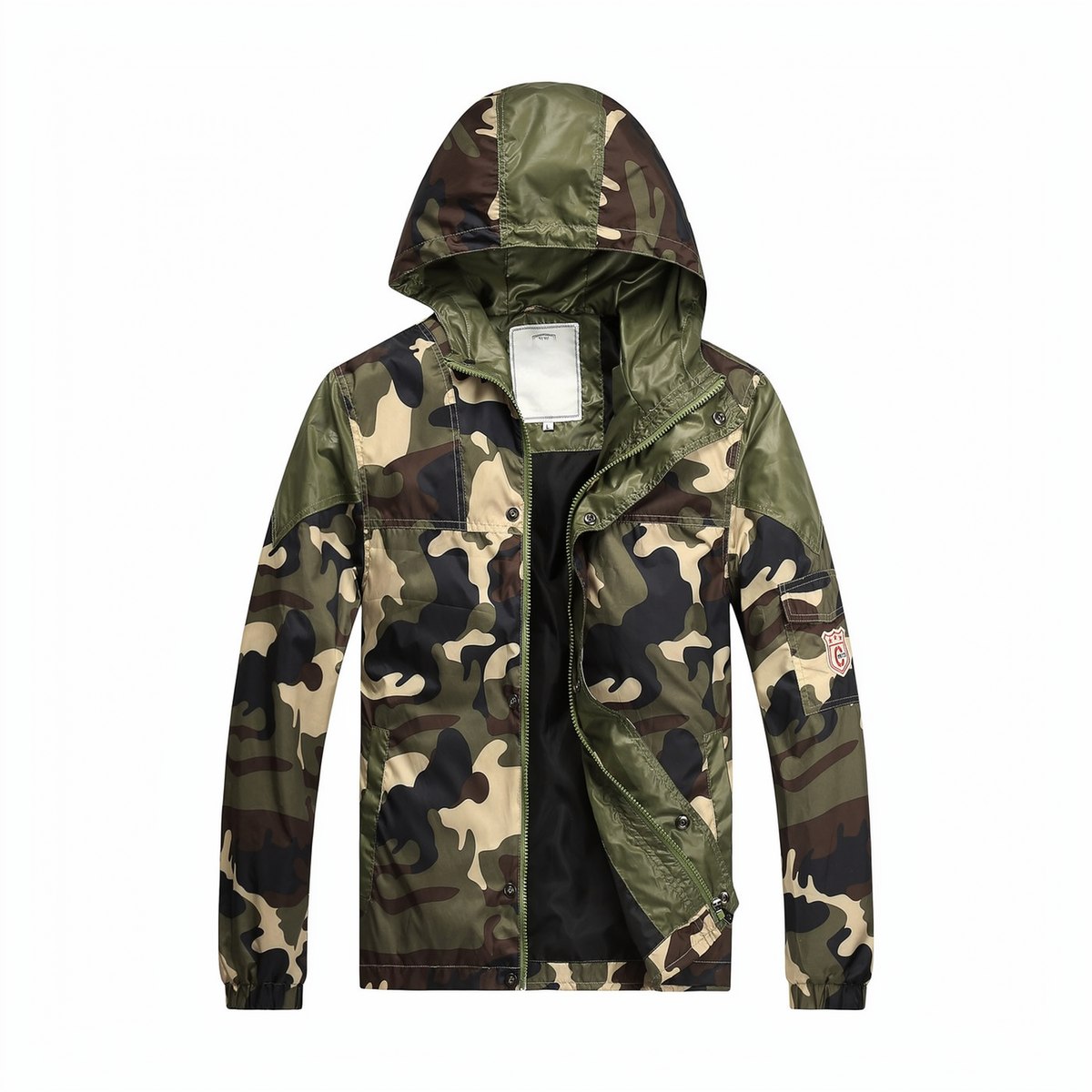
The chest panel is the highest-risk decoration zone: placement tolerance is typically ±3 mm and must be measured from a fixed seam, not from the edge of the garment. GorgeousBen jacket front.
Screen Printing: Lowest Unit Cost, Highest Change Cost
Screen printing pushes ink through a mesh, one screen per colour. That drives the commercial logic: a one-colour chest print on 500 pieces is the cheapest decoration available, while the same artwork in four colours carries four screens, four registration passes and four chances to drift out of register. Common mesh counts run 110 to 160 for plastisol on cotton.
Plastisol is cured rather than dried — typically around 160 degrees Celsius for 60 to 90 seconds, with the window set by the ink supplier. Under-cured ink passes inspection and fails the customer's third wash, so cure temperature belongs in the inspection record. On dark garments a white underbase is printed first so the top colour reads true.
DTG: No Screens, Cotton Only, Short Runs
Direct-to-garment printing sprays water-based ink into the fibre, so there is no screen and no per-colour setup. Per-piece cost stays almost flat from 1 to 200 pieces, which suits samples and small launches. Machines commonly produce tens of pieces per hour, and the method needs cotton or a high cotton-rich blend; polyester needs pretreatment, with different hand and durability.
Match the Method to Fabric and Garment
The fabric decides more than the artwork does. Embroidery on a coated or water-repellent shell leaves needle holes that compromise the finish — on a rain shell that is a specification error. On stretch knits, embroidery needs a backing that moves with the fabric, or the logo puckers after washing. On garment-dyed pieces, decoration must follow the dye lot, or the thread will no longer match the body.
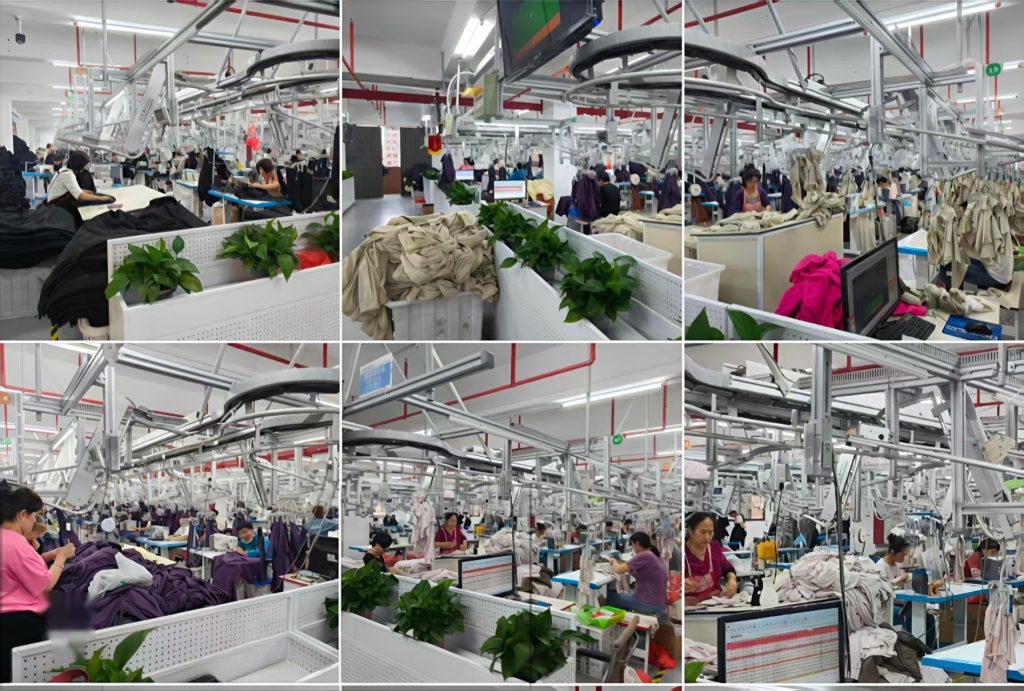
Decoration is a separate line stage: panels are cut and sewn first, then decorated, then finished. Sequence errors here cost more than any ink or thread saving. GorgeousBen sewing floor, Shishi.
Placement matters too. Functional pockets, zip guards and storm flaps should not be decorated over — the decoration blocks the function or wears through at the fold. Ask for positions on a technical drawing measured from a fixed point, and check that drawing against the trim card.
What Each Method Does to Timeline and MOQ
Embroidery digitising takes one to three days and can be approved from a photographed stitch-out, so it rarely delays a programme. Screen printing adds two to four days for screens and proofing, and every artwork revision restarts that clock. DTG is fastest to first piece and slowest to volume, so it suits salesman samples more than bulk.
Decoration almost never sets MOQ — the fabric dye lot does, commonly 300 to 500 metres per colour for custom-dyed cloth; the MOQ negotiation guide covers how to split quantities without breaking that lot. What decoration does set is your exposure to change: a colour change after screens are made is a new setup, and setup costs belong in the written quote. The quote clause checklist lists the lines to lock before you sign.
Quality Checks That Catch Decoration Failures
Measure placement on five pieces from the first carton against the drawing — ±3 mm for embroidery, ±2 mm for print registration.
Confirm the specified backing is actually used; a substituted backing is invisible at inspection and obvious after washing.
Check registration on every colour of a multi-colour print and the underbase edge for haloing on dark garments.
Cure-test plastisol by stretching the print firmly; cracking indicates under-cure even when the surface looks dry.
Wash three decorated pieces to the care label and re-inspect for cracking, lifting and colour bleed — ISO 105-C06 wash fastness gives a number both sides accept.
Include decoration defects in the inspection plan at AQL 2.5; the AQL sampling plan sets out how many pieces to pull.
Cost Drivers You Can Still Control at Sampling
Four levers move decoration cost more than supplier choice. Stitch count comes first: simplifying a logo from 14,000 to 9,000 stitches cuts machine time by a third without changing what the customer sees at arm's length. Colour count is second — each screen is a setup plus a registration risk. Placement count is third: a second logo position doubles handling. Consolidating designs across styles is fourth.
Approve Decoration on the Pre-Production Sample
The pre-production sample is the contract, and it must carry the real decoration — same file, thread, ink and placement — not a placeholder. Walk the PPS approval checklist, then wash one decorated sample and re-measure it. Pressing exposes decoration problems: prints lift under a hot iron and embroidery crushes if pressed flat, so finishing instructions belong with the decoration spec.
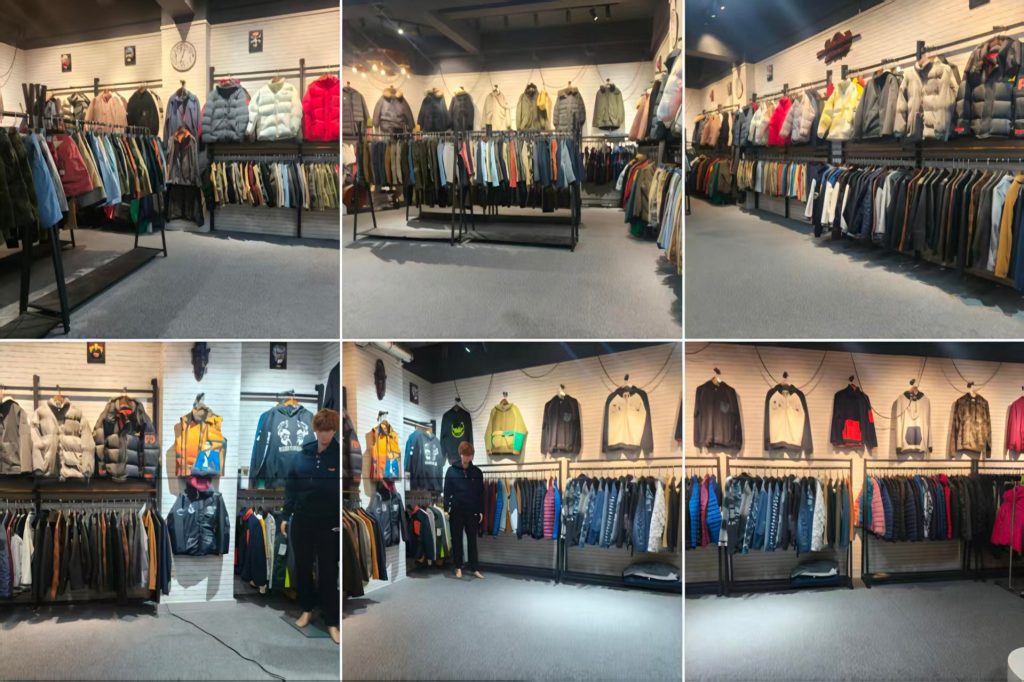
Approve decoration on a physical sample at arm's length and under daylight — a screen cannot show hand, relief or registration creep. GorgeousBen showroom, Shishi.
A disciplined buyer writes decoration as a specification: method, artwork file, stitch or mesh data, thread or ink reference, placement coordinates, backing, cure temperature and wash standard. A factory that can quote against that document will price the same product every time; a factory that answers in adjectives will price it differently every season.
Common Questions
Is embroidery more durable than screen printing?
Yes, in most wear conditions. Embroidery is thread through fabric, so it does not crack, peel or fade with washing the way a surface print can. Its failure modes are different: needle holes on coated shells, puckering on stretch knits and abrasion of low-density stitching. For workwear, industrial laundry and long-life programmes, embroidery is the safer default.
Can you screen print on polyester or nylon?
Yes, but the ink must match the fibre. Plastisol adheres to cotton far more reliably than to polyester, and on synthetics a low-cure or catalyst ink, or a transfer, is usually specified instead. Always request a wash test on the actual shell fabric rather than on a cotton swatch; performance on the sample fabric is the only number that transfers to bulk.
What MOQ applies to custom embroidery?
Embroidery itself has no meaningful MOQ — digitising is a one-off file charge that works for 20 pieces or 5,000. The real floor comes from fabric: custom-dyed cloth commonly starts at 300 to 500 metres per colour. On stock fabric, embroidery programmes can run as low as a few dozen pieces per style and colour.
How many washes should a DTG print survive?
A correctly pretreated, cured DTG print commonly withstands 30 to 50 home washes before visible fading; cold washing inside-out extends that, hot tumble drying shortens it. Industrial laundry, bleach and high-temperature pressing shorten it sharply — if those are involved, specify embroidery or a transfer.
If you are specifying decoration for an upcoming programme and want the method, stitch or screen data written into the same quote as the garment, browse the GorgeousBen product range or contact the team with your artwork, quantity and target fabric — samples are decorated and washed before bulk is approved.