Home > Blog > Sewing Thread Specification: Tex, SPI and Fiber Choices
Sewing Thread Specification: Tex, SPI and Fiber Choices
By Ben LeeNovember 20th, 202616 views
Match sewing thread to fabric, seam function and wash conditions — not to habit: for most woven garments, a Tex 40 polyester or core-spun thread sewn at 8 to 12 stitches per inch is the working default, and the whole spec fits in four lines of a tech pack.
Thread is one of the smallest cost lines on a garment and one of the most common causes of seam failure: under two percent of material cost, yet wrong choices surface later as broken seams, puckering after the first wash or bartacks that open under load. Most buyers leave thread unspecified and inherit whatever the line uses that day. This guide gives the numbers to specify it properly.
Why Thread Fails Quietly
Thread problems rarely appear at final inspection. A thread one size too light passes packing and fails in the customer's third wash; cotton thread on a stretch seam snaps the first time it is stressed. Because the failure is delayed, the claim lands after shipment — and claim recovery is a losing game, as the quality claim guide explains. Specifying thread up front is cheaper than any remedy.
Reading Thread Size: Tex, Denier and Ticket
Thread size systems confuse buyers because suppliers use several. Tex is the most useful for garments: the weight in grams of 1,000 metres of thread, so a bigger number is thicker — Tex 40, the workhorse size for woven garments, means 40 grams per 1,000 metres. Denier and ticket numbers run differently in some conventions, so always convert to Tex when comparing quotes.
Application
Common Tex Size
Typical Fabric
Light knits, shirting, overedge
Tex 27 to 30
Jersey, poplin, shirting
General seams, wovens
Tex 35 to 40
Chinos, jackets, cargo pants
Topstitch, contrast seams
Tex 50 to 60
Denim, outerwear
Bartack, reinforcement, heavy seams
Tex 60 to 80
Workwear, heavy cotton
These ranges are common industry practice, not a standard — the right number for your style depends on fabric weight and seam construction, which is why the cargo construction checklist treats reinforcement as a separate inspection point.
Fiber Choice: Polyester, Cotton, Core-Spun, Nylon
Fiber decides how the thread ages more than size does. Polyester dominates garment production because it is strong, colorfast and shrinks little. Cotton looks and presses naturally but is weaker and shrinks with the fabric; core-spun wraps polyester strength in a cotton skin to get both. Bonded nylon serves heavy industrial seams, not fashion garments.
Fiber
Strengths
Weak Points
Best For
Spun polyester
Cheap, strong, stable in wash
Less natural hand
General seams, overedge
Core-spun (poly core, cotton wrap)
Strength plus cotton look and press
Slightly higher cost
Topstitch on cotton garments
Cotton
Natural hand, matte finish
Weaker; shrinkage must match fabric
Premium cotton shirting
Bonded nylon
Very high strength, abrasion
Stiff; UV and heat limits
Workwear, leather, heavy seams
One rule does most of the work: thread shrinkage must be close to fabric shrinkage. Polyester thread on a fabric that shrinks three percent puckers the seam line, because the fabric gathers around barely-shrinking thread. Ask for shrinkage-tested thread on cotton programmes.
Pair Thread With Needle and Fabric
The needle must carry the thread without cutting it or punching oversized holes. Common starting points: Tex 27 to 30 with a NM 70 to 80 needle on light knits and shirting; Tex 40 with NM 80 to 90 on mid-weight wovens; Tex 60 to 80 with NM 100 to 110 on denim and workwear. Knits take a ballpoint that separates loops instead of cutting them; coated shells take a sharp point and slower speed to limit needle marking.
Tension belongs in the same conversation: a correct spec sewn with wrong tension still produces weak seams, so the inline QC checkpoints should include a seam-balance check at every style start.
SPI and Seam Strength: More Is Not Stronger
Stitches per inch is the second half of the spec. Woven garments commonly run 8 to 12 SPI; light knits run 10 to 14 to hold narrow seams. The instinct that more stitches mean a stronger seam is only partly right: beyond an optimum, extra stitches perforate the fabric and reduce seam strength — the needle holes become the weak line. Bartacks are different: dense zigzag reinforcement at stress points such as pocket openings, where thread and density work together — so reinforcement points are specified, not improvised.
Pushing both SPI and thread size up "for safety" raises cost twice — more machine time, thicker thread — and puckering risk too. The efficient fix is the right fiber and a matched needle, not maximum values everywhere.
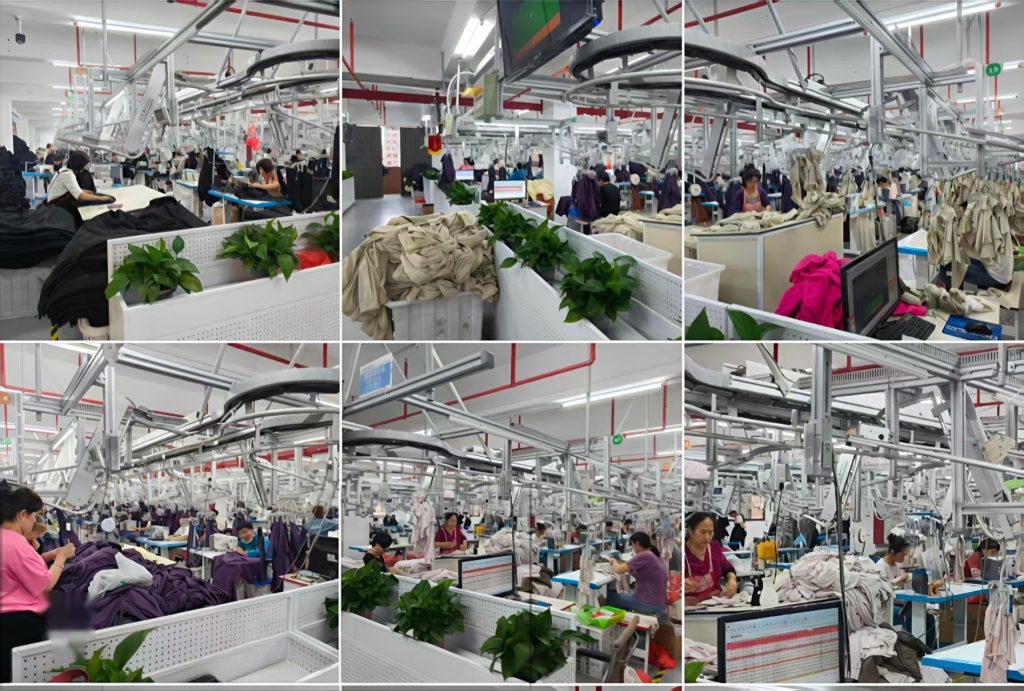
Thread specification is a line decision: every machine on the floor carries the approved cone for the style. GorgeousBen sewing floor, Shishi.
Specialty Seams: Topstitch, Overedge and Stretch
Topstitching is visible, so it needs its own line in the spec: commonly Tex 50 to 60, with a larger needle and longer stitch for the classic denim look. Contrast topstitch must be colorfast to washing and rubbing, since it sits on the surface. Overedge and coverseam on stretch fabrics use textured polyester, which stretches and recovers with the seam. Embroidered logos consume thread at scale — the trims guide places decoration thread on the trim card alongside labels and zippers.
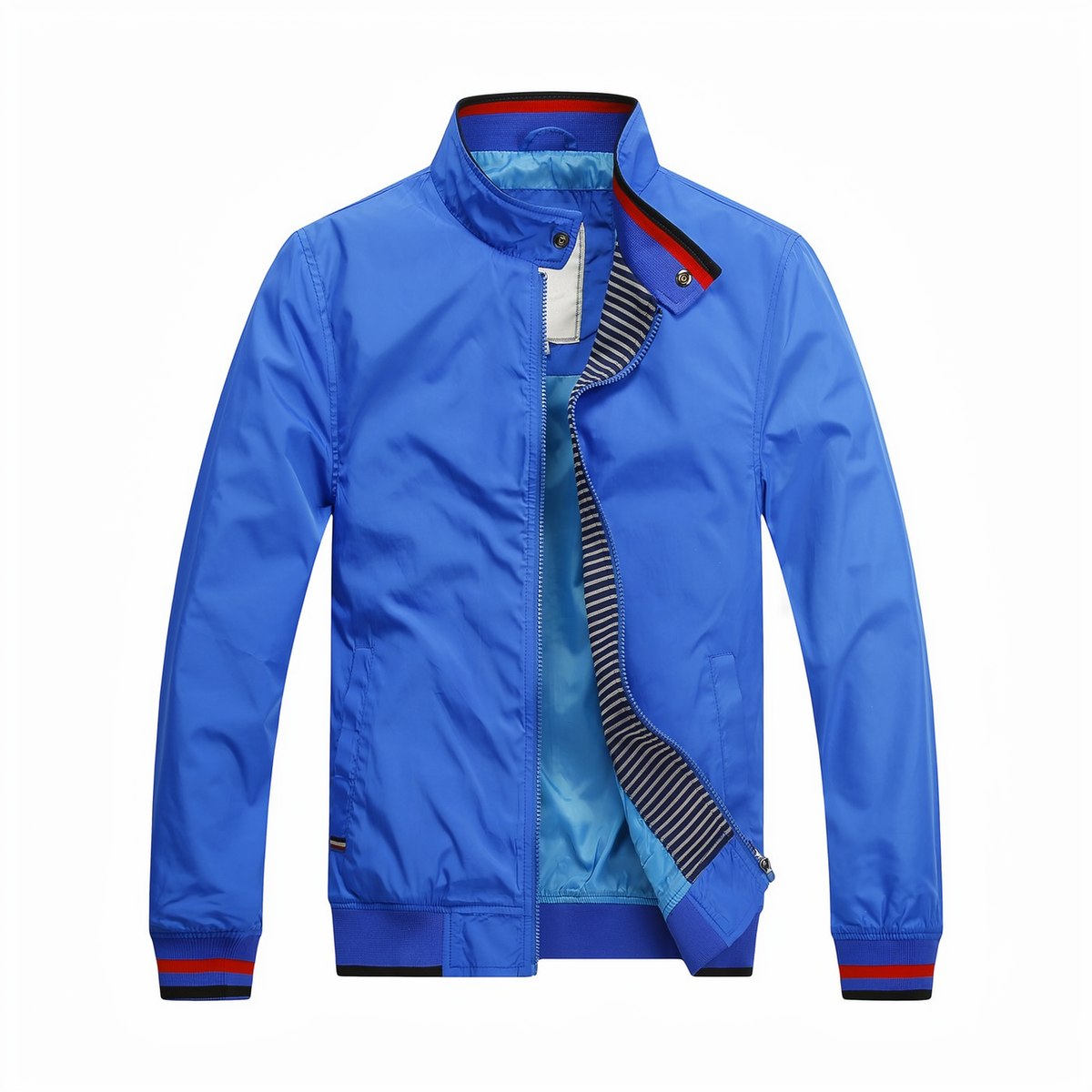
Topstitch is the thread you can see: seam balance, density and colorfastness are all judged on the surface. GorgeousBen jacket detail.
Write the Thread Spec Into the Tech Pack
A usable thread specification is four to six lines, and the tech pack guide shows where they sit. Specify per seam type — general, topstitch, overedge, bartack — each with Tex size, fiber family and SPI. Add Pantone codes, a shrinkage or fastness test where relevant, and a substitution-approval note. The trim card should carry a sewn segment of each thread on the actual fabric, not a loose cone — a cone in a bag can be swapped and nobody would know.
General seams: Tex 40 core-spun or spun polyester, 10 SPI, needle NM 90.
Topstitch: Tex 60, Pantone-coded, 8 SPI, colorfastness to washing stated.
Bartacks: Tex 60, density per position drawing, positions listed exactly.
Approval rule: "no substitution without written approval" — the line that makes the rest enforceable.
The Cost Side: Small Money, Large Consequences
Thread rarely moves a quote more than a few cents per garment, so it is not a negotiation lever — a factory saving money on thread is saving almost nothing and risking a seam claim worth far more. What does move cost is indecision: re-threading a line mid-run, re-sewing seams after a colour mismatch. Decide once at sampling and the cost stays negligible.
Approve Thread on the Pre-Production Sample
The pre-production sample is where the thread spec becomes physical, and the PPS approval checklist already treats trims as a gate. Wash one approved sample before bulk, re-check seam balance and puckering, and keep it as the shipment reference. GorgeousBen keeps a sewn trim card for every programme so the line, the QC station and the buyer are all reading the same thread.
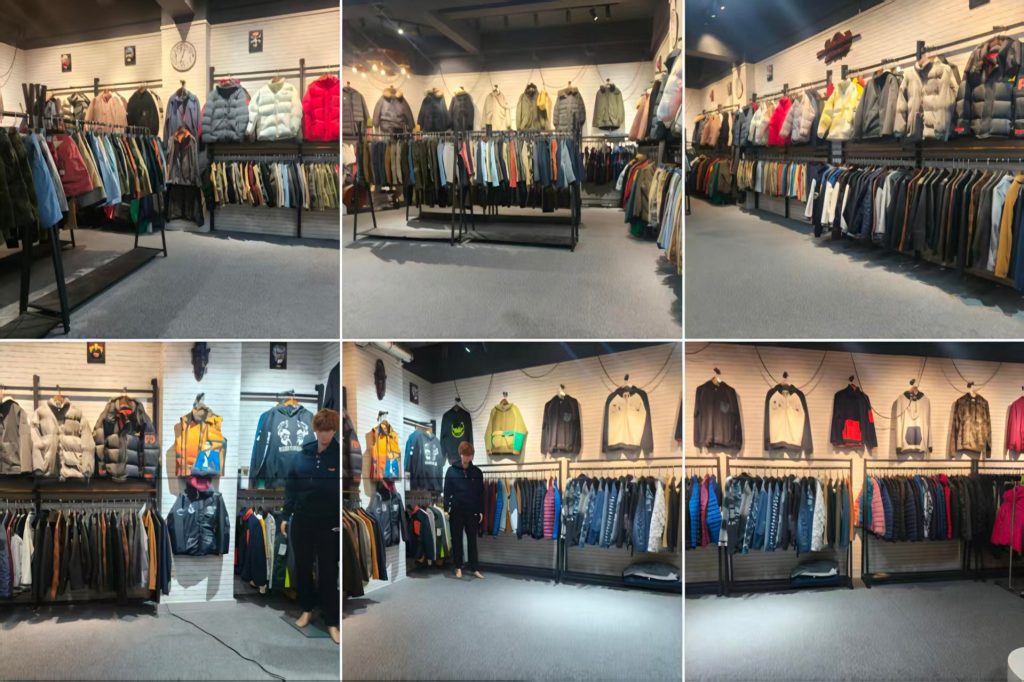
Thread is approved on a sewn sample, not on a cone in a bag. GorgeousBen showroom, Shishi.
If you want thread, stitch and reinforcement specs written into the same quote as the garment, browse the GorgeousBen product range or contact the team with your styles and target fabrics.
Common Questions
What Tex size is most common in garment manufacturing?
Tex 40 is the default general-seam thread for woven garments, with Tex 27 to 30 on light knits and overedge seams and Tex 50 to 60 for topstitch and reinforcement. Treat these as starting points, not standards: the right size depends on fabric weight, seam type and machine, and should be confirmed on a sewn sample before bulk.
Can cotton thread be used on stretch fabrics?
It is a poor match. Cotton thread has little stretch recovery and lower strength than polyester, so it snaps or pops stitches when a stretch seam is stressed. Use polyester or core-spun thread, with textured polyester on overedge seams. If a natural look is required, core-spun gives the cotton appearance with polyester strength.
Why do my seams pucker even with the correct thread?
Puckering has four usual causes: thread shrinkage mismatched to fabric, sewing tension too tight, a needle too large for the fabric, and feeding differences between plies. Fix them in that order on a test piece before blaming the thread. On cotton programmes, request shrinkage-tested thread and confirm tension with a seam-balance check at each run start.
Does thread brand matter, or is Tex enough?
Tex defines size, not quality. Two Tex 40 threads can differ in strength, elongation and shrinkage depending on fiber construction and finish. For general garments, naming the fiber family and Tex size with a test requirement is usually sufficient; for demanding programmes such as workwear and coated shells, name a tested performance level and keep the no-substitution clause in the tech pack.