Home > Blog > How to Wear a Hoodie Without Looking Sloppy
How to Wear a Hoodie Without Looking Sloppy
By Ben LeeNovember 21st, 20266 views
A hoodie looks sharp when three things are right: a fabric weight that holds structure — 280 to 450 gsm for most men — a fit that follows the body instead of hiding it, and styling that treats it as one layer of the outfit. Get those right and the same garment reads considered instead of lazy.
The hoodie is the most-worn garment in most men's wardrobes and the easiest to get wrong. The fabric bunches instead of draping, the hem flares, the hood collapses into a roll of cloth at the collar — and no watch or sneaker rescues it. The problem is almost never the hoodie concept. It is weight, fit and styling, and all three are fixable in one shopping trip.
Why Some Hoodies Look Sloppy Before Styling Even Starts
Fabric weight does most of the work. Weight in knitwear is measured in grams per square metre (gsm), and the difference between a hoodie that holds its shape and one that clings is mostly a difference between 180 and 350 gsm. Light weights under 250 gsm drape like a t-shirt: they show seam lines, ride up at the waist and bag out at the elbows. Mid weights around 300 to 380 gsm stand away from the body slightly, which creates the clean, structured line people read as 'expensive'. Heavy 400 to 450 gsm fleece holds structure like a light jacket.
Two construction details compound weight. First, loopback (unbrushed) inside keeps the surface smooth and the body more structured, while brushed fleece feels softer but relaxes faster. Second, the ribbing: hem and cuff ribs with decent elastane snap back after washing; tired ribs let the hem flare, and a flared hem is the fastest route to sloppy. Stretch the rib — it should return immediately.
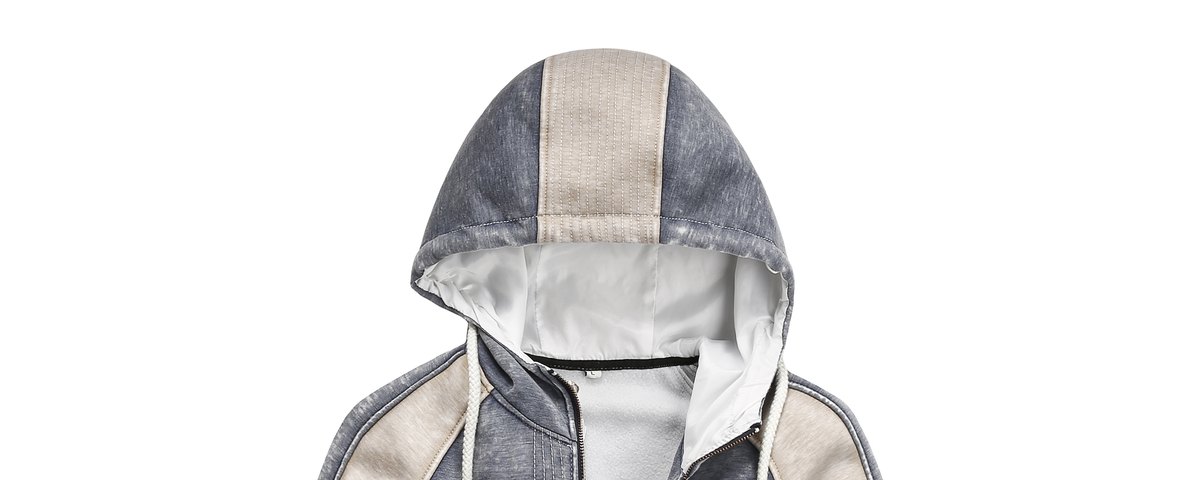
The hood should hold a soft peak, not collapse: a lined hood with flat, woven-tape drawcords keeps its shape at the collar. GorgeousBen hoodie detail.
Fit First: Shoulders, Hem and Hood
A hoodie is cut looser than a t-shirt, but "loose" is not a licence for excess. Four points decide whether it fits. The shoulder seam should sit on the corner of your shoulder — a raglan seam is forgiving, but a drop-shoulder extending well down the arm reads careless unless it is intentional. The hem should end at the hip bone: lower covers the back pocket line and shortens the legs visually; higher rides up. Sleeves should end at the wrist bone with a slight stack; sleeves swallowed past the knuckles drag the look down. The hood, worn down, should hold a soft roll at the collar, not pile up behind the neck.
Knit sizing varies more between brands than woven sizing, so check real measurements against your body instead of trusting the label — the size chart guide explains how in one minute. A chest ease of roughly 8 to 15 cm over body measurement is the normal comfort zone for a regular-fit hoodie.
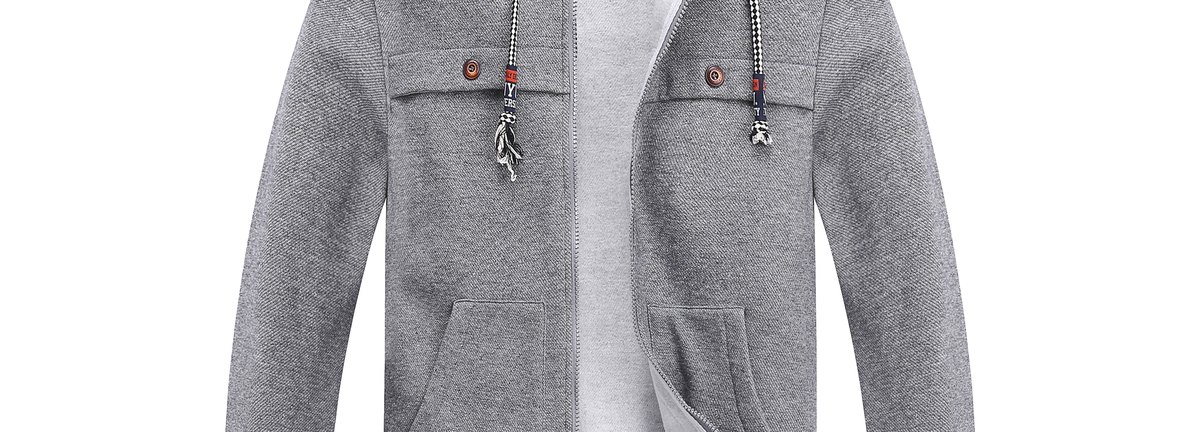
A zip-through style in mid-weight cotton fleece: the chest line stays clean, pockets sit flat, and the collar holds without gaping. GorgeousBen hoodie detail.
Match the Weight to the Season
One hoodie cannot do every job. A weight that feels right in October is oppressive indoors in July, and a summer-weight layer is useless against January wind. Match the spec number to how you will wear it:
Fabric Weight
Best Season
How It Behaves
240–280 gsm
Late spring, summer evenings
Light layer, packs small, drapes closer to the body
300–380 gsm
All-purpose, autumn through spring
Holds structure, works as a mid-layer or standalone
These bands are common industry practice rather than a standard, and finish matters: brushed fleece runs warmer at the same gsm than loopback. If you own one hoodie, own the 300–380 band — it works alone and under a jacket.
Five Outfit Formulas That Work
With weight and fit handled, styling becomes simple arithmetic. Five formulas cover almost every casual situation:
Grey crew-neck + white tee + dark chinos. The default. A mid-grey mid-weight hoodie over a plain tee with clean dark trousers works when nothing else does. Chino colour and fit matter more here — the chinos guide covers the choice.
Zip hoodie under a bomber or work jacket. The zip-through is built for layering: flat collar, no hood bulk at the neck, easy off indoors. Keep the jacket regular, not tight.
Hoodie + cargo pants + plain sneakers. The workwear formula. Cargos are already detailed — bellows pockets, drawcords, bartacks — so the hoodie stays plain: solid colour, no print, quiet hardware.
Monochrome. A navy hoodie with navy or charcoal trousers lengthens the silhouette and hides the fact that you thought about it. Works in grey-on-grey too.
Hoodie + overshirt, hood out. For a softer look: an unstructured overshirt over the hoodie, hood laid flat outside the collar. Hood-out is casual, but with a plain hood it reads deliberate.
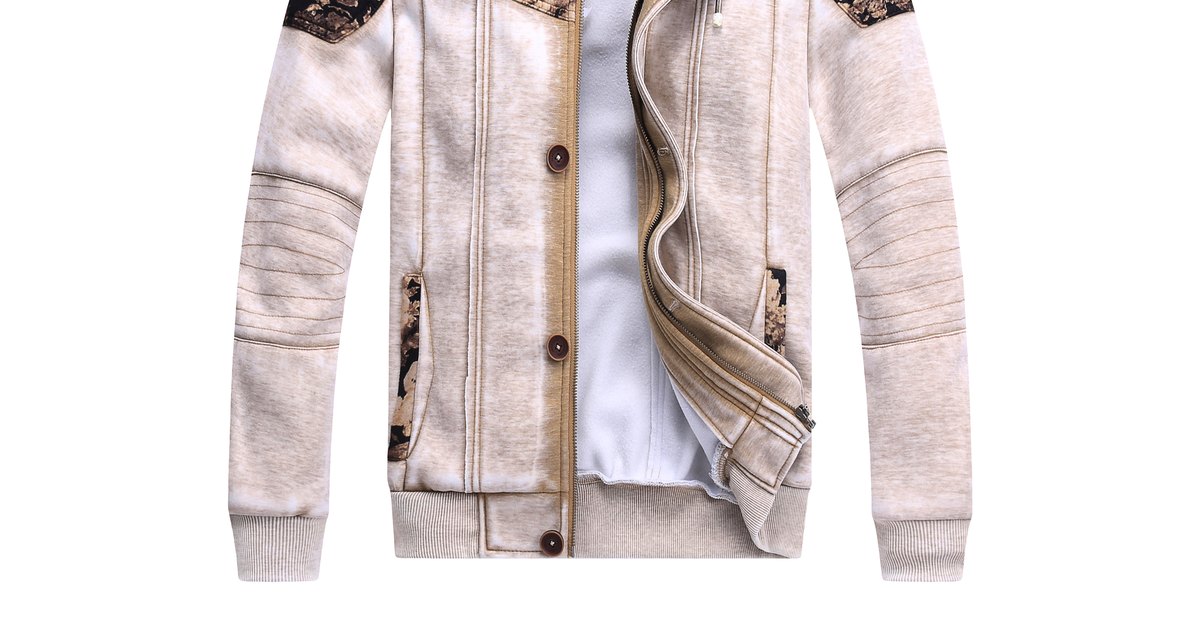
A button-front hoodie in cream works as the top layer in mild weather — the ribbed hem keeps the torso line flat. GorgeousBen hoodie detail.
Layering Without Bulk
Under a jacket the hoodie becomes a mid-layer, and each layer needs room for the one inside it: a 350 gsm hoodie wants roughly one size of chest ease in the jacket — which is why slim jackets and heavy hoodies fight. The jacket fabric guide ranks outer layers by structure, and stiffer fabrics such as waxed cotton or wool flannel balance a soft knit best.
Layering sleeve rule: the hoodie cuff sits just inside the jacket sleeve, showing a centimetre of rib at the wrist; sleeves bunched inside create elbow bulk.
Colour, Care and Pilling Control
Two or three colours cover every situation: mid-grey, navy and one neutral — cream, ecru or black. Grey marl hides wear best; navy works casual or slightly dressed; cream looks the most expensive and shows everything, so the rest of the outfit must stay plain.
Care is where good hoodies quietly die. Wash cold, inside out, away from denim and zippers, which abrade knit surfaces and start pilling. Skip the tumble dryer or use the lowest heat: high heat shrinks the body while the ribs stay long, producing exactly the flared silhouette this article opened with. Dry flat — a wet 350 gsm hoodie on a narrow hanger stretches the shoulders. If pilling starts, a fabric shaver on a flat surface restores the knit in minutes; never pick pills by hand.
A 60-Second Checklist Before You Leave the House
Hem sits at the hip bone and the ribs grip — no flare.
Shoulder seam at the corner — or a deliberate drop-shoulder on a truly oversized cut.
Sleeves end at the wrist bone with a slight stack.
Hood rolls flat at the collar; drawcords even on both sides.
Everything else in the outfit is quieter than the hoodie — one statement piece per look.
Most of this reduces to buying better once: a mid-weight hoodie in a working colour, with ribs that recover, fits better in year three than a light one fits in month three. The GorgeousBen range of men's hoodies, sweatshirts and casual bottoms is in the product catalogue — every style shown here is produced in-house in Shishi.
Common Questions
What fabric weight should a good men's hoodie be?
For an all-purpose hoodie, look for 300 to 380 gsm cotton or cotton-rich fleece. Below 250 gsm the fabric drapes like a t-shirt and loses shape quickly; above 450 gsm it becomes a winter-only garment. Weight should be stated in grams per square metre on the product page — a seller who does not publish it is usually telling you something.
Can a hoodie ever be smart casual?
Yes, with conditions. The formula is a plain, mid-weight or heavy hoodie in navy, grey or black, no prints or large logos, worn under a structured layer — an unstructured blazer, overshirt or clean bomber — with tailored trousers and minimal sneakers. The hoodie reads as a knit layer rather than sportswear. If it is light, printed or worn with sweatpants, it stays firmly casual.
Zip-up or pullover: which should I buy first?
If you own one hoodie, buy the pullover — it is the cleaner look worn alone and the classic crew or hooded shape works in every formula above. Buy the zip-up second, because its value is layering: flat collar, easy on and off indoors, and it sits better under jackets. A zip-through in a mid weight is the most versatile layering piece in the wardrobe.
How do I stop my hoodie from pilling and losing shape?
Wash it cold and inside out, separate from abrasive fabrics such as denim, and avoid the tumble dryer — heat shrinks the body faster than the ribs. Dry flat rather than hanging when wet. Choose loopback or tightly brushed fleece with elastane in the ribs, and remove early pills with a fabric shaver.