To read a men's size chart correctly, first check whether its numbers describe your body or the garment, measure your own chest, waist and sleeve with a soft tape, and pick the size whose chart numbers sit closest to yours — remembering that one letter size typically spans only 4–6 cm at the chest.
The medium that fits you in one shop can feel like a large in the next, and the reason is rarely your body: the two charts were built on different systems, different grade steps or different ease allowances. Guessing costs money — in returns for shoppers and in remakes for wholesale buyers. GorgeousBen, a menswear manufacturer in Shishi, Fujian sewing for customers in 47 countries, prints flat garment measurements on every style page, and the question its sales team answers most often is simply "which size is mine?" This guide answers it in five steps, with a worked example and the red flags that expose an unreliable chart.
Why One Brand's M Is Another Brand's L
Letter sizes are labels, not measurements. Under the same "M", one brand may cut a 100 cm chest and another a 106 cm chest, because each company chooses its own grade rules — the increments that grow a pattern from S to XXL. Add vanity sizing, where brands shift numbers down so customers feel flattered, and the letters drift even further apart between markets. A size grading guide explains how those increments are engineered on the factory side; as a shopper, the practical conclusion is simple: ignore the letter and read the numbers.
Body Measurements or Garment Measurements?
Every size chart belongs to one of two systems, and confusing them is the single most common sizing mistake:
- Body measurements describe the wearer: "chest 100 cm" means your chest should measure 100 cm. Ease has been added invisibly by the pattern.
- Garment measurements describe the clothing on a table: "1/2 chest 52 cm" means the flat garment measures 52 cm across, which is 104 cm around.
The trap is a chart that says "chest 52" without saying which system it uses — a number that reads as a large body size but is actually a flat half-measure, or the reverse. Good charts label the system on the sheet. If the product page does not say, ask before ordering; a manufacturer who cannot answer that question is also telling you something about its quality control. On the production floor, the same distinction is governed strictly — see how a garment is measured flat against a spec.
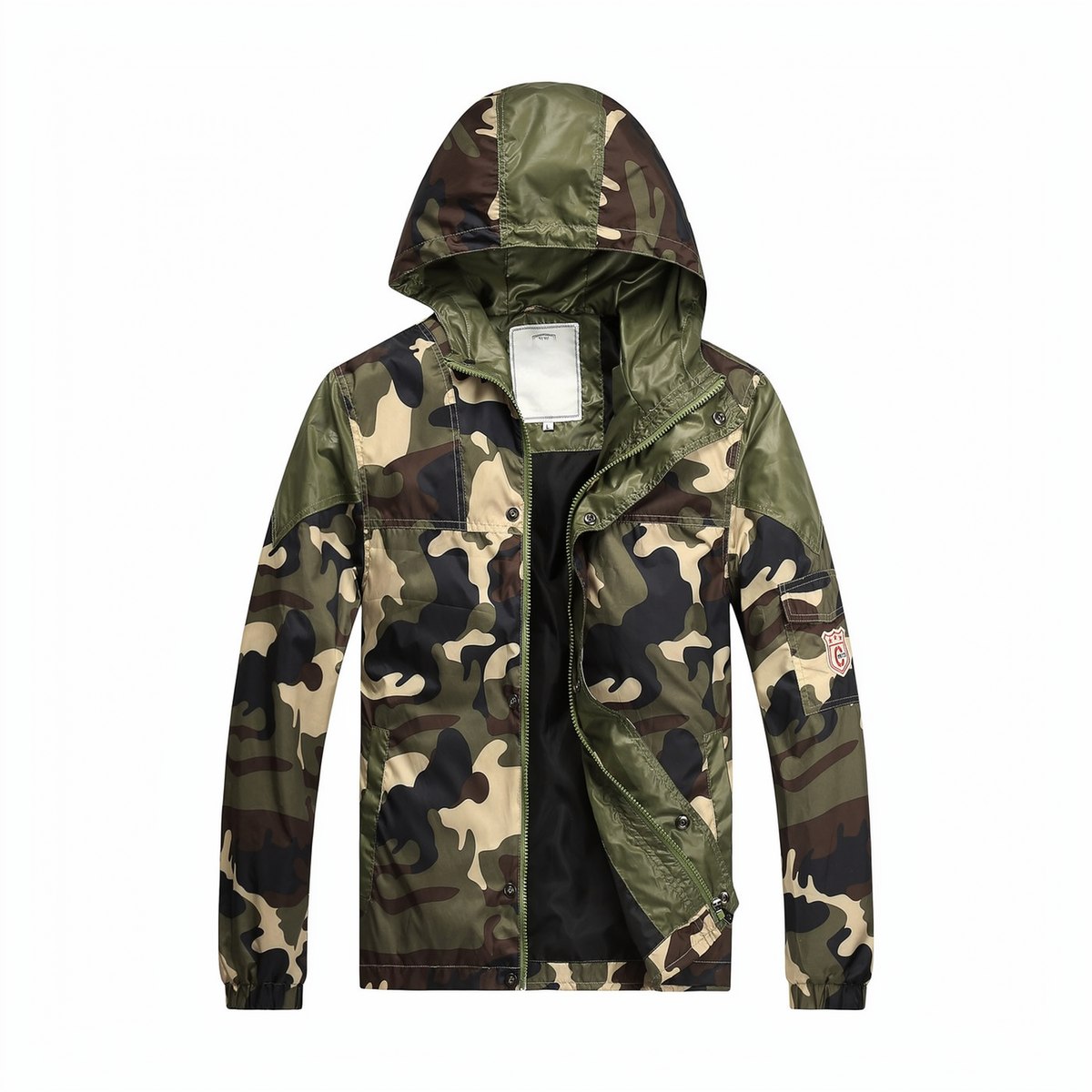
Flat garment measurements are taken seam to seam on a table — the numbers behind most size charts.
Measure Yourself Once, Use the Numbers for Years
Ten minutes with a soft tape removes the guesswork from every future purchase. Wear light clothing, keep the tape level and snug but never tight, and record the results in centimetres:
- Chest — around the fullest part, tape level under the arms, breathing normally.
- Waist — at your natural waistline, roughly at the navel, not where trousers happen to sit.
- Hips — around the widest point, feet together.
- Sleeve — from the shoulder bone to the wrist bone with the arm slightly bent.
- Inseam — along the inner leg from the crotch to where you want the hem to fall.
Save the numbers in your phone. Bodies change slowly; a note made today stays accurate for seasons, and it turns every new men's size chart — in any brand, any country — into a two-minute check instead of a gamble.
A Real Size Chart, Decoded
Below is a typical woven jacket chart in the flat system, the style GorgeousBen publishes for its own garments. Numbers are illustrative; always use the chart on the product page you are buying from.
| Size |
1/2 chest (flat) |
Chest (around) |
Body length |
Sleeve length |
| S |
50 cm |
100 cm |
68 cm |
60 cm |
| M |
52 cm |
104 cm |
70 cm |
61.5 cm |
| L |
54 cm |
108 cm |
72 cm |
63 cm |
| XL |
56 cm |
112 cm |
74 cm |
64.5 cm |
Worked example: your chest measures 100 cm and you want a regular fit — meaning the garment should be some 10–14 cm larger than your body at the chest. The garment-around column is the one to read: M gives 104 cm (4 cm of ease, slim), L gives 108 cm (8 cm, close to regular), XL gives 112 cm (12 cm, relaxed). On this chart, an L is the honest regular choice — a decision impossible to make from the letter alone.
What "Fits True to Size" Actually Means
"True to size" is useful only when it refers to numbers: it means the garment matches the chart's stated system with a standard ease allowance. It is not a guarantee, and it is not transferable between brands — a chart whose M already carries 16 cm of ease is "true to size" and still roomier than another brand's M. Two checks make the phrase safe to use: confirm the chart states its measurement system, and confirm the points you care about carry a stated tolerance, commonly ±1 cm on main measurements in production. A chart with numbers, a system label and a tolerance can be trusted; a slogan cannot.
Choose the Fit You Want, Not Just the Size
Two buyers with identical chests can legitimately choose different sizes, because ease is a preference. As a common tailoring guide for jackets: a slim cut carries roughly 8–12 cm of chest ease, a regular cut 12–16 cm, and a relaxed or layering cut 16 cm or more. Knits follow their own logic — a fine-gauge sweater is worn with less ease than a chunky one. The style's own chart always rules: if a page states the garment "runs slim", treat the numbers, not the habit of buying one letter size, as the source of truth. When the chart leaves ease unstated, the photos of the garment worn and relaxed on a body, plus one email to the seller, settle it faster than a return.
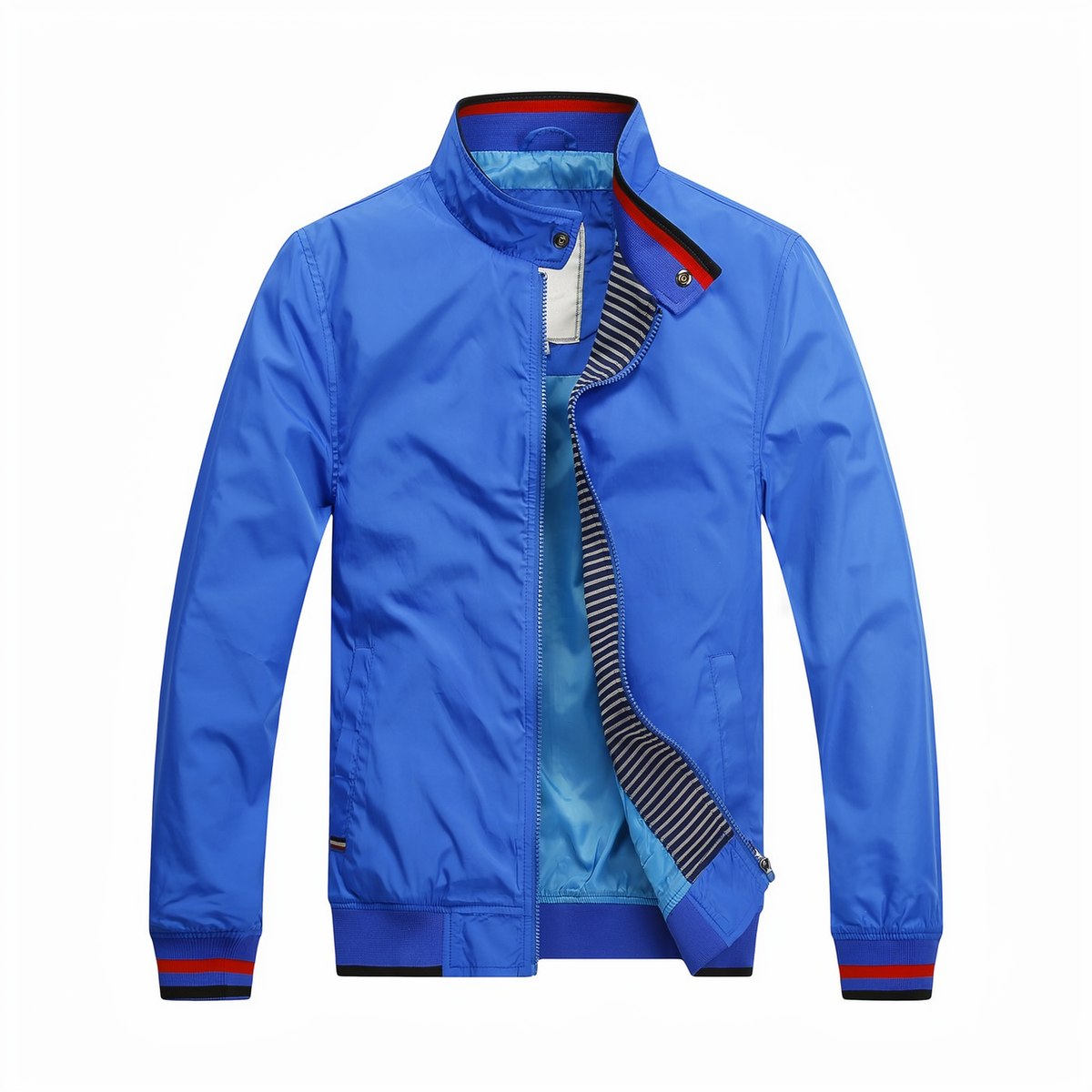
Construction details — plackets, ribs, panels — change how a chart's numbers feel when worn.
Five Red Flags in a Size Chart
- No system label. If nothing says body or garment measurement, the numbers are ambiguous by definition.
- Letters only. A chart listing S–XXL without a single centimetre is a size label, not a size chart.
- Missing units. "Chest 40" without cm or inches invites a 2.54× error.
- One chart for every style. A copy-pasted chart across knit shirts and woven jackets cannot be accurate for both.
- "Exact fit" promises. Production tolerance is real; any chart claiming exactness is marketing, not measurement.
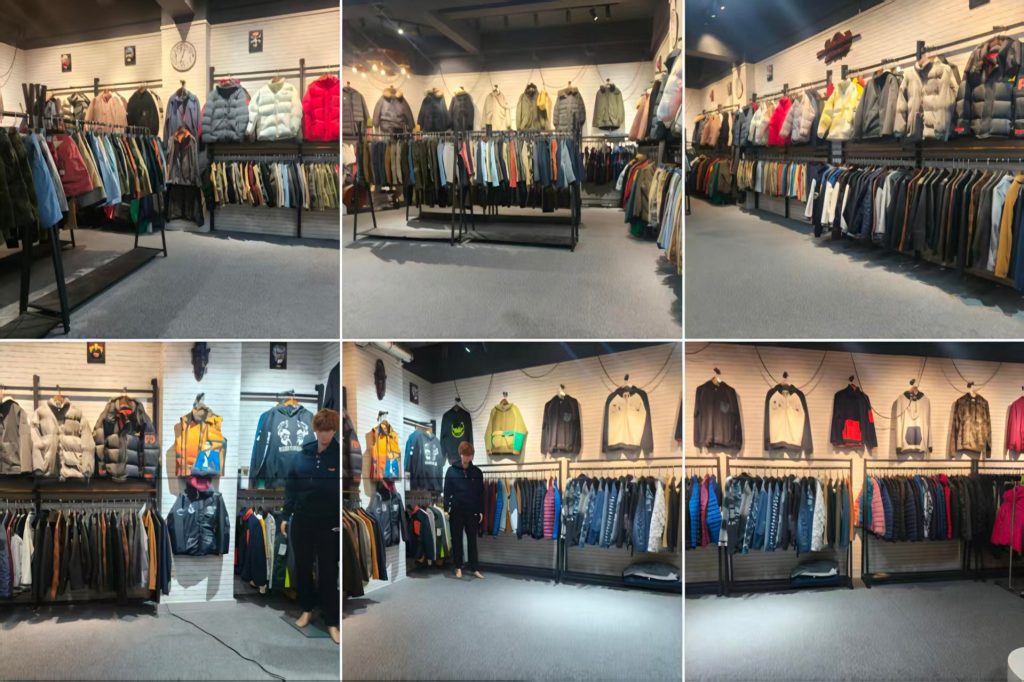
Sample sizes on the GorgeousBen showroom wall — every published chart traces back to a physical garment.
Frequently Asked Questions
Should I size up when I am between two sizes?
Go back to the numbers instead of the letters. Compare the two sizes' chest and waist against your own measurements and the ease you prefer; pick the size whose garment numbers give that ease. When the gap is genuinely half a size, the larger size tailored down one centimetre at the side seam usually beats a tight fit — but that is a decision the chart, not habit, should make.
Why does the same size fit differently in different styles?
Each style has its own pattern with its own ease and construction. A bomber with ribbed cuffs, a quilted jacket worn over knitwear and a linen shirt use different base blocks, so their "M" garments measure different circumferences even from the same factory. This is why serious brands publish a chart per style rather than one master chart — and why comparing the numbers beats remembering a letter.
Are men's size charts in inches or centimetres?
Both exist, and mixing them is a classic ordering error. United States and United Kingdom charts often use inches; most Asian and European manufacturers work in centimetres. One inch equals 2.54 cm, so a 40-inch chest is about 101.6 cm. Check the unit line on the chart before comparing anything, and convert your own body numbers into the chart's unit once, then reuse them.
Can I trust a size chart from an overseas manufacturer?
Yes, when the chart states its measurement system, names each point, gives units and works from a real sample. GorgeousBen, which ships menswear to buyers in 47 countries, publishes flat garment measurements in centimetres for every style and answers system questions in writing before an order is confirmed — the same discipline a buyer should demand from any supplier before paying a deposit.
Put a Chart to Work
A men's size chart is not decoration on a product page; it is the manufacturer telling you, in numbers, what it will deliver. Read the system, measure yourself once, compare ease, and the letter sizes stop mattering. Ready to try it on real garments? Browse the GorgeousBen collection and check any style's chart against the numbers you measured today.


