In men’s apparel, size grading is the table of increments a factory applies to every measurement point as it steps up or down one size — commonly 4–6 cm at the chest and 4–5 cm at the waist. Get one increment wrong and the error repeats across the entire size run before a single garment reaches a carton.
Most buyers approve one size M sample, place the order, and only discover at delivery that the L is short in the body or the S is wide at the shoulder. GorgeousBen has manufactured menswear for buyers in 47 countries from its factory in Shishi, Fujian for more than 20 years, and grading is one of the few problems that is always cheaper to settle on paper than in production. This guide explains what grade rules are, how men’s measurements typically grade, why your size chart and the factory’s spec sheet disagree, where bulk production loses the grade, and the tolerances to lock into the purchase order.
What Size Grading Actually Means
Every pattern is built on a base size — often M, or a 48 in European sizing and a 32-inch waist for men’s trousers. Size grading, sometimes written as grade rules for clothing, is the set of increments applied from that base size to every other size: how much the chest grows from M to L, how much the waist grows from a 32 to a 34, how much the sleeve lengthens.
Three consequences follow. First, grading is decided point by point, not garment by garment, so a jacket can have a correct chest and a wrong shoulder at the same time. Second, grading is not size range planning: deciding which sizes to offer a market is a commercial decision, while grading is a pattern-room decision — we cover the commercial side in our guide to size range planning for wholesale. Third, grading is a factory document that belongs in the tech pack sent for quotation, not a table copied from another brand’s website.
GorgeousBen keeps a written grade rule sheet for every block it runs and shares it with buyers before sampling.
How Men’s Apparel Typically Grades
These are conventional ranges used across men’s apparel production, not a legal standard. Confirm them against your block, fabric and market expectations.
| Measurement point |
Typical increment per size |
What goes wrong when it is off |
| Chest |
4–6 cm |
Jacket feels tight in L but loose in M |
| Waist |
4–5 cm |
Trousers sit differently at the same labelled size |
| Hip / seat |
4–5 cm |
Pockets pull open on the larger sizes |
| Shoulder width |
1–1.5 cm |
Collar drags or the shoulder seam drops |
| Sleeve length |
1–1.5 cm |
Cuffs sit above the wrist bone on larger sizes |
| Inseam |
1.25–1.5 cm |
Trouser length looks unchanged from S to XL |
| Collar |
1 cm |
Shirt will not button at the neck |
Increments apply per size step, not per label — a vanity size M is still graded with the same rules.
Why Your Size Chart and the Factory’s Spec Sheet Disagree
Four causes explain almost every mismatch we see between a buyer’s chart and a factory’s measurements.
- Body measurements versus garment measurements. A retail size chart usually lists the wearer’s body circumference; a spec sheet lists the garment measured flat, with ease already built in. Those two numbers differ by the ease you designed, often 8–12 cm at the chest of a casual jacket.
- Different measurement points. Chest measured 2.5 cm below the armhole is not the chest measured at the widest point, and the gap can be a full centimetre.
- Relaxed, stretched or steamed. Knits and washed cotton change length when they hang; a garment measured straight off the iron is not the garment the customer receives.
- Borrowed charts. A chart copied from another brand carries that brand’s grade rules, not yours.
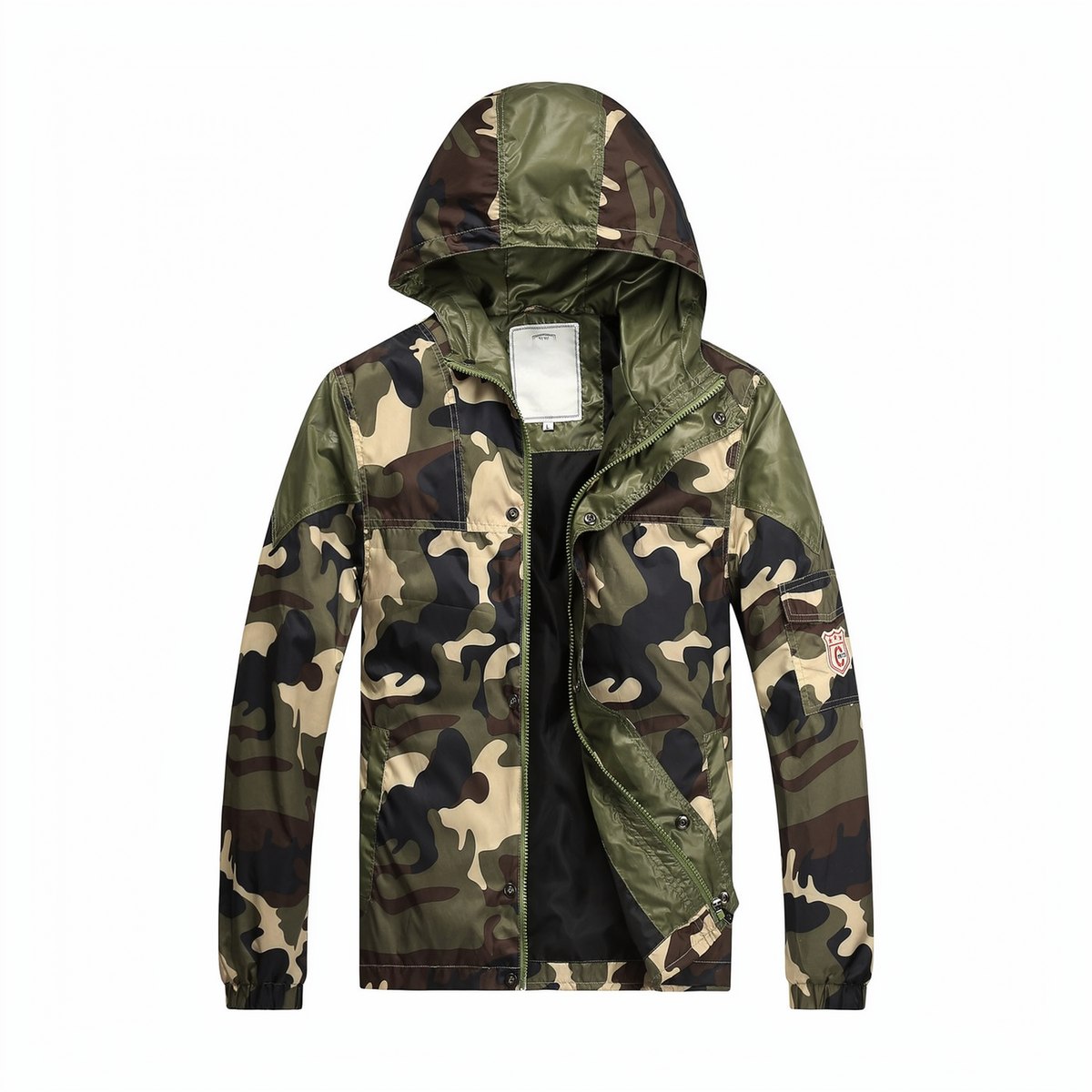
Measuring a finished GorgeousBen jacket flat at the chest — the same point the spec sheet grades.
Where Bulk Production Loses the Grade
Grade rules can be perfect and the delivered garments still drift. Four places in production account for most of it.
- Cutting. Fabric spread under tension relaxes after the blade passes. The top layer and the bottom layer can differ by a few millimetres, and that difference is then repeated in every bundle cut from the same lay.
- Shrinkage. Cotton wovens commonly shrink 2–3% in length during the first industrial wash. On a 76 cm inseam that is roughly 1.5–2 cm — more than a full size of grade. If the fabric is not pre-shrunk, the pattern has to carry the allowance.
- Sewing. Operators stretch knits at the feed, or a panel from one bundle is joined to a panel cut from another. Both push a finished measurement outside tolerance with no obvious mistake by any operator.
- Measurement method at inspection. Flat and relaxed, hung overnight, or pressed before measuring produces three different numbers from an identical garment. Fix the method in writing, or the argument becomes about technique rather than fit.
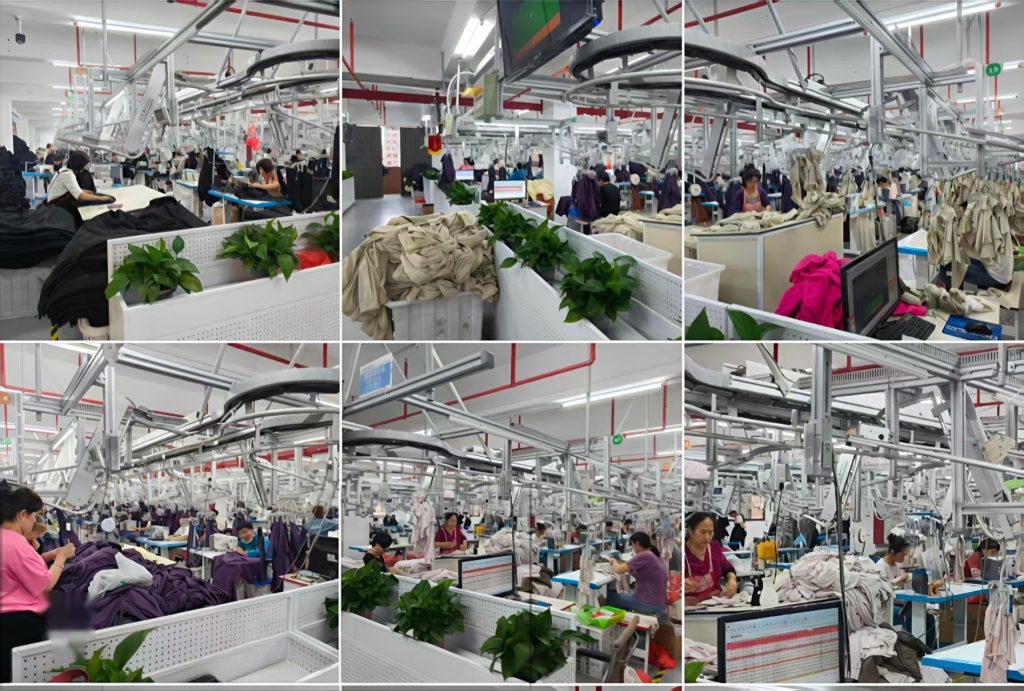
In bulk sewing, a stretched feed or a mixed bundle moves a measurement outside tolerance with no visible defect.
Tolerances to Write Into the Purchase Order
A grade rule without a tolerance is an argument waiting to happen. These are the working tolerances we recommend buyers state explicitly.
| Measurement group |
Common tolerance |
Why it matters |
| Body points: chest, waist, hip, length |
±1 cm |
Absorbs normal sewing variation without changing the fit |
| Balance points: shoulder, armhole, collar |
±0.5 cm |
These decide how the garment hangs on the body |
| Placement points: pocket, placket, label |
±0.5 cm |
Visible asymmetry reads as a defect to the customer |
Alongside the numbers, four sentences belong in every order:
- The measurement state — flat and relaxed, after pressing, or hung — and the waiting time before measuring.
- Who measures, and with which method and tape.
- Which size is the reference sample for the inspector.
- What happens on a failure: rework, replacement, or rejection, and who pays.
A tolerance table is only useful if the inspection actually checks it — our guide to reading a factory QC report before balance payment shows what a measurement section should look like.
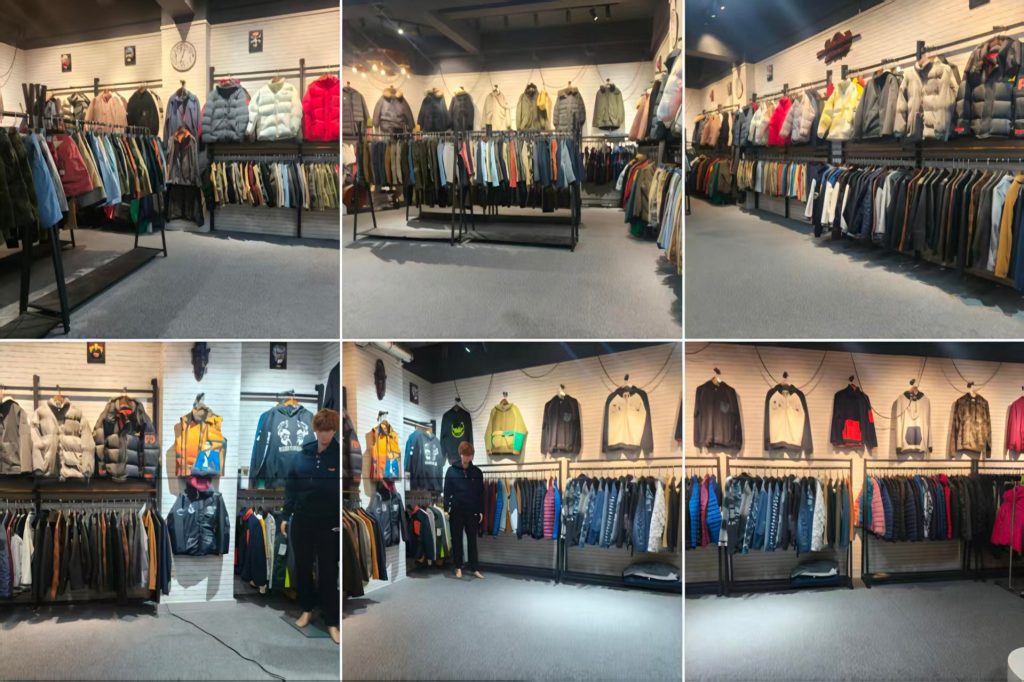
A graded size set in the showroom: one unit per size, same fabric, measured at every point.
A Five-Step Grade Review Before Bulk Cutting
- Put the rules in writing. Base size, increment per measurement point, and the point-of-measure diagram, approved by both sides.
- Measure the approved sample yourself. Every point recorded in a spreadsheet.
- Ask for a graded size set. One unit per size, same fabric and trim, produced from the final patterns — not a re-cut of the sample.
- Wash one unit per size. Measure again after drying and compare against the grade table, especially on length.
- Attach the tolerance table to the PO and to the inspection form, then approve bulk cutting only after the size set passes.
Frequently Asked Questions About Size Grading
What is the difference between size grading and a size chart?
A size chart is customer-facing: it tells a shopper which size to buy, usually using body measurements. Size grading is the internal pattern-room work that produces those sizes — the increments applied to each measurement point from a base size. A brand can publish a clean chart while the underlying grade rules are wrong.
How much measurement tolerance is normal in apparel production?
For men’s woven apparel, roughly ±1 cm on body points and ±0.5 cm on balance and placement points is common commercial practice. Stretch fabrics and washed finishes usually need wider tolerances, and they should be agreed in writing before bulk cutting rather than negotiated at inspection.
Who should own the grade rules, the brand or the factory?
The brand owns the fit intent and signs off the rules; the factory owns the execution and the technical translation into patterns. A factory with an in-house pattern room can propose grade rules from a base size and your target measurements, but a buyer who cannot state the intended chest and waist for each size is delegating fit by default.
How many sizes should a first bulk order include?
Most first orders in men’s apparel start with three to five sizes around the base size — for example M to XL, or waist 30 to 36 — because every additional size adds pattern work, cutting layers and fabric consumption without proving demand. Add sizes once sell-through data shows where the volume actually sits.
Turn One Sample Into a Size Run You Can Sell
A single approved sample proves that one size can be made. A graded size set proves the range can be sold. GorgeousBen manufactures menswear in Shishi, Fujian and shares its grade rule sheet, measurement point diagram and tolerance table with buyers preparing a first order. Send your target measurements or tech pack through our contact page, or browse current menswear products to see the blocks we already run.


