Home > Blog > Cargo Pants Construction: What Buyers Should Check
Cargo Pants Construction: What Buyers Should Check
By Ben LeeNovember 18th, 202613 views
Good cargo pants are decided by construction, not styling: fabric weight between 240 and 350 gsm, bellows pockets with reinforced flaps, bartacks at eight or more stress points, 8 to 12 stitches per inch on main seams, and hardware matched to the fabric. Check these five before you compare prices between manufacturers.
Cargo styling hides construction. A catalogue photo shows pocket placement and colour; it cannot show whether the pocket mouth is bartacked, whether the flap is cut long enough to shed rain, or whether the waistband holds its shape after a garment wash. Buyers discover the difference in week three, when a pocket bag sags or a fly end opens. This guide lists what to check, in what order, before you commit.
Start With Fabric Weight and Weave
Most workwear-grade cargo pants sit between 240 and 350 gsm in cotton twill or ripstop — a common industry range, not a rule. Twill is the classic choice: the diagonal weave resists abrasion and softens with each wash, which suits utility styling. Ripstop is a plain weave with reinforcement threads running in a grid; it resists tearing at a lighter weight and reads slightly more technical. Both are legitimate; the failure is buying "heavyweight" as a description instead of a number.
Ask the factory to state gsm on the quote and confirm it on the swatch by weighing a cut piece. If the fabric contains elastane for stretch, note that pressing temperatures drop. Whichever you choose, the weight must match the intended use — a 240 gsm summer cargo and a 350 gsm work pant are different products wearing the same silhouette.
The Cargo Pocket: Bellows, Flap and Closure
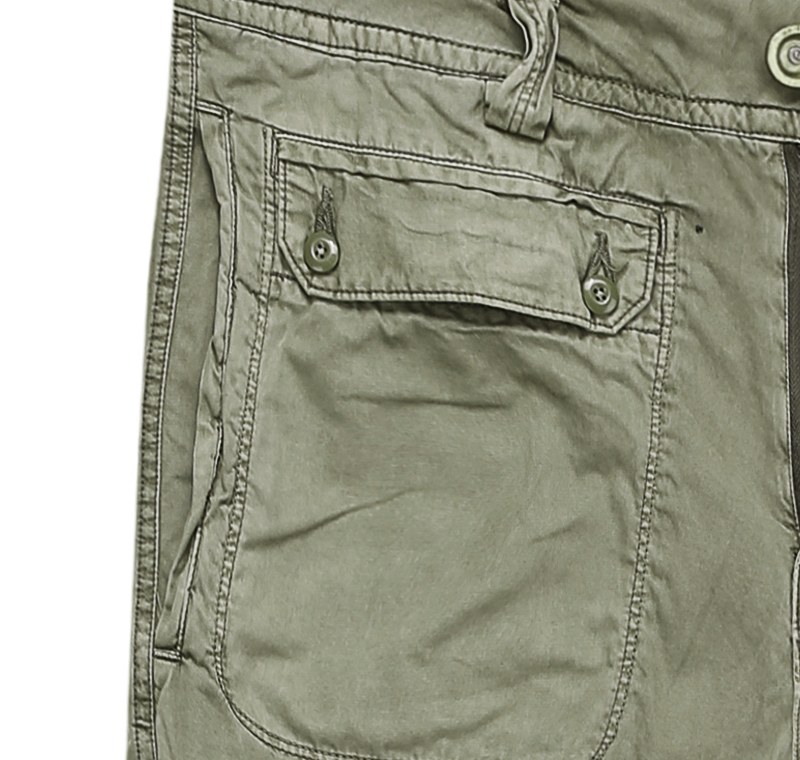
The side pocket is the defining feature, and the most common failure point. A well-built bellows pocket uses a gusset between the front and back panels so the pocket expands without pulling the seam; cheaper versions sew the bag flat and let the pocket gape under load. The flap should extend clearly below the pocket opening so it actually protects the contents, and it should close with two buttons or a snap anchored through a reinforcement.
A bellows pocket with a two-button flap: check flap length, even topstitching and reinforcement under the buttons. GorgeousBen cargo pants construction detail.
Run a simple loading test on any sample: put roughly 500 grams inside — phone, wallet, gloves — and flex the pocket fifty times. The mouth should not gape, the flap should still close, and the bartack at each pocket corner should hold. Left and right flaps should match; asymmetry on a sample predicts worse on bulk.
Bartacks: Small Stitches That Carry Real Load
A bartack is a dense bundle of stitches, commonly 42 to 76, locked across a stress point. On cargo pants, expect them at both cargo pocket mouths, the flap corners, the front slant pockets, the top and bottom of the fly, the crotch junction and the belt loop roots — six to ten locations is typical (common practice for utility styles). Fewer than that on a 300 gsm fabric is a cost shortcut, not a design choice.
Two details matter as much as placement. First, the bartack must sit through all layers — a bartack on the pocket bag only holds the bag, not the mouth. Second, check the fly ends specifically; they are the most commonly omitted point, and the most visible when it fails. Ask the factory to mark bartack positions on the tech pack so bulk is judged against a drawing, not memory.
Stitching and Seams: What to Count
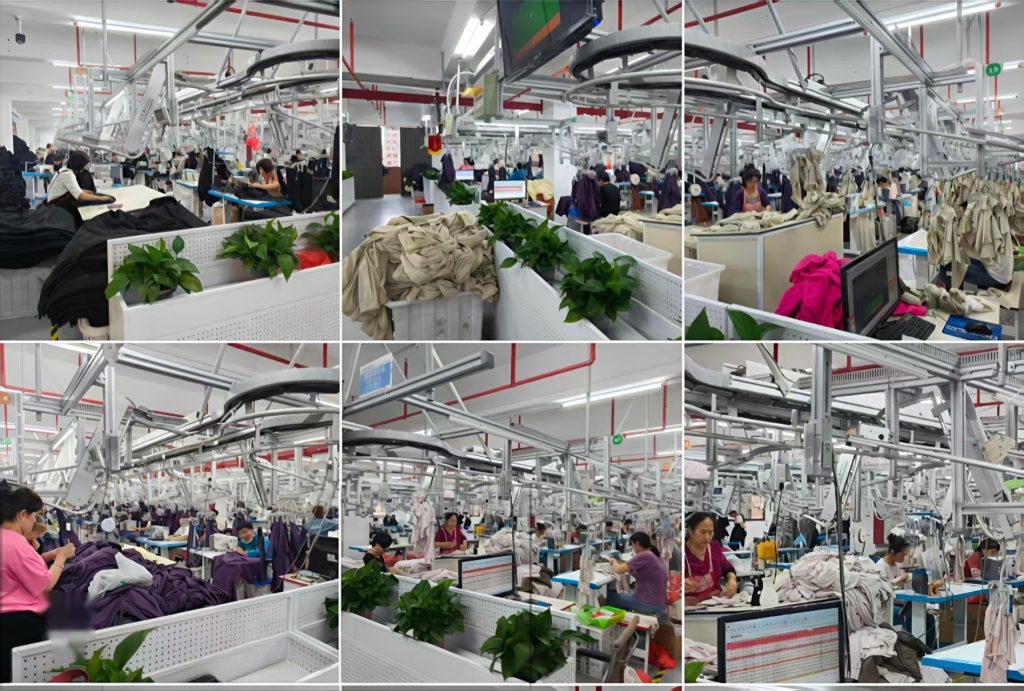
Stitch density on main seams typically runs 8 to 12 stitches per inch for this fabric class — dense enough to hold, coarse enough not to perforate heavy twill. Count it on the sample with a ruler; it takes thirty seconds and reveals a lot about the line's discipline. Side seams should use a safety stitch with a topstitch or double-needle finish, and tension should be balanced enough that the twill does not pucker along the seam.
Stitch density and balanced tension are countable on any sample. GorgeousBen garment sewing line, Shishi.
Thread specification belongs in the paperwork, not the conversation. A polyester core-spun thread around Tex 40 is the common choice for this weight class, and it should appear on the trim card alongside buttons and zips so bulk is matched against an approved physical standard.
Fly, Waistband and Hardware
The fly should carry a zip in the #5 class from a recognised supplier, a zip guard, and bartacks at both ends. The waistband should be interlined so it stays flat after washing, with five to seven belt loops anchored through the waistband into the waist seam — each root bartacked. Buttons and snaps need reinforcement beneath; a pull test on the sample settles the question faster than any email.
Match hardware to fabric. A 350 gsm work pant with a 3 mm snap is underspecified: the snap will fail long before the fabric does. The reverse costs money too — oversized hardware on a 240 gsm summer cargo adds weight and snag points without adding life.
Tolerances and Fit Checks
Construction and fit are separate arguments, and both belong in writing. Most programmes allow roughly ±1 cm on main points such as waist, hip and inseam — the flat measurement method produces numbers both sides can accept without debate. For mobility, run a squat and a high-step test on the fit sample: cargo silhouettes are expected to move, and knee articulation or a gusset decides whether they do. What the sample does, bulk copies.
Verify on Samples Before You Cut Bulk
The sequence matters: prototype to confirm construction, fit sample to confirm wear, then a pre-production sample that becomes the contract reference — the PPS approval checklist covers what to inspect before fabric is cut. Approve trims on a physical card, wash the PPS once, re-measure it, and check that flaps and waistband hold their shape. Garment wash is where weak pocket construction shows first.
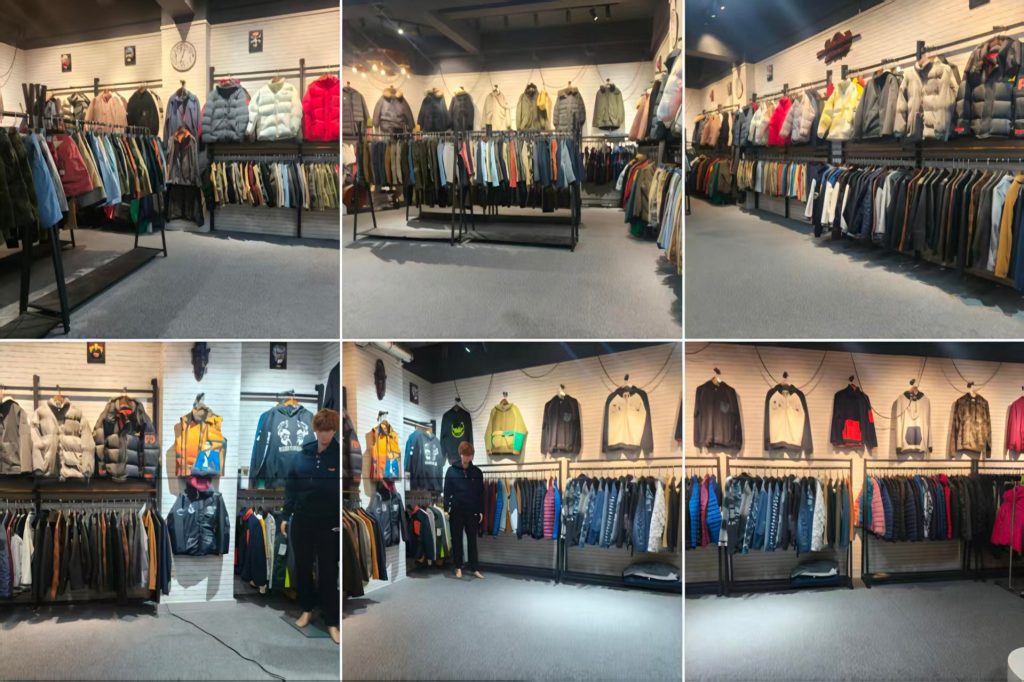
Judge construction on stitched samples you can load and flex, not on catalogue photos. GorgeousBen showroom, Shishi.
Visiting a factory helps, but a disciplined remote process works too: ask for stitched samples, not styled photos. GorgeousBen, a menswear manufacturer in Shishi, China, builds its cargo programme on exactly this sequence — specification first, samples second, bulk only against an approved PPS.
Checkpoint Summary
Checkpoint
What Good Looks Like
Red Flag
Fabric weight
240–350 gsm stated on quote, confirmed on swatch
"Heavyweight" with no number
Cargo pocket
Bellows with gusset, flap below opening, two-point closure
Flat bag, short flap, single button
Bartacks
6–10 stress points, through all layers, fly ends included
Missing at fly or pocket corners
Stitching
8–12 SPI, safety stitch plus topstitch, no pucker
Skipped count, tension marks on twill
Waistband and fly
Interlined waistband, 5–7 loops, #5-class zip with guard
Soft waistband, loops into single seam
Sample verification
Load-and-flex test, wash-and-remeasure on PPS
Bulk approved on photos alone
Common Questions
What fabric weight is best for cargo pants?
For year-round use, most buyers choose cotton twill between 280 and 350 gsm, which resists abrasion and holds pocket shape. Lighter 240 gsm twills or ripstops suit summer styles and warmer markets. Match weight to use rather than to a general "quality" feeling, and confirm the number on a weighed swatch before the order is placed.
How many bartacks should quality cargo pants have?
Six to ten bartack locations is typical for cargo styles (common practice): both pocket mouths, flap corners, front pockets, both fly ends, the crotch junction and belt loop roots. The exact count matters less than coverage of the fly ends and pocket corners, which carry the highest load. Positions should appear in the tech pack so bulk can be verified against a drawing.
What MOQ applies to custom cargo pants?
MOQ is usually driven by fabric dye lots rather than the garment itself. Custom-dyed fabric commonly requires 300 to 500 metres per colour, which at roughly 1.8 metres per pair covers a little over 200 pairs per colour (illustrative arithmetic). The MOQ negotiation guide explains how to split quantities across colours and sizes without breaking the dye lot.
Ripstop or cotton twill: which should I choose?
Choose twill for classic utility styling, abrasion resistance and a softer hand after washing. Choose ripstop when tear resistance at lower weight matters more than tradition — outdoor, tactical and summer styles. Both perform well when construction is right; both fail early when bartacks and pocket construction are wrong. Confirm the weave on a physical swatch, not a fabric name on a quote.
If you are sourcing cargo pants and want a factory that treats construction as the specification, browse the GorgeousBen product range or contact the team with your target weight, pocket layout and quantity — samples follow the sequence above, and bulk only starts against an approved PPS.