Finishing and pressing are the last operations before a garment is folded and cased, and they decide whether an order that passed every inline check still looks cheap on arrival. Cotton wovens are typically pressed at 180–200 °C with steam, while polyester blends sit roughly 30–50 °C lower, because excess heat leaves a permanent shine that no customer will forgive.
Buyers audit fabric, stitching and measurements carefully, yet the finishing line is the step almost nobody photographs during a factory visit — where an otherwise correct order turns into a discount request. GorgeousBen, a menswear manufacturer in Shishi, Fujian sewing for buyers in 47 countries, treats finishing as a quality gate rather than a clean-up duty. This guide walks through what the finishing line does, the pressing standards worth writing into a purchase order, the defects that reach customers, and how to verify all of it without boarding a plane.
What the Finishing Line Actually Does
Between the last sewing operation and the carton, a garment moves through six standard steps. Skipping or compressing any of them shows up weeks later in a customer return.
- Thread trimming and clean-up. Loose threads inside pockets, under collars and along seam allowances are removed — the single most common reason for a "poor workmanship" comment at inspection.
- Spot cleaning. Oil marks and chalk lines are treated before heat, because pressing bakes stains permanently into the fabric.
- Pressing and shaping. Buck presses, hand irons and steamers set the silhouette: collars roll correctly, pocket flaps lie flat, hems sit square.
- Washing or rinsing, where specified. A garment wash or rinse written in the tech pack happens here — after sewing, before final measurement.
- Final measurement check. Pressed garments are measured against the sealed sample, because steam can relax or tighten a panel slightly.
- Folding, tagging and packing. Folding templates, hangtags, polybags and cartons — the stage where the packing standard takes over.
Steps one to five belong to finishing; step six connects directly to the packaging and labelling rules buyers should enforce. The whole flow sits at the end of the garment production process, after bulk cutting and sewing are complete.
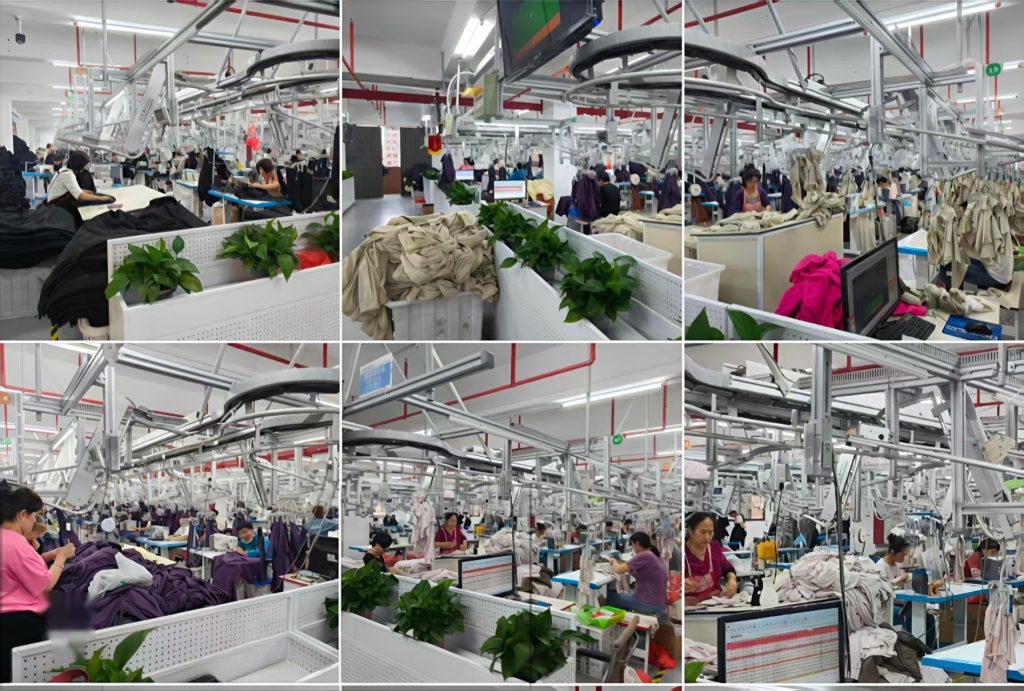
Garments arrive at finishing straight from hanging sewing lines like these — which is why finishing planning starts before the first stitch, not after.
Pressing Standards Buyers Should Ask For
Pressing is not one temperature but a set of settings matched to fabric: a factory that presses everything at one heat either glazes synthetics or under-sets cotton. The ranges below are common industry practice — the sealed sample and the fabric composition rule.
| Fabric |
Typical press setting |
Why it matters |
| Cotton twill (cargo pants, chinos) |
180–200 °C with steam |
Buck press shapes side seams and pocket bags; legs must not get a double crease |
| Linen and cotton-linen blends |
180–200 °C, generous steam |
Highest relaxation risk; measure only after pressing |
| Wool and wool blends |
150–160 °C through a pressing cloth |
Direct contact glazes the surface permanently |
| Polyester and poly-cotton blends |
130–150 °C, covered buck |
Excess heat leaves shine; Teflon covers reduce it |
| Coated or down-filled garments |
Lowest heat, steamer preferred |
Heat can delaminate coatings and flatten loft |
A temperature log per fabric group and buck covers changed before they scorch separate a controlled press station from an improvised one — both visible in a two-minute video call.
Five Pressing Defects That Reach the Customer
- Shine and glazing. A hard, glossy patch on seams or pockets — caused by too much heat or pressure, usually on synthetics. It cannot be fixed after packing.
- Seam impressions. The outline of an inside seam printed onto the face fabric, common on jackets pressed face-down without a cushion cloth.
- Stretched or wavy hems. Pulling a garment across the buck distorts hems and cuffs; on pants it shows as a ruffled leg opening.
- Double creases. A second, unintended crease line running parallel to the intended one — the classic cargo-pants complaint when legs are folded back on themselves under the press.
- Water spots and rust marks. Dirty steam lines or condensation dripping onto light fabrics leave halos that spot cleaning can only fade, not remove.
All five are preventable with settings and discipline, which is why finishing defects rarely appear in a single carton — they appear across the whole shipment.
Where Washing Fits Before Pressing
When the spec calls for a garment wash — enzyme, silicone or a simple rinse — the sequence is fixed: sew, wash, dry, press, then measure. Washing changes hand feel and can shift measurements, so the shrinkage budget must already be built into the pattern; the numbers to expect are usually stated on the fabric test report, and grading adds its own allowance as covered in the guide to size grading. A factory that presses first and washes later will ship a garment whose collar no longer sits the way the sealed sample did. If the wash requirement is not written down, it does not exist — the same principle as every other field in a tech pack a factory can quote from.
Final Inspection and Packing Standards
After pressing, garments are measured, inspected and packed in one continuous flow. Final inspection samples cartons against the agreed AQL sampling plan, and every measurement is taken on the pressed garment — measuring before pressing hides the very drift the buyer cares about. Folding follows a fixed template so cartons stack evenly, hangtags and care labels are attached before polybagging, and the carton specification governs how the finished goods travel.
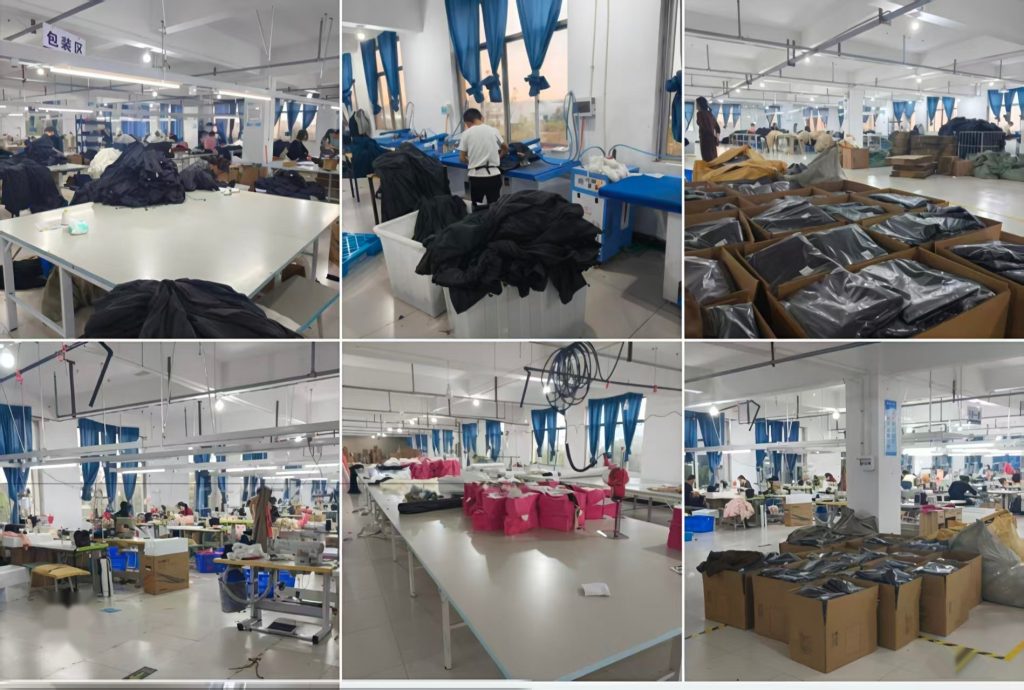
Pressed, folded and cased in one area: keeping inspection, folding and packing on the same floor stops the standard drifting between departments.
How to Check Finishing Without Visiting the Factory
- Ask for a live walkthrough of the press stations. Look for buck covers in good condition, a thermometer or gauge per station, and garments moving in one direction — wash, dry, press, measure.
- Request photos of folded goods with the measurement sheet. A factory confident in its finishing photographs garments after pressing, next to the spec, not before.
- Ask for the defect log of the last three shipments. Finishing defects that repeat shipment after shipment indicate a settings problem, not bad luck.
- Hold a sealed sample and require a shipment reference. Acceptance becomes a comparison instead of an opinion; the retention garment answers disputes months later.
- Check the inline inspection handover. Finishing inherits what inline QC checkpoints caught or missed during sewing — a clean handover record is a good sign.
How GorgeousBen Runs Its Finishing Line
GorgeousBen keeps a dedicated finishing area separate from the sewing floor, with press settings logged per fabric group and covers changed on schedule. Every style is measured after pressing against the sealed sample, a counter sample of each shipment is retained in the factory archive, and finishing defects are logged alongside sewing defects in the same report so buyers see the full picture. Washed styles follow the sew–wash–dry–press–measure sequence without exception, and nothing is folded until it has passed the final measurement check.
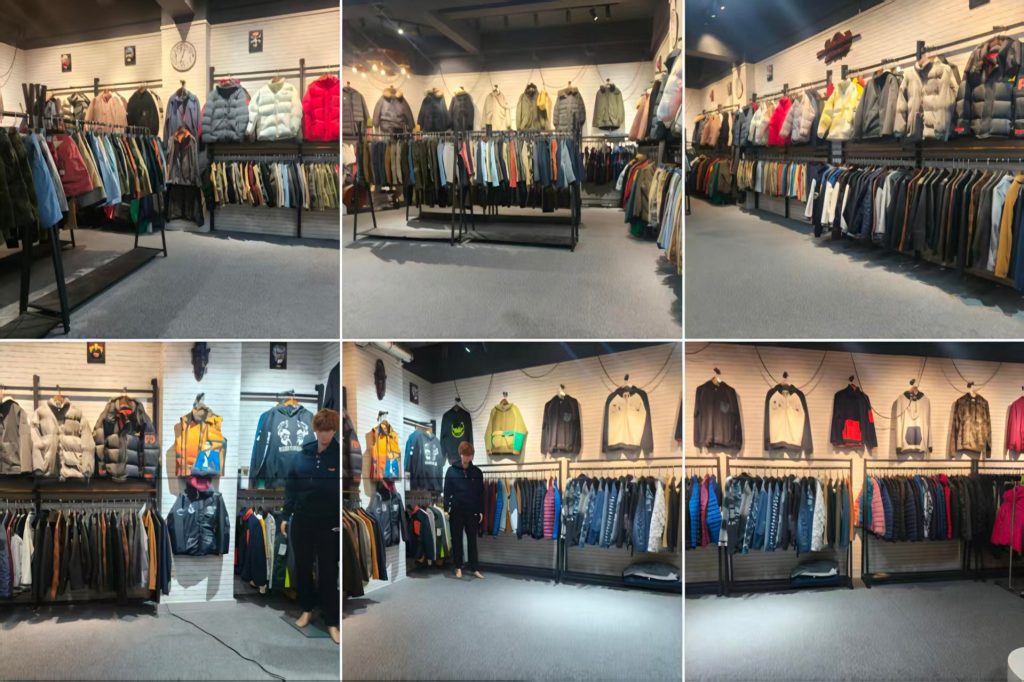
Finished samples in the GorgeousBen showroom — the standard a finishing line has to reproduce in bulk, carton after carton.
Frequently Asked Questions
What temperature should different fabrics be pressed at?
As common practice, cotton and linen take 180–200 °C with steam, wool needs roughly 150–160 °C through a pressing cloth, and polyester blends stay at 130–150 °C to avoid shine. Coated and down-filled garments should be steamed rather than hard-pressed. Always confirm the setting against the fabric composition and the sealed sample.
Does pressing change garment measurements?
Steam can relax or slightly tighten a panel, which is exactly why final measurements should be taken after pressing, not before. A change beyond the tolerance written in the spec sheet — commonly around ±1 cm on main measurements — should be treated as a defect and corrected, not accepted as steam behaviour.
Can pressing damage prints or coatings?
Yes. Heat and pressure can glaze prints, flatten embroidery and delaminate coatings. Such garments should be pressed from the reverse side, through a cloth, at reduced temperature, or finished with a steamer. The press method for printed panels belongs in the tech pack so it is agreed before bulk.
How do I judge a factory’s finishing before ordering?
Combine four checks: a video walkthrough of the press stations, post-press measurement photos against the spec, the finishing defect entries in recent inspection reports, and a sealed sample you hold yourself. A factory that produces these willingly is organised; one that improvises answers usually improvises in production too.
Check the Finishing Before You Order
A factory that can show its press stations, its settings log and its defect records will run your bulk the same way it showed you. GorgeousBen manufactures menswear — cargo pants, chinos, jackets and more — in Shishi, Fujian, and shares finishing standards with every quotation. Browse the current menswear range, or send your style and target quantity through the contact page to receive a quote with the finishing specification in writing.


