Four certifications cover most sustainability questions a garment buyer will face: BSCI for social compliance, OEKO-TEX Standard 100 for chemical safety, GRS for recycled content and GOTS for organic fibres. Ask for the ones your market requires, verify each certificate against the issuing body’s public database, and write compliance into the order terms instead of accepting a friendly promise.
The question is no longer optional for procurement teams. Germany’s Supply Chain Due Diligence Act has applied to companies with 1,000 or more employees since 2024, the EU’s Ecodesign for Sustainable Products Regulation entered into force in July 2024, and EU consumer rules adopted the same year ban generic green claims that cannot be proven. Retail groups now routinely reject suppliers who cannot document both working conditions and chemical safety. Yet certification talk is also where sourcing conversations get vague: some factories send a photo of a logo instead of a certificate, and others claim “eco-friendly” with nothing behind it. This guide, written from the factory side, explains what sustainable clothing manufacturer certifications actually mean, which four matter most, and how a buyer should verify them before the first order.
The Four Certifications That Cover Most Buyer Requirements
Instead of chasing every logo on a supplier’s website, procurement teams can cover nearly every requirement with four certifications. They map cleanly onto the four dimensions buyers ask about: people, chemicals, recycled content and organic content.
| Certification |
What it covers |
Issued and audited by |
Typical validity |
| BSCI (amfori) |
Social compliance: wages, working hours, safety, no child or forced labour |
amfori-approved auditing companies |
Audit result up to 2 years |
| OEKO-TEX Standard 100 |
Tests finished textiles for 1,000+ harmful substances |
OEKO-TEX member institutes |
Certificate up to 3 years |
| GRS (Global Recycled Standard) |
Recycled content plus full-chain traceability |
Textile Exchange-approved bodies |
Scope certificate 1 year, TCs per shipment |
| GOTS (Global Organic Textile Standard) |
Organic fibre from 70% (95% for the “organic” label) plus environmental and social criteria |
GOTS-approved certification bodies |
Scope certificate 1 year, TCs per shipment |
Social Compliance: How a BSCI Audit Works
BSCI, launched in 2003 by the trade association now called amfori, is the social-compliance audit most European buyers request first. The audit reviews thirteen performance areas — child labour, fair wages, working hours, occupational health and safety among them — and rates a factory from A to E. Contrary to a common misunderstanding, there is no permanent “BSCI certificate”: the factory receives an audit report with a rating, and the result stays valid for a maximum of two years. Audit costs are normally carried by the amfori member who requests the audit, which means a supplier should hand you the full report, not sell you a logo. Buyers should also expect semi-announced audits — the factory knows the audit window but not the exact day — and the walkthrough covers the whole site, from the cutting tables below to packing and storage.
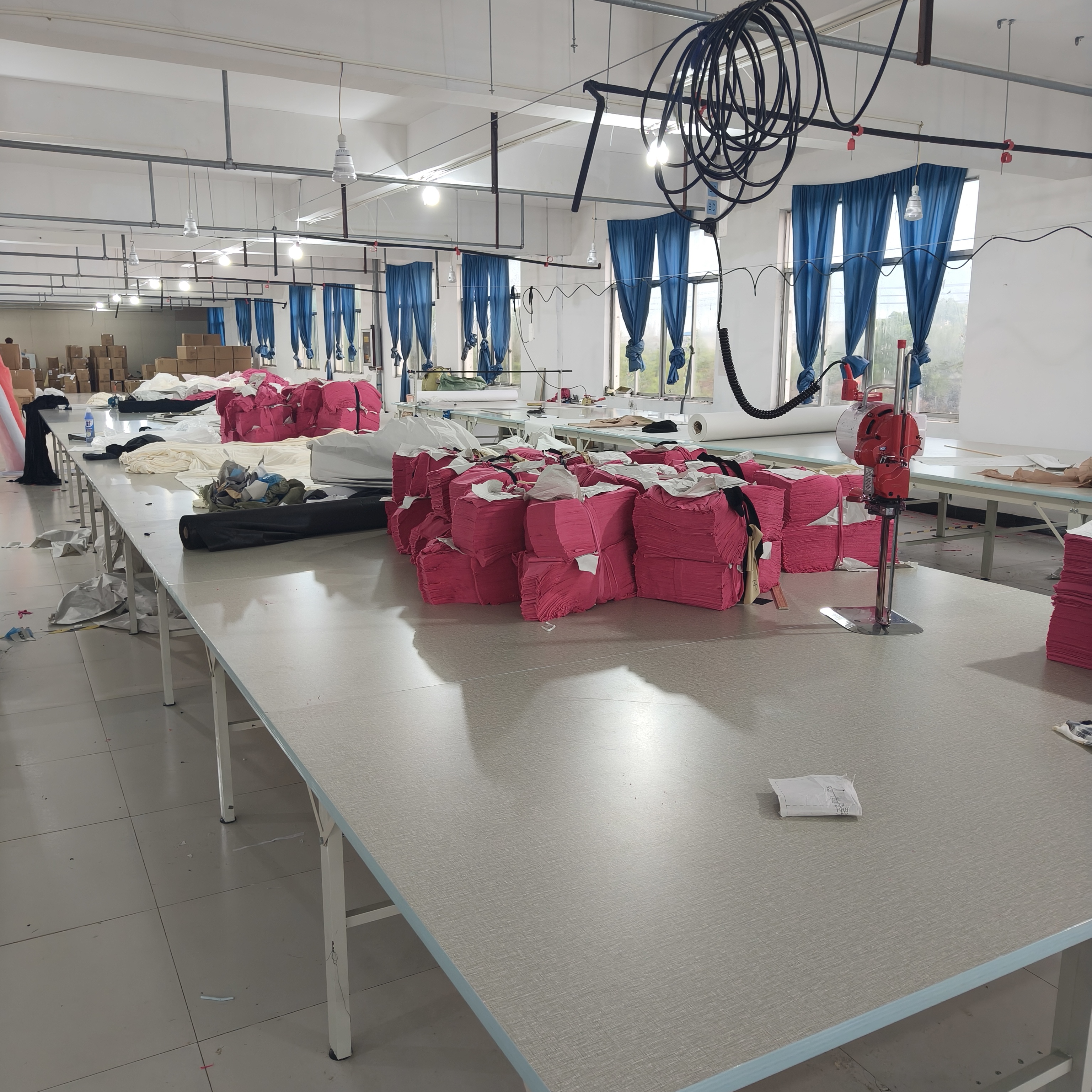
BSCI audits cover the entire production site, from cutting tables to sewing lines and packing floors.
Chemical Safety: What OEKO-TEX Standard 100 Actually Tests
Founded in 1992, OEKO-TEX Standard 100 is a product-level test, and that distinction matters. The institute tests the finished textile — every component, from thread and buttons to prints and coatings — against more than 1,000 regulated substances and limit values, including formaldehyde, heavy metals, phthalates and azo dyes. Certification is tiered by skin contact: Class I covers baby articles with the strictest limits, Class II next-to-skin garments, Class III accessories without skin contact and Class IV home textiles. A Standard 100 certificate is typically valid for three years, with surveillance checks on certified goods in between.
Two details protect buyers from misuse. First, the certificate belongs to the samples tested, not to every fabric a factory will ever buy, so ask which article numbers and fabric lots the certificate names. Second, the stricter Annex 6 add-on aligns tested limits with a brand-level restricted substances list — worth requesting if your customer is a large retailer.
Recycled and Organic Claims: GRS vs GOTS
GRS, owned by Textile Exchange, verifies recycled content and traceability from recycler to finished garment, adding social and chemical requirements along the way. GOTS certifies organic natural fibres: a product may carry the “organic” label only when it contains at least 95% certified organic fibre, while the “made with organic” label starts at 70%. Both systems issue a scope certificate to each certified site for a one-year cycle and a transaction certificate for every shipped lot — the mechanism that stops recycled or organic claims from being copied between unrelated factories.
For buyers the practical choice is simple: choose GRS when the story is recycled polyester or recycled cotton blends, and GOTS when the story is organic cotton. Either way, request the transaction certificate that matches your purchase order. Since EU consumer-protection rules adopted in 2024, unproven generic green claims are banned in EU markets, so a supplier who cannot produce the paperwork is exposing your brand, not just its own.
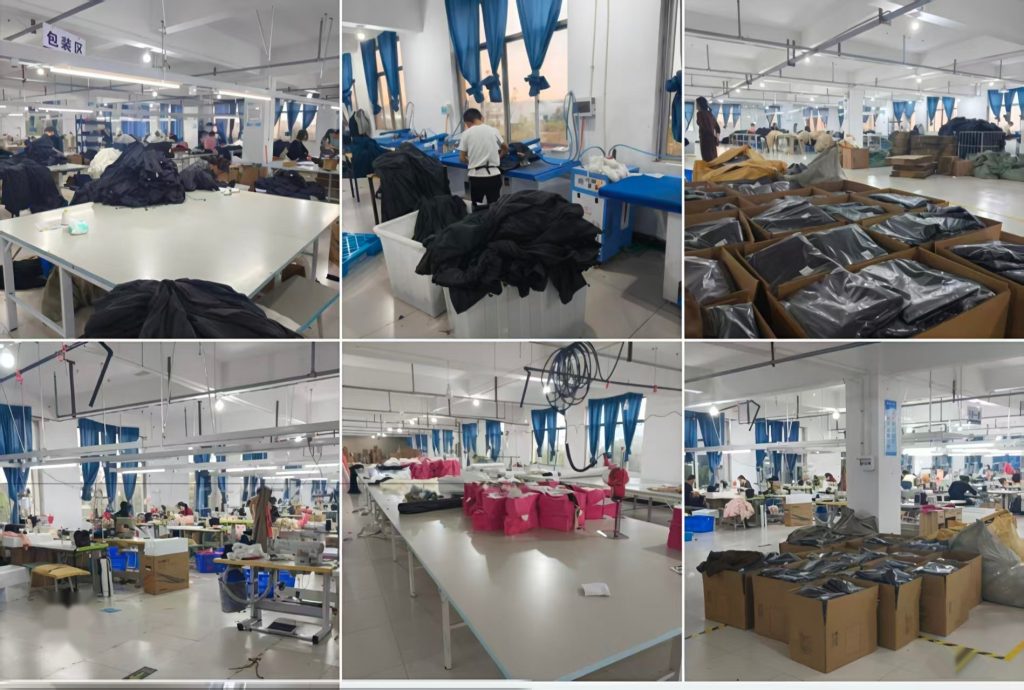
Certified shipments leave with their paperwork: transaction certificates, test reports and labels travel with the goods.
How to Verify a Certificate Before You Pay: A 5-Step Checklist
- Ask for the certificate number and issuing body — a logo image proves nothing. Every legitimate document carries a registration number and the name of the auditing or certifying company.
- Check validity dates. BSCI audit results last up to two years, OEKO-TEX certificates up to three, and GRS or GOTS scope certificates one year. Expired paperwork is a renegotiation point, not a detail.
- Confirm the scope matches your product. A GOTS scope certificate for woven shirts does not cover knitted hoodies; a Standard 100 certificate for fabric does not automatically cover trims.
- Look the certificate up in the public database. GOTS scope certificates are verifiable in the GOTS public database, GRS in Textile Exchange’s, and OEKO-TEX certificate numbers on the institute’s label check page.
- Match the paperwork to the shipment. For GOTS and GRS, request the transaction certificate for each delivery; for BSCI, read the audit report’s rating and findings, and agree who commissions the next audit cycle.
Making Compliance Part of the Order
Certifications are not decoration; they are order terms. State in the purchase order which standards apply, which documents ship with the goods, and what happens if a certificate lapses mid-programme. Factories that maintain the four certifications above answer these questions in a day; factories that cannot answer them at all have already told you something.
GorgeousBen Fashion is a menswear manufacturer based in Quanzhou, Fujian, with more than 20 years of OEM and ODM experience producing trousers, jackets, shirts and casual wear for buyers in 47 countries. The factory maintains BSCI social-compliance audits and supplies OEKO-TEX-backed materials, and its quality system extends beyond paperwork — the same discipline described in the factory’s guide to 4-point system fabric inspection. Buyers are welcome to visit the showroom and production floor below before committing to a programme.
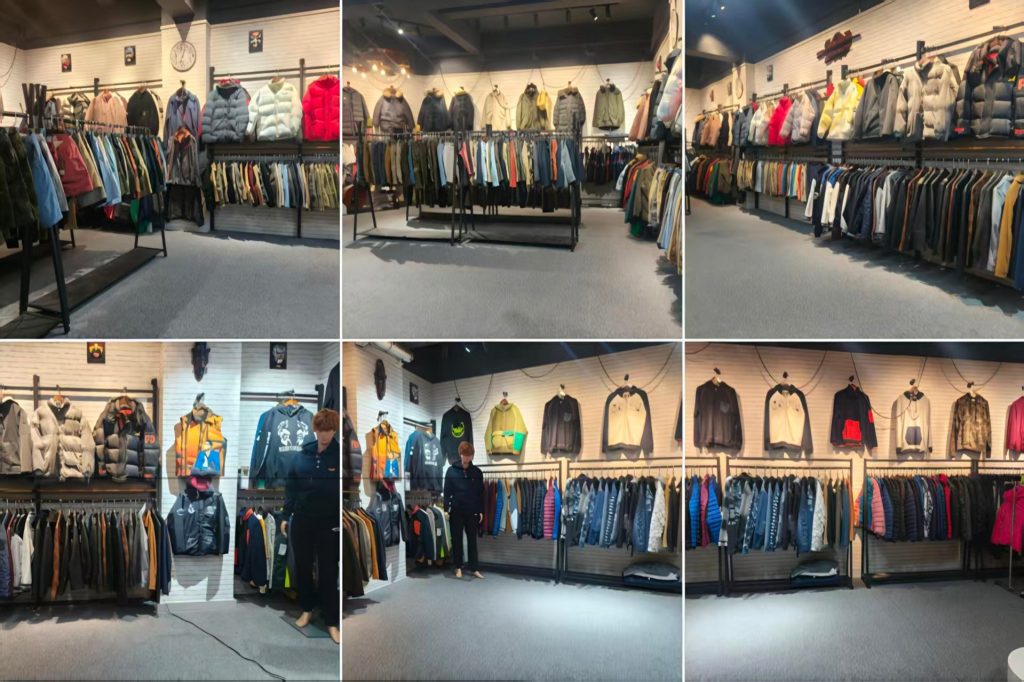
The sample wall at the GorgeousBen showroom: review fabrics and finished programmes in person before you order.
Planning a compliant programme for your own label? Browse finished styles in the GorgeousBen product catalogue, or contact the team for certificates, audit reports and wholesale quotations.
Frequently Asked Questions
What certifications should I ask a clothing manufacturer for?
Start with four: BSCI for social compliance, OEKO-TEX Standard 100 for chemical safety, GRS for recycled content and GOTS for organic fibres. Together they cover the working-conditions, chemical, recycled and organic requirements that European and North American buyers most commonly impose. Ask for certificate numbers with validity dates, and verify each one in the issuing body’s public database before placing an order.
Is BSCI certification mandatory for garment imports to Europe?
No law makes BSCI mandatory, but Germany’s Supply Chain Due Diligence Act and comparable EU rules have made documented social compliance a practical requirement for most large European retailers. Buyers within amfori commission BSCI audits of their suppliers, and audit costs are normally borne by the requesting member. In day-to-day sourcing, a factory without a recent BSCI audit report is effectively excluded from many European RFQs.
What is the difference between OEKO-TEX Standard 100 and GOTS?
OEKO-TEX Standard 100 tests a finished textile for more than 1,000 harmful substances and says nothing about how the fibre was grown; it is a chemical-safety certificate. GOTS tracks organic fibre content — from 70% for the “made with organic” label and 95% for the “organic” label — plus environmental and social criteria across the whole chain. Many buyers therefore ask for both: GOTS for the fibre story, OEKO-TEX for the chemical-safety proof.
How can I verify a supplier’s GOTS or GRS certificate is genuine?
Ask for the scope certificate number and the name of the certifying body, then look the number up in the GOTS public database or Textile Exchange’s verification page. A genuine certificate shows the certified company, its address, the product categories covered and the expiry date. For a specific shipment, request the transaction certificate and check that quantities and product descriptions match your purchase order.


