Fabric weight decides what a garment costs, how it hangs and what a factory can accept as a minimum — before a single stitch is sewn. Measured in GSM (grams per square meter), it drives fibre consumption, price per piece, drape and the mill’s minimum order quantity. Heavier fabric costs more and drapes stiffer; unusual weights raise MOQs sharply.
The fabric GSM question causes more quoting disputes than any other line in a tech pack, because buyers who ask simply for “good quality cotton” receive quotes that vary 20–30% for the same design — each supplier quietly assuming a different weight. For orientation: a standard cotton T-shirt runs 140–180 GSM, a fleece hoodie 320–400 GSM, and commercial knits carry a ±5% weight tolerance. Moving a polo from 180 to 220 GSM adds roughly 20% to the fabric share of its cost. This guide explains how fabric weight moves cost, drape and MOQ, with figures from the factory floor at GorgeousBen, a menswear manufacturer with 20+ years of OEM and ODM production experience.
What Does GSM Mean in Fabric?
GSM stands for grams per square meter: the weight in grams of one square meter of fabric, measured on a precise scale. A 160 GSM single jersey weighs exactly that — one square metre of the cloth, 160 grams. The single number captures yarn thickness, knit or weave density and finishing at once, which is why it is the fastest way to compare two fabrics that look similar but behave very differently.
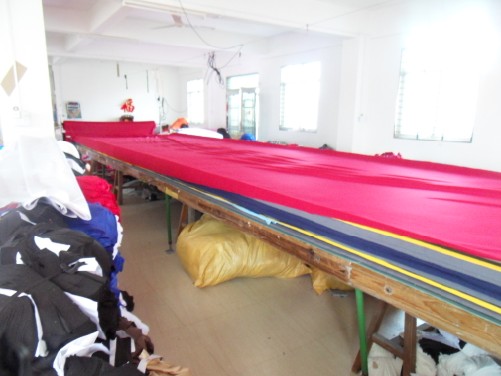
Weight is verified on the lay: every bulk cut starts from fabric measured against the agreed GSM and tolerance.
Two clarifications prevent most disputes. First, GSM measures the fabric, not the garment — a size XL in the same cloth has the same GSM as a size S. Second, no mill hits the target exactly: commercial production carries a tolerance, typically ±5%, so a “200 GSM” sweatshirt fleece may legitimately measure 190–210. Contracts should state the tolerance as well as the target, and the weight should be re-checked on the counter-sample before bulk cutting is authorised.
How Fabric Weight Affects Garment Cost
Fabric is bought by the kilogram, so weight moves cost almost mechanically: a heavier knit consumes more yarn per meter, and yarn is the largest single cost in most garments. Raising a polo from 180 to 220 GSM adds roughly 20% to the fabric share of the quote before anything else changes. For a basic cotton T-shirt, fabric typically accounts for 40–50% of the FOB price, so a GSM change is never a rounding error.
Weight also interacts with everything downstream of knitting: heavy fleece needs brushing and longer finishing, dense wovens run slower on the spreading table, and shrinkage allowances are recalculated per weight. When comparing two suppliers on the same style, normalise the quotes to the same GSM first — a “cheaper” quote is sometimes simply a lighter fabric.
How GSM Affects Drape, Fit and Season
Drape is where the specification becomes visible. Light fabrics from 110–140 GSM fall close to the body and read as summer shirts; midweights around 160–220 GSM hold a clean silhouette on polos and T-shirts; fleece from 280 GSM up stands away from the body and gives outerwear its structure. The same pattern cut in two weights produces two different garments, which is why fit sessions should always use production-weight fabric rather than whatever sample cloth is on hand.
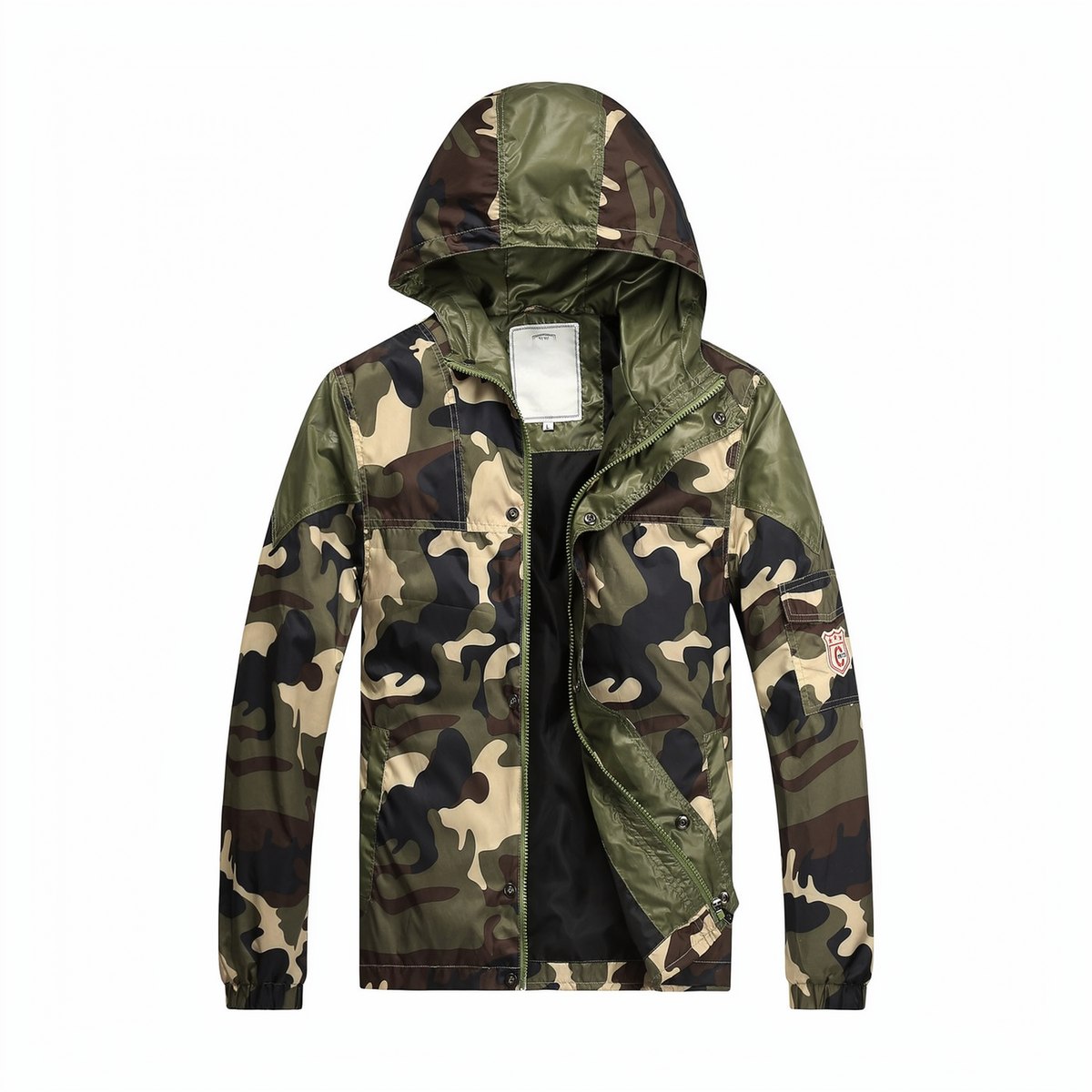
Structure you can see: at 300+ GSM, a jacket shell holds its shape away from the body.
Expectations also differ by market: Northern European autumn ranges typically run heavier, while Gulf and Southeast Asian programmes stay lighter year-round. Naming the target GSM in the tech pack avoids the most common sample complaint — “the fit is right but the hand feel is not” — which is almost always a weight mismatch, not a pattern error.
Typical GSM Ranges by Garment Type
The table below is the reference range the GorgeousBen merchandising team uses when a buyer has no specification yet:
| Garment |
Common GSM range |
Factory note |
| T-shirt (single jersey) |
140–180 |
160–180 reads premium and opaque |
| Polo (piqué) |
180–220 |
Above 220 the collar turns stiff |
| Shirt (woven poplin) |
110–140 |
Near 110 suits hot-climate programmes |
| Sweatshirt (brushed fleece) |
280–320 |
Brushing adds hand feel and weight |
| Hoodie (heavy fleece) |
320–400 |
330–350 is the mid-market standard |
| Chinos / trousers (twill) |
200–280 |
240 covers all-season ranges |
| Jackets (canvas / shell) |
280–450 |
Depends on lining and season |
Treat the table as a starting point for the conversation with your factory, not a standard. Regional preference, target retail price and season all shift the right answer by 20–40 GSM in either direction.
Why Unusual GSM Values Increase MOQ
Minimum order quantities are set upstream, at the knitting and dyeing mill, and mill economics are built on standard weights. Weights the industry runs constantly — 160, 180, 200, 240, 320 GSM in common constructions — are available as stock or short-run greige, so a sewing factory can buy fabric for a few hundred garments. Ask for 205 GSM or 355 GSM instead, and the mill must re-set machines and dye a dedicated lot, typically 300–500 kg per colour. Depending on consumption, that lot equals roughly 1,500–3,000 finished pieces — several times a normal garment-based MOQ.
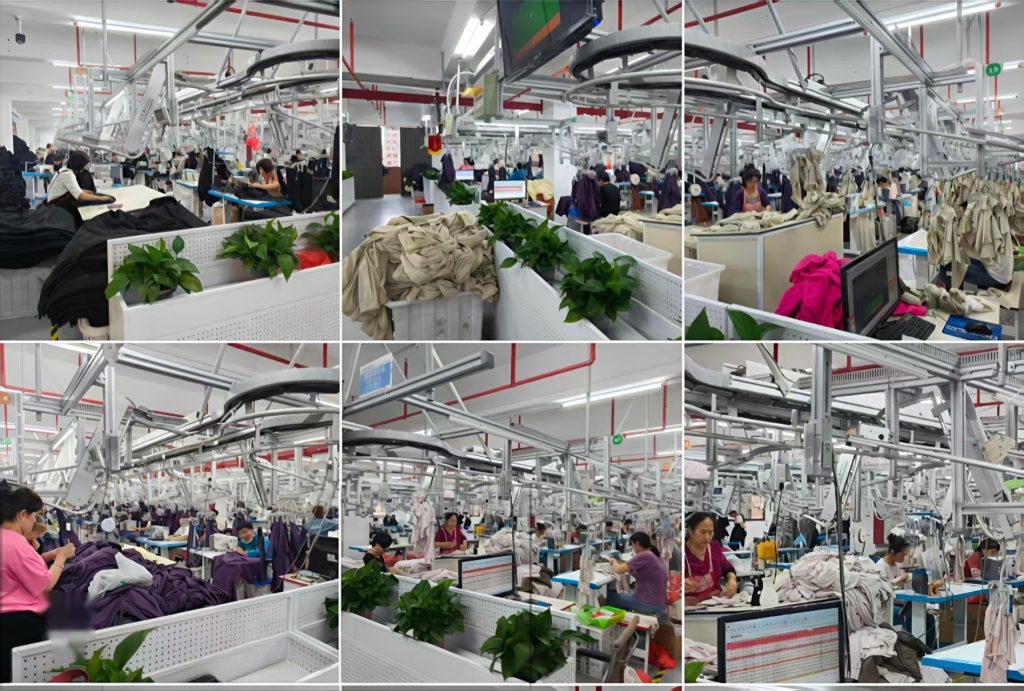
Standard weights keep the line fed: stock fabric means MOQs set by garments, not by fabric lots.
The practical rule for smaller orders: keep the construction standard and adjust within the mill’s tolerance rather than inventing a weight. If a style genuinely needs a non-standard GSM — a signature heavyweight tee, for instance — expect the MOQ to be quoted from the fabric lot rather than from the garment, and plan the colour count accordingly, because every colour multiplies the minimum.
How to Specify Fabric Weight in Your Tech Pack
Three habits keep GSM working for the buyer rather than against the order:
- Name the target GSM and the tolerance explicitly — “fleece 330 GSM ±5%”, not “thick winter quality”.
- Ask the factory to state the measured weight of the counter-sample and keep the mill’s test report with the approval records.
- Re-check weight on bulk fabric before cutting; a 5% drift on a heavy fleece is noticeable both in hand feel and in cost.
A precise GSM line also shortens quoting time: factories can price the style from the specification instead of guessing, and the quotes that come back are genuinely comparable across suppliers.
GorgeousBen Fashion is a menswear manufacturer based in Quanzhou, Fujian, with more than 20 years of OEM and ODM experience producing jackets, shirts, trousers and casual wear for wholesale buyers in over 40 countries. The team quotes every style against an agreed GSM and tolerance, and supplies measured fabric weights with counter-samples so approvals rest on data rather than hand feel alone.
Planning a range and unsure which weights fit your market? Browse finished styles in the GorgeousBen product catalogue, read the companion guide on fabric sourcing cost breakdown, or contact the team with your target GSM for a quotation.
Frequently Asked Questions
What does GSM mean in fabric?
GSM stands for grams per square meter and expresses the weight of one square meter of fabric. Higher GSM means a heavier, typically denser and more opaque cloth. It is measured by cutting a sample, weighing it on a precise scale and converting the result to a full square meter. Commercial fabrics carry a tolerance of about ±5% around the stated target.
What GSM is best for T-shirts?
Most cotton T-shirts sit between 140 and 180 GSM. Lighter 140–160 GSM suits hot climates and sharp price points, while 180 GSM reads as a premium, more opaque shirt. Above 200 GSM a T-shirt becomes a heavyweight style with a stiffer hand and a higher MOQ, because the construction moves outside the most common mill outputs.
What GSM should a hoodie be?
A standard fleece hoodie runs 320–400 GSM, with 330–350 GSM the most common specification for mid-market brands. Below 300 GSM the garment reads as a sweatshirt rather than a hoodie; above 400 GSM costs rise sharply and the fabric falls outside stock ranges, which raises both price and minimum order quantity.
Does higher GSM always mean better quality?
No. Higher GSM means more fibre and a denser hand, which suits outerwear and premium T-shirts, but quality depends just as much on yarn grade, knitting density, finishing and stitching. A poorly knitted 400 GSM fleece will underperform a well-made 320 GSM one. Weight should be specified to match the garment’s purpose, not maximised for its own sake.
Why does a custom fabric weight increase the MOQ?
Mills produce standard weights continuously and hold them as stock or short-run greige, so small garment orders can be served from existing lots. A non-standard GSM requires dedicated machine settings and a dedicated dye lot, often 300–500 kg per colour. That lot sets the minimum, which usually equals several thousand finished garments rather than a few hundred.


