Most capsule wardrobe mistakes are about quantity and fabric, not taste. If your wardrobe is full but you still have nothing to wear, the cause is usually 30 to 40 items overlapping on two or three roles. Eleven pieces that each do two jobs will out-dress forty that each do one.
This guide walks through the six mistakes men repeat most often, what each one costs in real use, and the specific fix. It is written for men who want fewer, better clothes rather than another round of shopping.
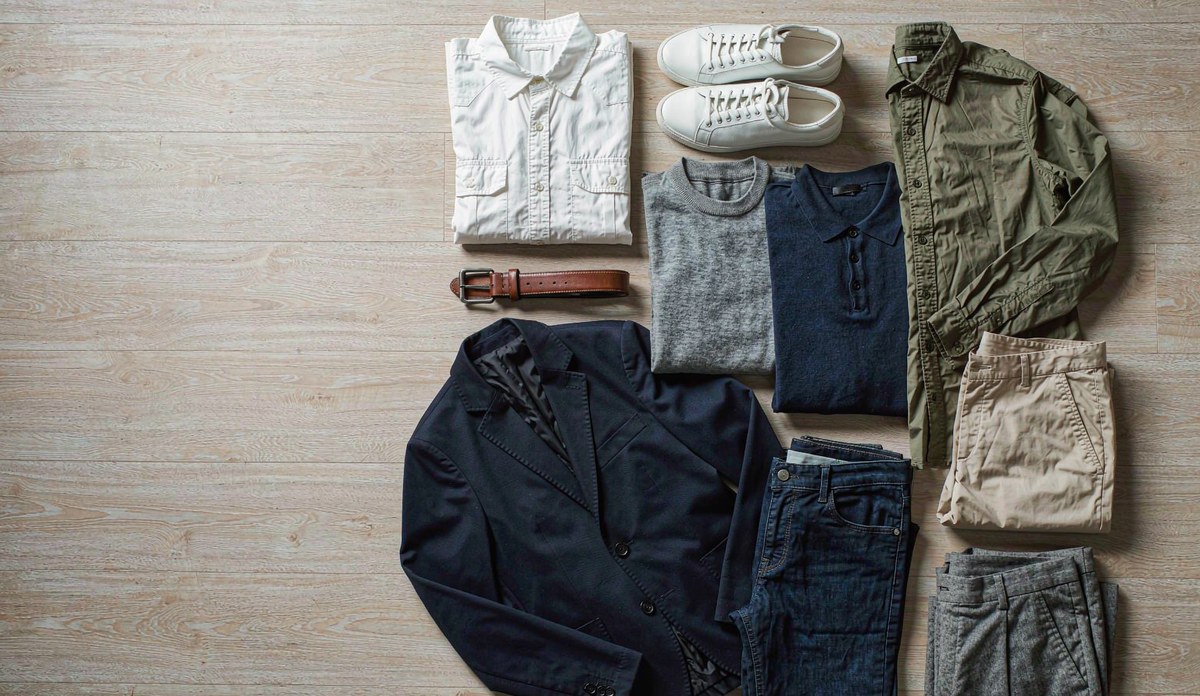
An 11-piece capsule that covers five roles: tailored, smart casual, weekend, cold layer and shoe. Each piece pairs with at least three others. Photo: GorgeousBen.
Mistake 1: Buying Colors You Like Instead of Colors That Combine
A wardrobe is a system, and color is the interface. If you buy a rust overshirt, an olive jacket and a burgundy knit because each one looked good alone, you now own three pieces that fight each other and nothing to put under them.
The fix is boring and it works: choose one dark neutral (navy or charcoal), one light neutral (white, ecru or stone), one mid neutral (grey, taupe or beige) and one accent. Then require every new purchase to pair with at least three items you already own. Trousers in navy, grey and beige alone give you nine shirt combinations before you buy a single accent piece.
Mistake 2: Buying Too Many Versions of the Same Item
Seven casual shirts and one pair of presentable trousers is not a wardrobe, it is a habit. Men tend to buy repeatedly in the category they feel confident about, and avoid the category that intimidates them. The result is a closet that can dress you for Saturday and nothing else.
Before you buy anything, count your pieces by role: tops, bottoms, outerwear, shoes. A workable 11-piece capsule for a temperate climate looks roughly like this:
| Role |
Pieces |
Why this number |
| Tops |
4 (2 shirts, 1 knit, 1 polo) |
Covers office, weekend and layering |
| Bottoms |
3 (chinos, dark jeans, wool trousers) |
Three leg silhouettes, three formality levels |
| Outerwear |
2 (blazer, overshirt or light jacket) |
One structured, one soft |
| Shoes |
2 (leather, white sneaker) |
Two is genuinely enough for most weeks |
Eleven pieces, not forty. Everything else is a duplicate, a repair or a nostalgic item you have not worn in a year.
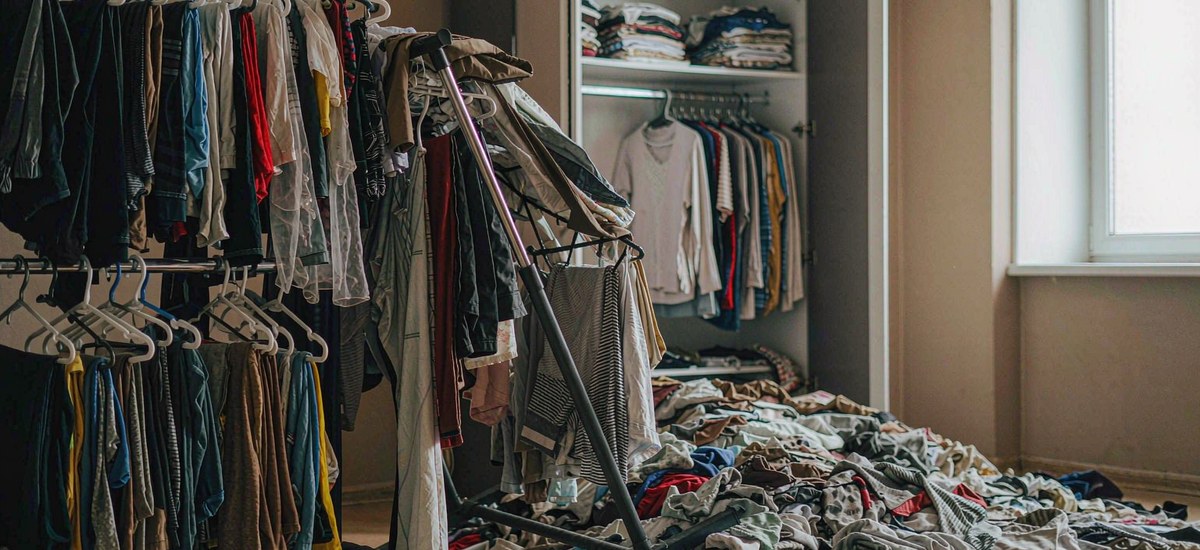
The failure state: a rack packed with near-identical pieces and no neutral base to combine them. Photo: GorgeousBen.
Mistake 3: Ignoring Fabric Weight and Structure
Two shirts in the same color can behave like different garments depending on the fabric. A lightweight, loosely woven shirt at roughly 110 to 130 gsm hangs limp, shows every fold and has to be re-ironed before each wear. A mid-weight oxford or twill at 140 to 170 gsm holds a collar shape, survives a day at a desk and looks better after ten washes, not worse.
The same logic applies to trousers. Cheap chinos are often soft and comfortable in the fitting room precisely because the weave is loose and the fabric is light — which is also why the knees go baggy within weeks. A slightly firmer twill keeps its line through a full day.
- Shirts: 140 to 170 gsm for year-round wear. Below 120 gsm for hot climates only.
- Trousers: firm twill rather than soft brushed cotton if you want shape retention.
- Knits: look at stitch density, not just touch. A dense knit pills less than a loose, fluffy one.
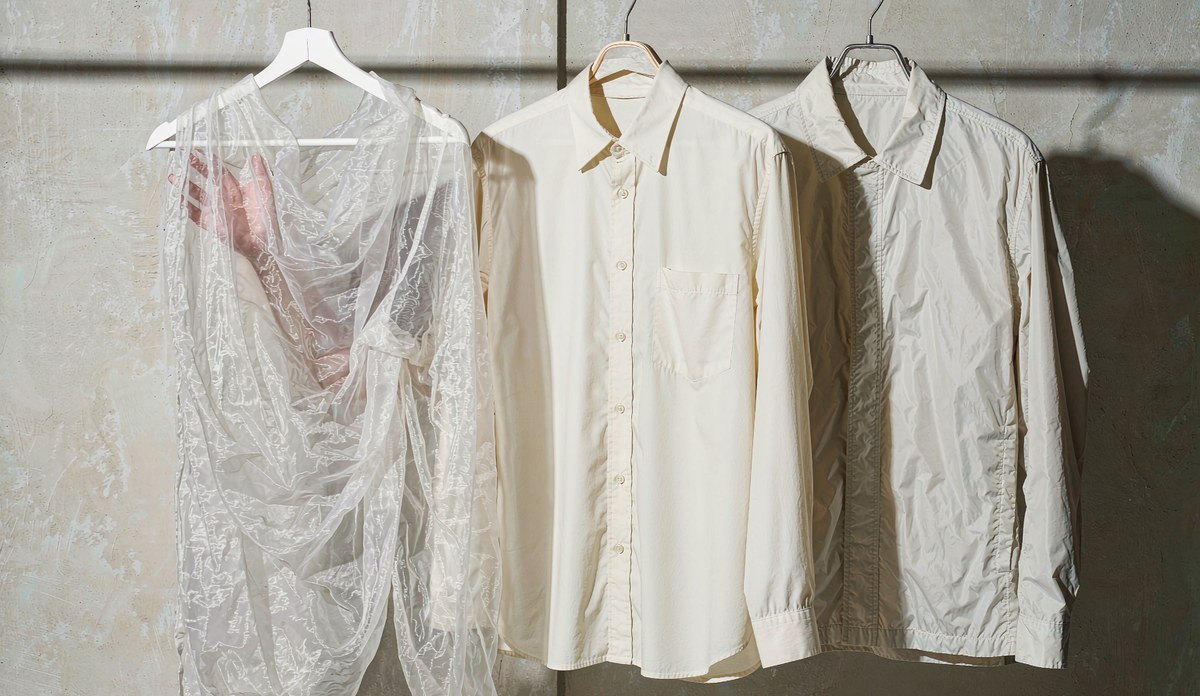
Same color, three different cloths. Density decides drape, opacity and how long the garment keeps its shape. Photo: GorgeousBen.
Mistake 4: Buying for the Body You Plan to Have
Clothes bought to fit a future version of you never get worn. If a shirt is tight across the shoulders today, it will stay in the cupboard, because there is no casual occasion that justifies discomfort. Buy for the body you have this season, and adjust the fit rather than the size: a tailor can take in a waist or shorten a sleeve for less than the cost of one replacement shirt.
Two measurements are worth keeping on your phone: shoulder width (seam to seam across the back) and inseam. Every item you consider should be compared against those two numbers, not against a size label. A size label is marketing; a measurement is fact. For more on getting bottoms right, the guide to choosing chinos by fit, fabric and color covers rise and thigh room in detail.
Mistake 5: Treating Care as an Afterthought
A capsule only works if the pieces stay presentable. Most wardrobe failures are laundry failures, not style failures: shirts that lose shape, knits that sag on a hanger, dark trousers that fade along the seams.
- Wash shirts inside out, cold, and skip the dryer. Heat is what shrinks collars and sets wrinkles.
- Fold knits, never hang them — a hanger stretches the shoulder into a permanent peak.
- Wash dark trousers less often than you think; airing overnight removes most of what a wash would.
- Steam, do not press, natural fibers. Pressure flattens the weave and makes creases sharper.
If you have already lost a few shirts to the dryer, the reasons are explained in why t-shirts lose shape after a few washes.
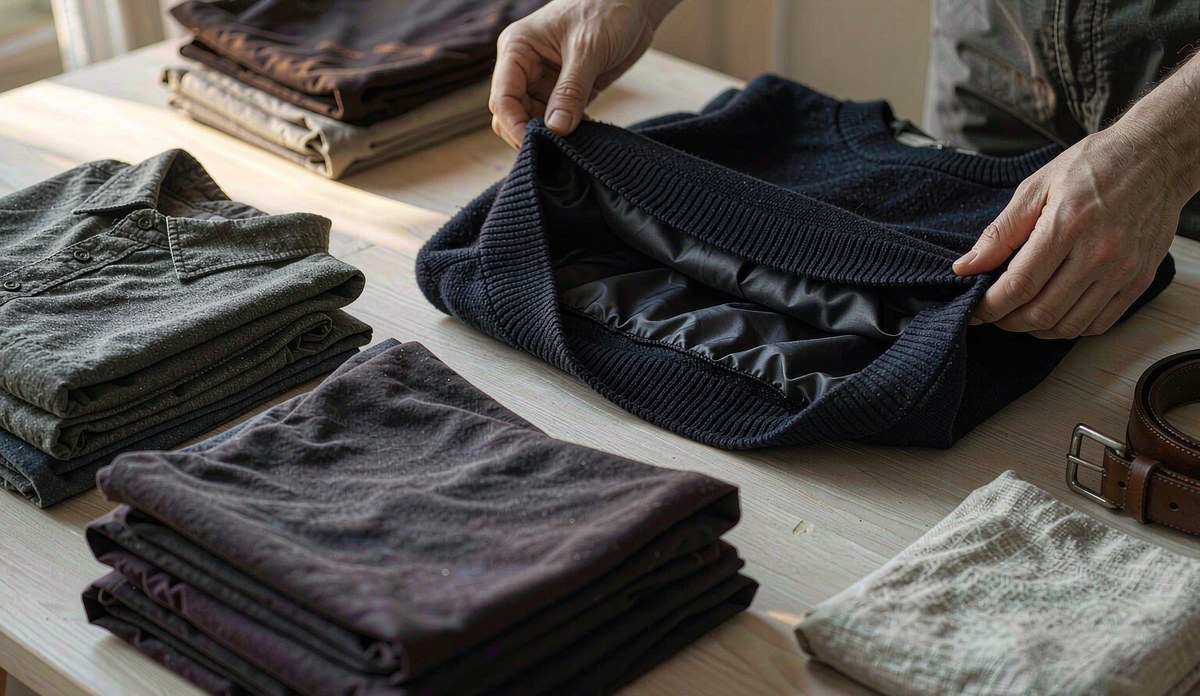
Fold knits, hang shirts, store by role. Ten minutes of discipline prevents most shape loss. Photo: GorgeousBen.
Mistake 6: Restocking Instead of Replacing
When something wears out, the instinct is to buy something similar plus two extras on sale. That is how a capsule becomes a clutter problem again. Replace the role, not the item: if the beige chinos are done, the question is whether the beige chino role still exists in your week, not whether those exact chinos are on offer.
One in, one out. If a new piece does not displace an existing one, it is an addition, and additions are what broke the system in the first place.
Frequently Asked Questions
How many pieces should a men's capsule wardrobe have?
Eleven to fourteen pieces is enough for most men in a temperate climate, covering tops, bottoms, outerwear and two pairs of shoes. The number matters less than the ratio: roughly four tops for every three bottoms, so combinations multiply rather than repeat.
How long should the pieces last?
A mid-weight shirt worn weekly should hold its collar and color for two to three years with cold washing and no dryer. Wool trousers in firm twill commonly last three to five years. When seams start failing before the fabric does, that is a construction problem, not wear.
Is a capsule wardrobe more expensive?
Up front, yes — fewer but better pieces cost more per item. Over three years it usually costs less, because you stop replacing fast-fashion duplicates that fail at the collar or the knee. The saving shows up in the second and third year, not the first.
Should I buy the whole capsule at once?
No. Build it in order: bottoms first, then a shirt you can wear with all of them, then outerwear, then shoes. Buying everything in one order usually means buying for an imagined life rather than the one you actually live.
Where to Start This Week
Take everything out of the wardrobe and sort by role, not by color. Count how many items you own in each of the four roles. The overfull category is your habit, and the empty one is your gap. Fix the gap first, then stop buying in the habit.
GorgeousBen Fashion is a menswear manufacturer with more than 20 years of OEM/ODM experience, producing shirts, trousers, knitwear and outerwear for brands and retailers in 47 countries. The same construction standards we hold for bulk orders are what keep a small capsule in rotation for years. Browse the GorgeousBen menswear collection to see the pieces discussed here.


