The cheapest quote is often decided before production even starts — by three letters on the invoice. A US$12,000 order shipped FOB from Xiamen, DDP to Los Angeles, can differ by US$1,800–2,600 in freight, duties and fees depending on who arranges each leg. Pick the wrong trade term and you either overpay the factory or inherit a customs problem you did not price for.
This guide explains EXW, FOB and DDP in plain language, shows what each actually costs on a typical apparel order, and gives you a decision table plus three questions to settle before you sign a proforma invoice.
What EXW, FOB and DDP Actually Mean
All three are Incoterms — standardized trade terms that split responsibilities between buyer and seller. In garment manufacturing:
- EXW (Ex Works): goods are packed and ready at the factory gate. You arrange pickup, export clearance, freight, insurance and import clearance. The factory's job ends at its loading dock.
- FOB (Free On Board): the factory delivers goods cleared for export onto the vessel at the named port (commonly Xiamen, Ningbo or Shanghai). You handle ocean freight, insurance and import side. This is the default in most apparel quotes.
- DDP (Delivered Duty Paid): the seller delivers goods to your door, duties paid. The factory (or its forwarder) arranges everything, including import customs and duties in your country.
One rule of thumb: the further the term pushes responsibility toward your door, the more margin is baked into the price — because whoever arranges the freight also marks it up.
What Each Term Really Costs on an Apparel Order
Here is a realistic comparison for one 20-foot container of men's pants (roughly 8,000 units), factory in Fujian, buyer in the US. Indicative figures — get live quotes for your own lanes.
| Cost item | EXW | FOB | DDP |
|---|
| Goods price (ex factory) | $12,000 | $12,000 | $12,000 |
| Trucking + export clearance | $350–500 (you) | Included | Included |
| Ocean freight + insurance | $1,600–2,200 (you) | $1,600–2,200 (you) | $1,900–2,500 (seller, marked up) |
| Import clearance + duty | You | You | Seller (duty often rounded up) |
| Final delivery | You | You | Included |
Notice the pattern: FOB and EXW expose the same freight market to you directly, so the difference between them is small — just the local trucking and export paperwork, around $350–500. DDP looks convenient, but sellers commonly pad freight and duty estimates by 10–20% to cover their own risk, because they cannot know your country's rules as well as you can.
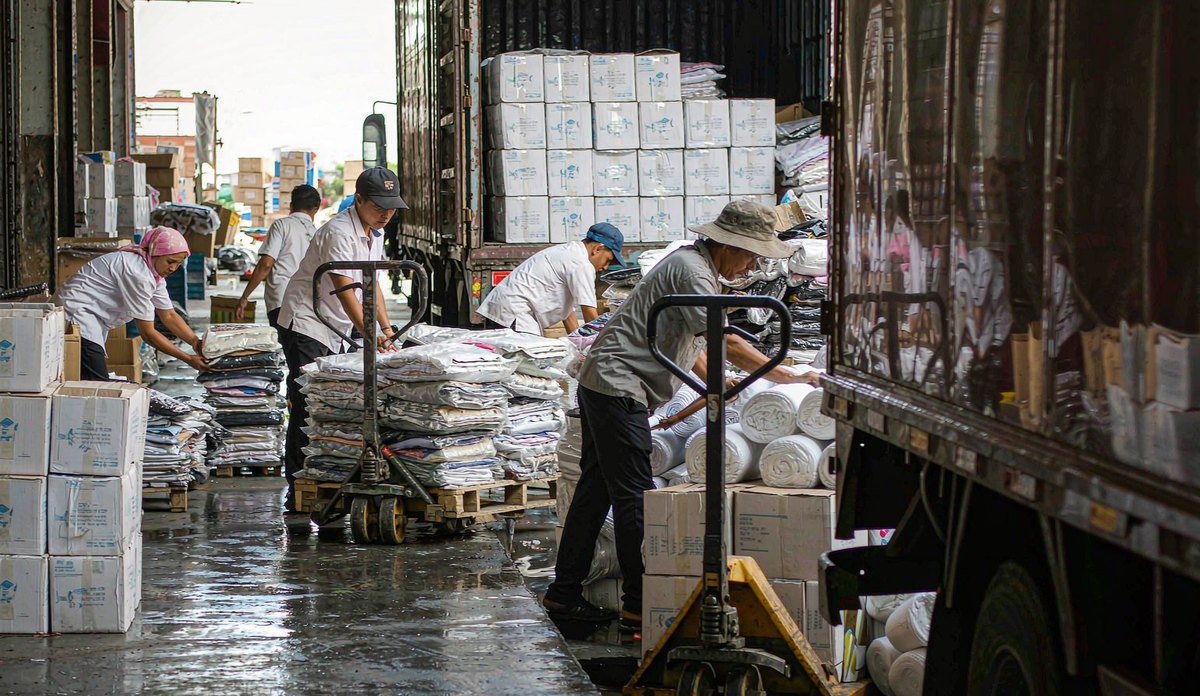
Packed cartons at a garment factory loading dock — under FOB, the factory's responsibility ends once these are on the vessel at the named port.
When EXW Makes Sense (and When It Backfires)
EXW suits buyers who already have a freight forwarder in China and ship regularly — consolidators, trading houses, or brands combining several suppliers into one container. You keep full control and pay real freight costs, not marked-up ones.
It backfires for first-time importers: your forwarder must handle export customs declaration in China, and mistakes here — wrong HS codes, missing export licenses — delay the whole container. Also beware quotes where the factory "helpfully" offers EXW but quietly quotes a lower goods price than it would under FOB; sometimes the difference just moves the cost from their side of the ledger to yours.
Why FOB Is the Default for Most Garment Buyers
FOB splits responsibility at a natural point: the factory does what it is good at (trucking, export clearance in Chinese), and you control the international leg where your forwarder can shop rates. Two practical tips:
- Name the port precisely. "FOB China" is not a term; "FOB Xiamen" is. Vague port names create disputes about who pays drayage.
- Confirm who books the vessel. If the factory insists on booking freight "for your convenience," you lose rate visibility — compare their number with your forwarder's quote before agreeing.
FOB also pairs cleanly with inspection: third-party QC happens at the factory before loading, and once goods cross the ship's rail, risk transfers to you. If you are still deciding between production models, see our breakdown of CMT vs full-package vs FOB production.
DDP: Convenient, But Read the Fine Print
DDP appeals to buyers who want one landed number and no customs paperwork. It works reasonably when the seller ships to your country frequently and has a trusted local broker. The traps:
- Duty estimates get padded. Apparel duty rates vary widely by fiber and construction; sellers round up to protect themselves.
- Some sellers "do DDP" via undervalued invoices to cut the duty bill. That is customs fraud with your name as importer of record — walk away.
- Disputes are murkier. If goods are damaged in transit, claims against a seller three time zones away are slow.
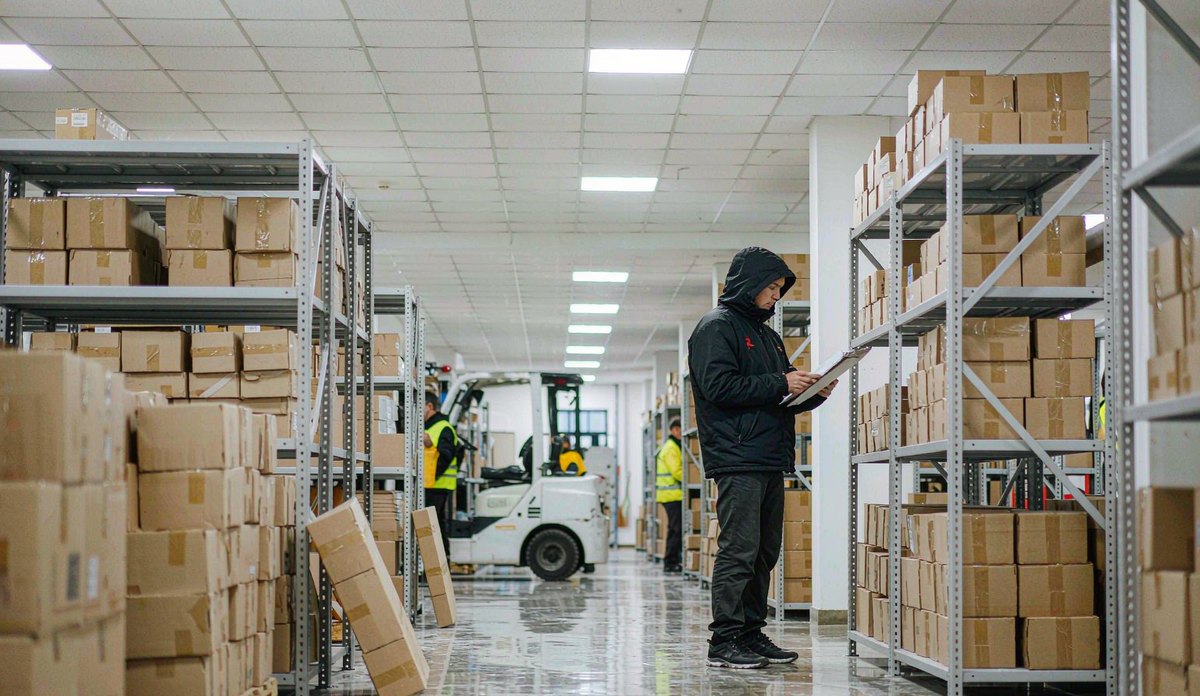
Goods checked on arrival. Under DDP the seller owns problems until your door; under FOB, transit risk is yours the moment the container is loaded.
Three Questions Before You Sign a Proforma Invoice
Most trade-term disputes come down to details nobody wrote down. Ask:
- "Which port, exactly, and who books the vessel?" Locks the FOB point and reveals whether freight is being marked up.
- "What is included in the goods price — export packing, customs declaration, documentation?" Compare with what a quote leaves out; our guide on hidden costs in garment manufacturing lists the usual suspects.
- "Who is the importer of record under DDP, and on what declared value?" If the answer is vague, switch to FOB with your own broker.
Quick Decision Table
| Your situation | Best term | Why |
|---|
| First order, no China forwarder | FOB | Factory handles export; your forwarder handles the rest |
| Regular shipper with a China forwarder | EXW or FOB | Full cost visibility, real freight rates |
| Consolidating several suppliers | EXW | One forwarder picks up from all factories |
| Want one landed price, low volume | DDP (carefully) | Convenient, but audit the duty estimate |
Trade terms are negotiable at quotation stage — and a factory that answers these questions clearly is usually a factory that runs orders clearly. GorgeousBen Fashion is a menswear manufacturer with 20+ years of OEM/ODM experience, quoting FOB, EXW and DDP with transparent freight breakdowns. Send us your spec sheet for a quote — we will show you each cost line, not just one landed number. Or browse our product range first.
FAQ
Is FOB cheaper than EXW?
Usually not. FOB includes the factory's trucking and export clearance, so its goods price is typically $200–500 higher on a full container — but you avoid arranging those legs yourself. Total landed cost is close to identical; the difference is control and paperwork.
Can I switch trade terms mid-order?
Only before shipment is booked. Once the forwarder has taken the booking under FOB, changing to DDP or EXW means re-issuing documents and re-negotiating who pays which carrier. Decide the term at proforma stage, not after production.
Who pays import duty under FOB?
The buyer. FOB transfers responsibility when goods are loaded on the vessel at the named export port; ocean freight, insurance, import duty and delivery in your country are all yours.
Is DDP risky for apparel imports?
It can be. Main risks are padded duty estimates and unclear importer-of-record arrangements. If the seller cannot state the declared value and duty calculation in writing, use FOB with your own customs broker instead.
What does "FOB factory" mean on a quote?
Strictly speaking, nothing — FOB must name a port. A quote saying "FOB factory" usually means EXW dressed up as FOB. Ask the factory to restate it as "FOB [port name]" so responsibilities are unambiguous.


