A booth visit that ends with a real quotation is decided weeks before the fair opens. The 140th Canton Fair enters its third phase on 31 October 2026, when textile and apparel exhibitors gather at the Pazhou complex in Guangzhou through 4 November. Buyers who arrive with a registered badge, pre-booked meetings and a written target list consistently collect sharper prices and faster samples than those who simply walk the aisles.
Every apparel buyer knows the pattern: five days of fair, thousands of booths, and by day three the categories blur together. Phase 3 is the most relevant phase for menswear sourcing and also the easiest one to waste. GorgeousBen, a Shishi-based menswear manufacturer with more than 20 years of OEM and ODM experience, exhibits during the apparel phase and sees the same contrast every session: preparation, not shoe leather, separates buyers who leave with orders from buyers who leave with brochures. This guide breaks that preparation into five concrete steps.
Start With the Phase Structure, Not the Flight Booking
The Canton Fair runs in three phases each session, and Phase 3 (31 October – 4 November 2026) is where textiles and garments sit. Before booking anything, write down the product categories you actually source — for example cargo pants, casual jackets, shirts and knitwear — and allocate your days against that list rather than against the hall map. A workable rhythm for a three-day visit: spend the first morning verifying your shortlist on the floor, book supplier meetings across the middle of the visit, and keep the final afternoon for revisiting the two or three booths that matter most.
If casual menswear is on your list, it also pays to know which exhibitors match your programme before you land. GorgeousBen covers this in its invitation post, Meet GorgeousBen at Canton Fair 2026, which outlines the menswear categories the factory produces and how to arrange a meeting.
Sort the Buyer Badge and Paperwork First
Register as a buyer through the fair’s official channels well before departure. Pre-registration produces the buyer badge you need to enter the complex and, for buyers who require one, the invitation documentation that supports a business visa application. Bring your passport, the registration confirmation and a stack of business cards — cards are still exchanged at every booth. On-site registration exists, but the queue routinely consumes half a day you would rather spend in meetings, so treat the badge as a pre-departure task, not an arrival task.
Book Booth Appointments Two to Three Weeks Ahead
The most productive booth meetings are scheduled, not spontaneous. Build a shortlist of exhibitors by product category, then email each one with your travel dates, a proposed time window and a short note on what you want to see — categories, price points and target markets. Ask explicitly to meet the person who can make commitments, normally a sales manager or senior merchandiser, and confirm the appointment the day before. Exhibitors pack their fair week quickly; a buyer who writes in advance gets a quiet corner and a prepared sample rack, while a buyer who drops in gets whatever attention is left over.
Build a Comparison Sheet Before You Compare Anything
Booth conversations evaporate. Fix your technical requirements first — fabric composition, fabric weight, fits, target FOB level — and record the same fields at every booth so quotes can actually be compared side by side the same evening. A simple spreadsheet with the fields below is enough.
| Field to record |
Why it matters |
| Product category and key specifications |
Keeps quotes comparable: same fabric, same weight, same construction |
| MOQ per style and per colour |
Colour MOQs, not style MOQs, usually decide whether a programme is viable |
| FOB price range |
Record the range and what it excludes, not a single friendly number |
| Sample policy and sample lead time |
Tells you how quickly a supplier can prove its claims after the fair |
| Production lead time after order |
Separates real capacity from fair-week promises |
| Certifications and compliance documents |
Social-compliance audits and fabric test reports should be named, not implied |
| Export experience in your market |
Markets differ in labelling rules, paperwork and payment habits |
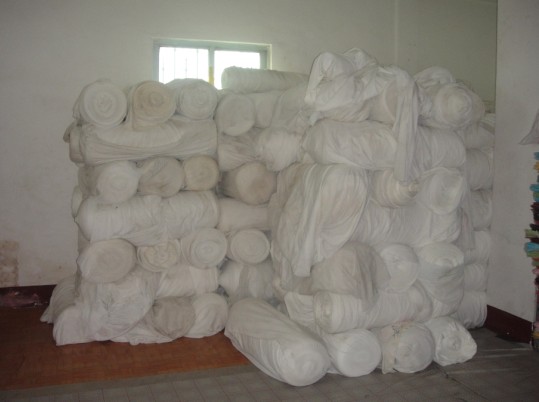
Fabric decisions made at a booth only hold if weights and compositions are written down and compared consistently.
Pack the Documents That Turn Talk Into Quotations
Exhibitors quote accurately only when they receive concrete inputs. Bring a simplified tech pack for each priority style: a flat sketch, the main measurement points, fabric composition and weight, and the trims you expect to use. Add your target prices and your market’s compliance requirements — fibre-content and care labelling rules differ between the EU, the UK, the US and the Gulf, and a factory that exports to your market already will handle this far more smoothly.
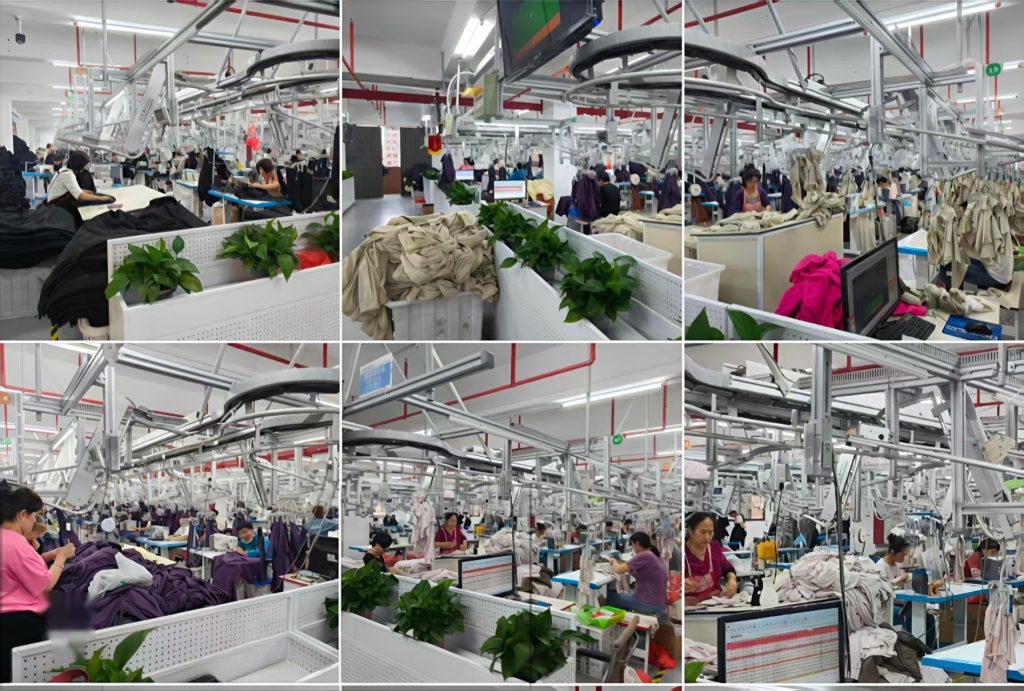
The garments on a booth are only half the story; the production line behind them decides how bulk will look.
Ask the same five questions at every garment booth:
- Monthly capacity for your product category, in pieces, not in vague “big capacity” terms.
- Which processes are in-house and which are subcontracted — cutting, sewing, washing, printing, embroidery.
- Quality-control checkpoints during sewing and before packing, and who performs the final inspection.
- Realistic lead time from confirmed order to ex-factory, at your quantities.
- Export documentation and loading port, and which trade terms the factory normally works on.
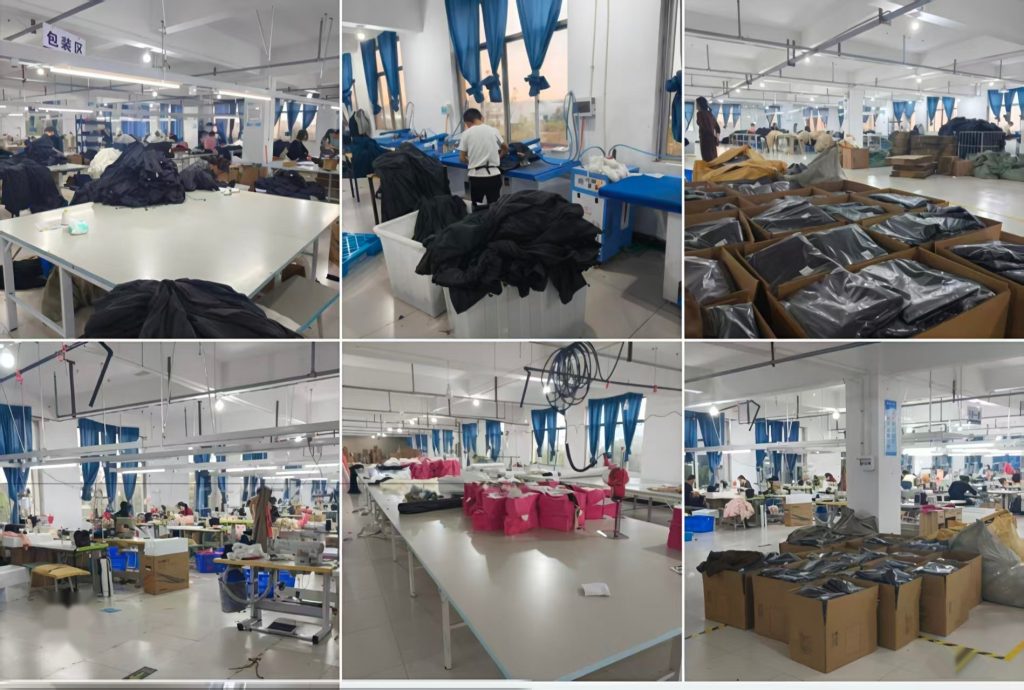
Export readiness shows in the packing floor: carton specs, shipping marks and documentation discipline.
One more preparation pays for itself: decide how you will qualify a booth before committing. A booth visit is a first interview, not an audit. Before any deposit changes hands, plan a sample round and, for serious programmes, a factory visit — the field-level checks in clothing factory audit checklist apply directly here.
GorgeousBen is receiving buyers throughout Phase 3. To reserve a meeting in advance, browse finished styles in the GorgeousBen product catalogue and contact the team with your travel dates and target categories — meetings booked before the fair start with your spec sheet on the table instead of small talk.
Frequently Asked Questions
When is Canton Fair Phase 3 in 2026?
Phase 3 of the 140th Canton Fair runs from 31 October to 4 November 2026 at the Pazhou complex in Guangzhou. This is the phase where textile and apparel exhibitors exhibit, so menswear buyers should plan their travel around these five days and arrive at least one day before opening to settle registration and logistics.
How do I get a buyer badge for the Canton Fair?
Register as an overseas buyer through the fair’s official pre-registration channels before you travel. The process produces the buyer badge needed for entry and, where required, invitation documentation that supports a business visa application. Bring your passport and confirmation to collect the badge. On-site registration is possible but slow, so most experienced buyers complete it in advance.
How many days should a buyer spend at Phase 3?
Two to three focused days are enough for most apparel buyers. Structure the visit around pre-booked meetings rather than floor wandering: verify your shortlist on day one, hold scheduled meetings on days one and two, and keep the final afternoon for revisits and follow-up conversations with the two or three suppliers who best matched your specification.
What should I bring to a garment booth meeting?
Bring a simplified tech pack for each priority style with a flat sketch, key measurement points, fabric composition and weight, plus your target prices and your market’s labelling requirements. Add business cards and, if you have them, a reference sample of the fit or quality level you expect. These inputs let the exhibitor quote a realistic FOB range on the spot instead of a vague “we will email you”.


