Choosing between China and Vietnam is the biggest sourcing decision most menswear brands face. On typical men's chino or shirt programs, China still wins on fabric variety and speed of reorders, while Vietnam often offers 5–10% lower labor-driven CMT costs and tariff advantages for US-bound shipments. Neither country is "better" in the abstract — the right answer depends on your fabric, order size, and target market. This guide breaks the comparison into the four variables that actually move your landed cost: fabric sourcing, MOQ, lead time, and trade terms.
Why Buyers Compare China and Vietnam for Menswear
Both countries are top-two apparel exporters globally, but they are not interchangeable. China's strength is depth: a full supply chain from spinning and weaving to trims, printing, and finishing within one province. Vietnam's strength is cost trajectory and trade access: competitive labor rates, growing fabric imports, and tariff positions that can matter for US buyers. For a brand sourcing 2,000–10,000 units of menswear per season, the difference usually shows up in three places — where your fabric comes from, how fast you can reorder, and what you pay at the border.
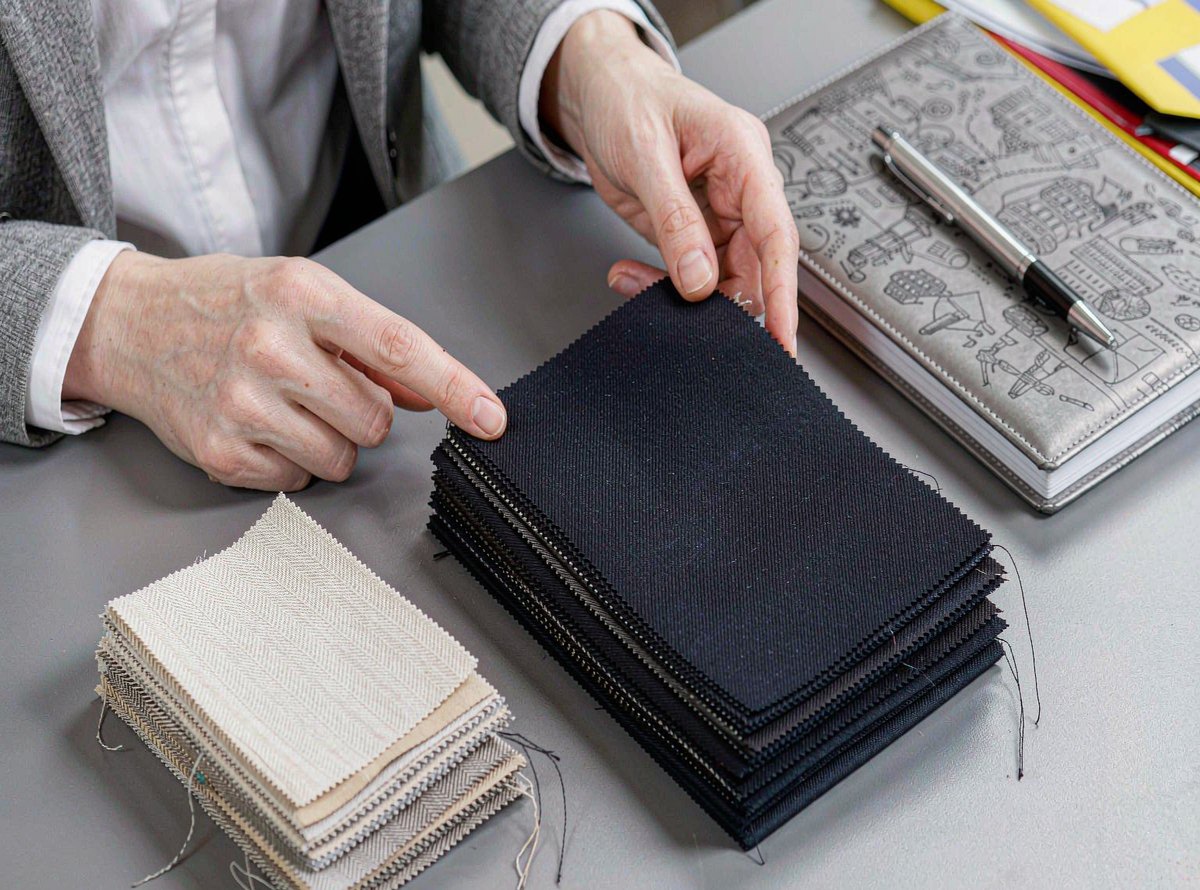 Comparing fabric swatches is the real first step in any China vs Vietnam apparel sourcing decision.
Cost Comparison: Where the Price Difference Really Comes From
The quoted FOB price hides two very different cost structures. Vietnam's advantage is mostly in labor (sewing/CMT), while China's advantage is in material cost and integration. Because fabric is typically 50–60% of garment cost, the labor saving can be erased if Vietnam must import the same fabric from — you guessed it — China.
| Cost factor | China | Vietnam |
|---|
| CMT (labor) | Baseline | ~5–10% lower on simple knits/wovens |
| Fabric & trims | Widest local range; fastest sampling | Often imported (adds cost + time) |
| Simple T-shirt programs | Competitive | Often cheaper |
| Complex menswear (chinos, outerwear) | Strong — trims, zippers, washing all local | Can match, but supply chain thinner |
Practical takeaway: for basic programs where fabric is commodity cotton or polyester, Vietnam frequently quotes lower. For tailored menswear, pigment dyeing, garment wash, or specialty trims, China often lands equal or cheaper once fabric logistics are counted.
MOQ and Order Size: Which Country Fits Your Volume
Vietnamese factories increasingly accept 500–1,000 piece MOQs for basics, and some go lower on stock-fabric programs. Chinese manufacturers range from small workshops taking 100–300 pieces to large lines requiring 1,000+. The nuance: very small Vietnamese MOQs usually mean stock fabric and limited customization. If your brand depends on custom colors, custom trims, or seasonal fabric development, China's trim and fabric markets (including lab dips in 5–7 days) still make small orders easier to execute — a point we covered in detail in our guide to hidden costs in garment manufacturing.
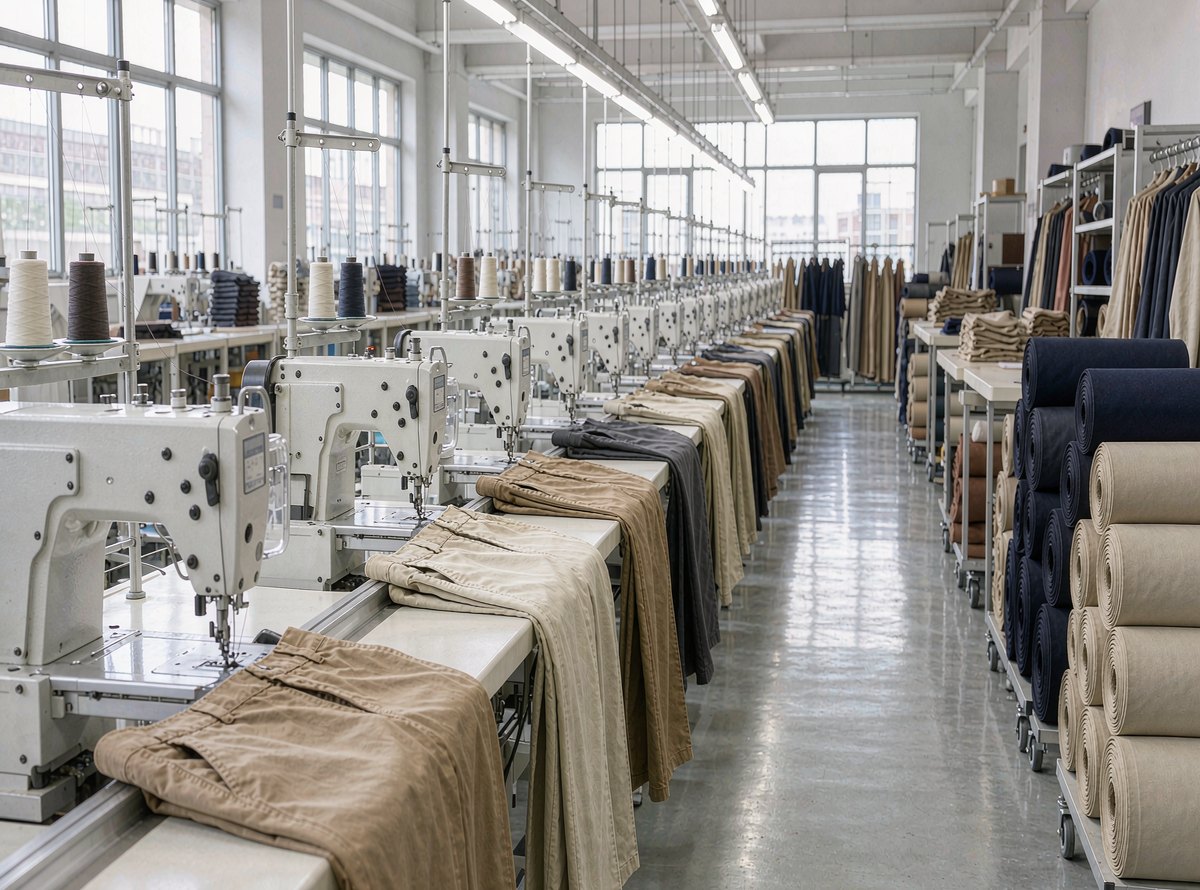 A modern sewing line producing men's chinos — complexity of the program shapes which country fits.
Lead Time and Reorder Speed
Typical timelines for a 1,000–3,000 piece menswear order:
- China: sampling 7–12 days, bulk 25–40 days after approval; fabric locally available in days, so reorders can compress to 3–4 weeks.
- Vietnam: sampling 10–15 days, bulk 30–45 days; if fabric is imported, add 2–4 weeks of procurement before cutting even starts.
If you replenish bestselling SKUs mid-season, China's reorder speed is a real commercial advantage. If you plan long production calendars for one big seasonal drop, Vietnam's slightly longer pipeline is manageable — just book it into your fabric lead time planning.
Tariffs and Trade Terms for US and EU Buyers
For US-bound goods, tariff treatment can swing landed cost by several percent, which is why many brands moved basic programs to Vietnam over the past decade. For EU-bound shipments, the gap is smaller. Whichever country you choose, agree on trade terms in writing — EXW, FOB, and DDP shift freight, insurance, and clearance responsibility in ways that easily change your true cost. See our breakdown of EXW vs FOB vs DDP trade terms for apparel before signing a proforma invoice.
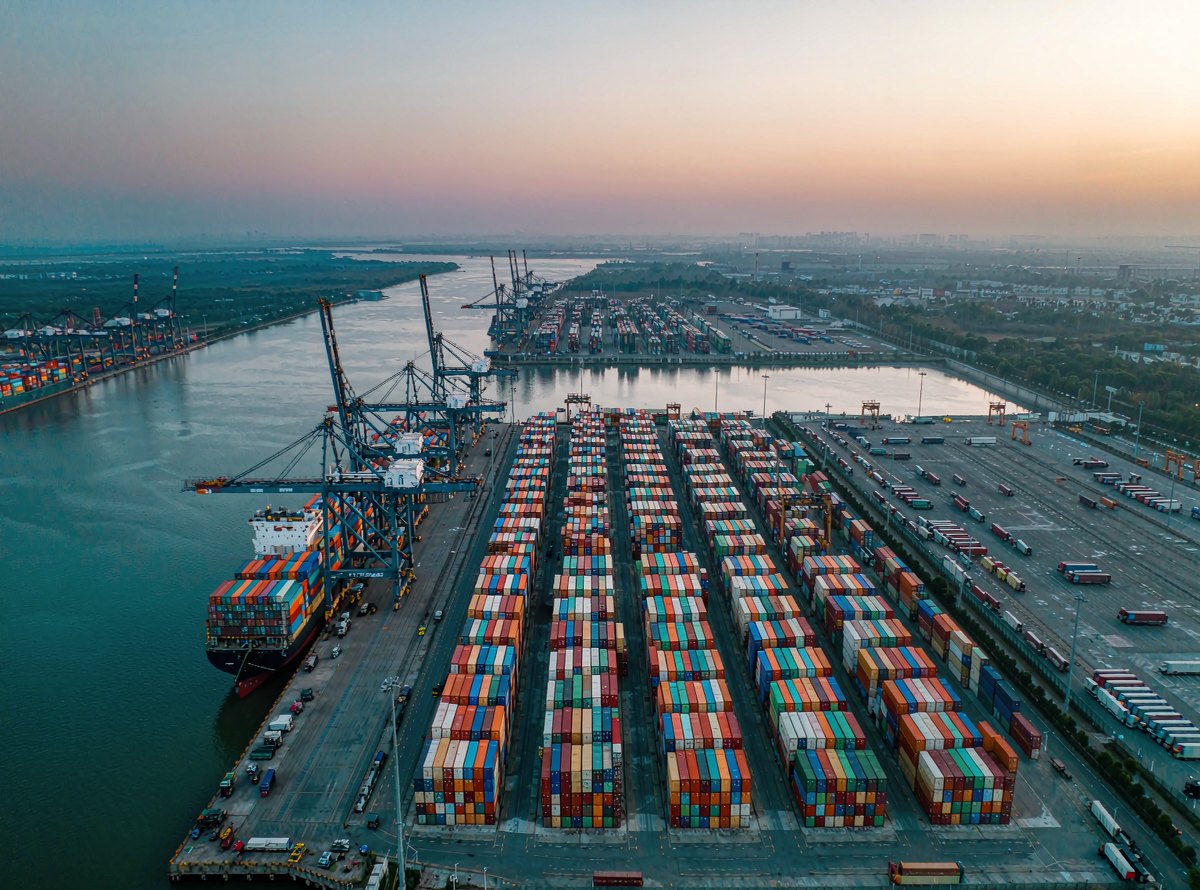 Export logistics — freight terms and destination tariffs decide the final landed cost gap.
Quality, Communication, and Program Complexity
Quality is factory-dependent in both countries, but the support ecosystem differs. China has a deep bench of third-party QC companies, pattern makers, and wash mills that can be engaged in days. Vietnam's vendor pool is thinner outside Ho Chi Minh City and the north, and English communication on technical specs is improving but still uneven at smaller factories. If your menswear involves technical fabrics, garment dyeing, or tight tolerance on measurements, plan for heavier sampling discipline and consider a factory with a proven export record — or a manufacturer like GorgeousBen Fashion, with 20+ years of OEM/ODM experience producing men's chinos, shorts, and knitwear for European and American brands.
Decision Framework: Which Country Should You Choose?
| Your situation | Better fit |
|---|
| Basic tees/polos, price-sensitive, large volume | Vietnam |
| Custom fabrics, seasonal colors, fast reorders | China |
| US-bound basics where tariff % dominates | Vietnam |
| Complex menswear (chinos, outerwear, garment-dye) | China |
| First order under 1,000 pcs with customization | China |
Many established brands end up running a hybrid: core basics from Vietnam, fashion and replenishment programs from China. That split captures Vietnam's cost edge on simple volume while keeping China's speed for the SKUs where sell-through matters most.
Frequently Asked Questions
Is Vietnam cheaper than China for clothing manufacturing?
For simple programs like basic T-shirts and loungewear, Vietnam often quotes 5–10% lower thanks to labor costs. For complex menswear requiring specialty fabrics, trims, or garment finishing, China frequently lands equal or cheaper once fabric import costs and longer timelines are included. Always compare landed cost, not FOB.
What is the typical MOQ in Vietnam vs China?
Vietnamese factories commonly require 500–1,000 pieces per style, sometimes lower with stock fabric. Chinese manufacturers range from 100–300 pieces at small workshops to 1,000+ at larger lines. Very low MOQs in either country usually mean stock fabric and limited customization.
Which country has faster production lead times?
China is typically faster: 25–40 days bulk production versus 30–45 days in Vietnam, and reorders can compress to 3–4 weeks because fabric is locally available. In Vietnam, imported fabric can add 2–4 weeks before cutting begins.
Can I split one order between China and Vietnam?
Yes, but not usually within a single factory. Most brands split by product line: basics in one country and fashion or replenishment items in the other. Unify specs, quality standards, and trade terms across both vendors to keep quality consistent.
How do I start comparing quotes between the two countries?
Send the same tech pack to vetted factories in both countries and require itemized quotations covering fabric, trims, CMT, finishing, and packaging. Compare on landed cost and lead time together. You can start by requesting a quote through the GorgeousBen contact page or browsing our menswear range for reference programs.


