The most reliable way to organize business cards at a trade fair is to annotate every card for fifteen seconds before leaving the booth, sort the day’s cards into three tiers by buying stage, and run a fifteen-minute recap each evening — because a card that leaves a booth without a note and a next action is a name you will not recognize two weeks later.
Phase 3 of the 140th Canton Fair runs from 31 October to 4 November 2026 at Pazhou, Guangzhou, and a buyer walking garment booths for five days can easily collect a hundred or more cards. The stack rarely fails at collection. It fails at context: by the time the flight lands, nobody can remember which contact quoted which price, which factory promised a sample, and which card was only a polite handover. GorgeousBen, a menswear manufacturer in Shishi, Fujian with more than 20 years of OEM and ODM experience serving buyers in 47 countries, sits on the other side of this exchange at its own booth — and the buyers who get answers fastest after a fair are, without exception, the ones who ran a card system on the floor.
Why Card Stacks Lose Their Meaning
Three things break between the booth and the office, and all three are preventable at the fair itself:
- No context. The card says who the person is, not what you discussed. Fifty identical conversations about knitwear become impossible to separate.
- No next action. A card without a written next step competes with two hundred others for attention, and attention goes to whoever emails first — not whoever fits best.
- No priority. Treating every card as equal means spending the first week after the fair replying to the easiest messages instead of the most valuable ones.
Annotate Every Card Before You Leave the Booth
Fifteen seconds at the booth saves an hour of guessing later. On the back of each card, write four short fields: what they make (category and fabric, in your own shorthand), what you asked for, what they promised, and one next action with a date. If the conversation covered numbers, put the numbers on the card — quoted price level, MOQ, promised fabric weight — because numbers evaporate faster than names. Then photograph the card together with the style it refers to, whether that is a sample on the shelf or a swatch on the table, so the picture pair survives even if the paper does not.
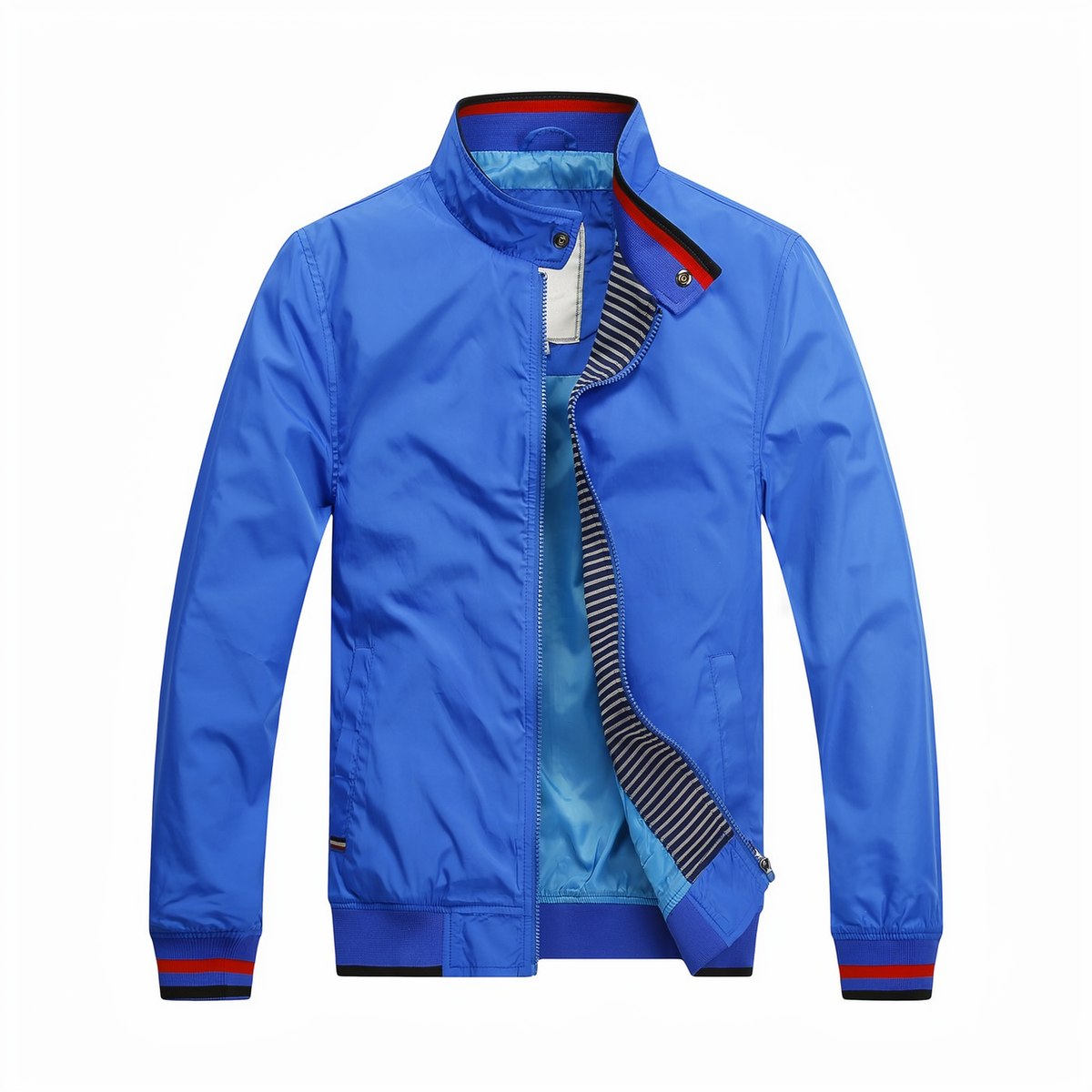
Pair the card with the style: construction details like this front panel are what your notes should reference.
The Three-Tier Sort: A, B, C by Buying Stage
Once a day — ideally the same evening — divide the day’s cards into three tiers by buying stage, not by how friendly the conversation felt. The stage decides what happens next, and it is the reason this system beats a single undifferentiated pile:
| Tier |
Who belongs here |
Same-evening action |
Next contact |
| A |
Styles fit your line and concrete numbers or samples were discussed |
Write the sample or quotation request in full, with sizes, colors and target price |
Within 48 hours of the fair closing |
| B |
Relevant category, prices untested, no specifications exchanged |
One line on what to ask first when you approach them |
First week after the fair |
| C |
Adjacent categories, introductions, background options |
File under product category with one keyword |
Seasonal or as needed |
The sorting judgment itself — deciding whether a booth deserves tier A at all — is covered in how to verify a garment manufacturer at Canton Fair and the pre-visit shortlisting in how to prepare for Canton Fair garment booths.
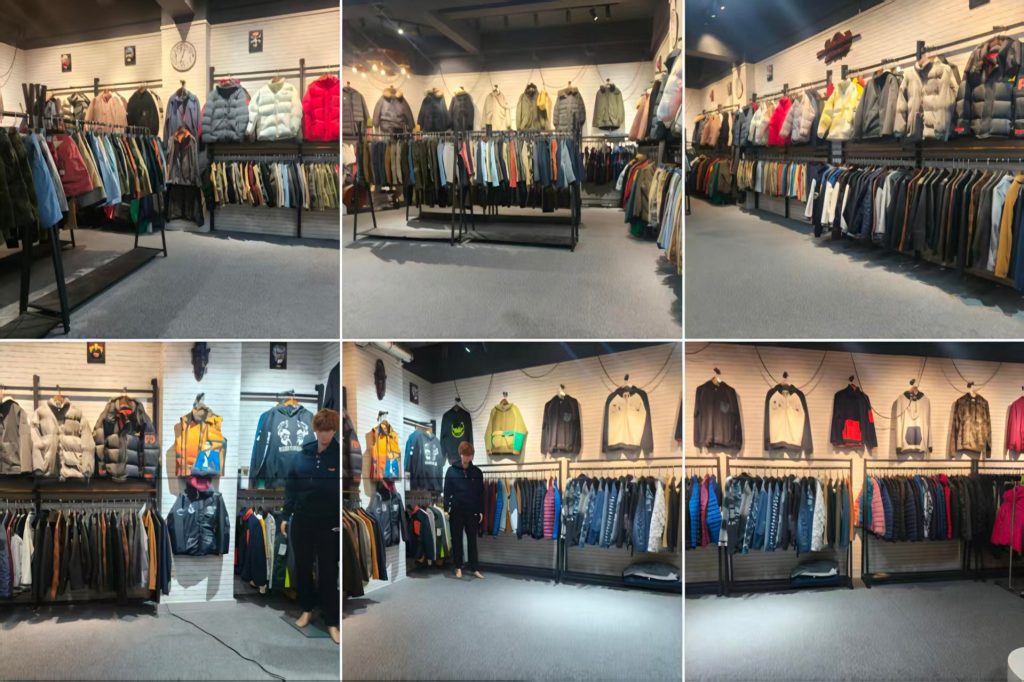
Tier A starts at the sample wall: only booths that survive a serious look earn the follow-up budget.
The Fifteen-Minute Evening Recap
Fifteen minutes in the hotel room each evening is enough to keep five days of cards under control. Photograph both sides of every new card into one folder named by day, add one line of context per card to a simple spreadsheet, and re-tier anything the evening conversation changed. Record the specifics while they are fresh: fabric compositions and weights that were only mentioned verbally, the exact styles you handled, and every promise made in either direction. A card that says “200 gsm fleece, quoted level okay, sending swatch set” is worth twenty cards that only say a company name.
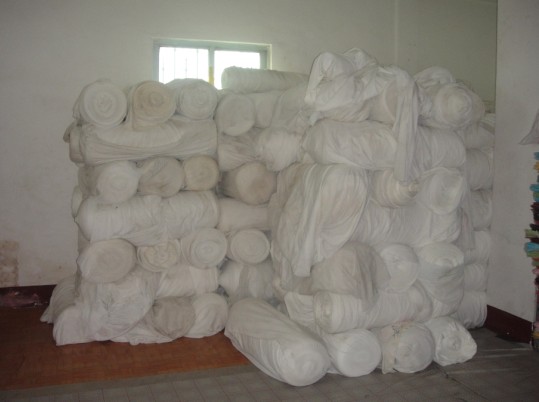
Record composition and weight on the card the day you see the fabric, not from memory a week later.
Mistakes That Quietly Kill Good Contacts
- Sorting by pocket instead of by tier. One trouser pocket for “interesting” and one for the rest is not a system; by day three the pockets are indistinguishable.
- Annotating on the flight home. A whole day of conversations annotated in one session merges into one blur; fifteen seconds at the booth is cheaper.
- Losing the brochure-to-card link. The brochure has the general email; the card usually has the person who actually answers. Keep them stapled or photographed together.
- Dropping booth-only contacts. Staff who translate for you, drivers recommended by other buyers, the neighbor exhibitor who mentioned a trims supplier — none of them have brochures, and all of them save days later.
- No owner when the team splits up. If three colleagues cover different halls, assign a shared spreadsheet with an owner column, or half the cards arrive home with nobody who remembers the meeting.
From Sorted Cards to Sample Shortlist
Within two days of the fair closing, tier A should already have become sample requests: one email per factory, referencing the specific conversation, the annotated card, and the photo pair. The logistics of getting those samples out of China are covered in how to ship samples from China after a trade fair, and the five-day booth routine that produces a disciplined shortlist in sourcing apparel at Canton Fair. Tier B gets a lighter first touch the following week, and tier C waits in the category files until a season makes it relevant.
How GorgeousBen Handles the Cards It Collects
The same discipline runs in reverse at the GorgeousBen booth. Every buyer card collected at the fair is annotated the same evening with the styles discussed and the next commitment, sorted by the buyer’s program stage, and answered in that order once Phase 3 closes — sample and quotation requests first. GorgeousBen manufactures menswear, with cargo pants as a flagship category, at its own cutting, sewing and packing floors in Shishi, Fujian, and runs OEM and ODM programs for buyers in 47 countries with more than 20 years of experience. Buyers organizing their own fair cards this season are welcome to browse the GorgeousBen product catalogue or contact the team with the styles and quantities noted on their tier-A cards, and receive a written quotation with sample terms in the same reply.
Frequently Asked Questions
What should I write on the back of a business card at a trade fair?
Four fields are enough: what the company makes in your own shorthand, what you asked during the conversation, what they promised, and one next action with a date. Add any concrete numbers mentioned, such as a price level, an MOQ or a fabric weight, because those details are the first thing memory loses after a full day of booths.
Is photographing business cards enough, or should I keep the paper ones?
Photographs are the backup, not the primary record, and they work only when the card is photographed together with the style or fabric it refers to. Keep the paper cards until the follow-up round is complete, because some cards carry handwritten notes, direct mobile numbers or introduction details that a single photo may not capture clearly.
How do several colleagues organize cards when they split up at a fair?
Agree one shared spreadsheet before the first day, with a column for the owner, the tier, one line of context and the next action. Each person annotates their own cards at the booth and updates the spreadsheet in the evening recap, so the whole team returns home with one consolidated view instead of three private stacks.
When should tier-A contacts be contacted after the fair closes?
Within 48 hours of the fair closing, while both sides still remember the conversation. The message should reference the specific styles and numbers discussed and convert directly into a sample or quotation request, because a generic greeting that arrives a week late competes with hundreds of identical emails factories receive after every fair.


