The safest way to ship samples from China after a trade fair is a booked express courier on agreed DDP terms with a proper commercial invoice — and because courier bills are set by chargeable weight, pack the set down small, consolidate where possible, and confirm in writing who pays duty before the parcel leaves the factory.
Phase 3 of the 140th Canton Fair runs from 31 October to 4 November 2026, and most buyers leave Pazhou carrying a stack of sample promises. The failure point is rarely the factory; it is the last mile. A sample that lands two weeks late, or stops in customs because the invoice described the goods as “clothing, gift, no value”, is a buying decision that never gets made. GorgeousBen, a menswear manufacturer in Shishi, Fujian with more than 20 years of OEM and ODM experience, ships sample sets to buyers in 47 countries and has watched the same four problems repeat session after session. Each has a one-conversation fix at the booth.
Where Fair Samples Go Wrong
Four issues account for nearly every delayed or expensive sample shipment after a fair:
- Chargeable-weight surprises. The set weighed 4 kg in the suitcase but the courier billed 14 kg, because express tariffs price the box’s volume, not just the scale weight.
- Invoices that describe nothing. “Menswear jackets” without composition, quantity or value invites inspection, and inspection takes days.
- Duty terms nobody agreed. The parcel arrives on unpaid-delivery terms, the courier demands import duty plus a brokerage fee before handing it over, and the sample sits in a warehouse while the buyer argues.
- No written record of who ships what. Three weeks later the buyer believes the factory shipped; the factory believes the buyer collected. Nobody has a tracking number.
Courier, Consolidation or Suitcase: Pick the Channel First
Match the channel to what the sample must decide. A reference set that has to drive a sourcing decision this month belongs on a courier; a pile of display pieces that only need to reach the office can travel slower and cheaper. The trade-offs are set out below, and the freight-mode logic for larger orders is covered separately in air freight versus sea freight for apparel.
| Channel |
Best for |
Cost structure |
Watch-outs |
| Express courier |
Decision samples: one to three garments per style, needed within days |
Per-kg price bands plus fuel and remote-area surcharges |
Bill follows chargeable weight; confirm the duty term up front |
| Consolidated shipment via a forwarder |
Samples collected from several factories in one region |
One freight cost plus per-carton handling |
Needs one delivery address and a packing list per factory |
| Sea or rail box |
Bulky, non-urgent reference samples |
Priced per cubic metre; lowest cost per kilogram |
Weeks in transit; never for a decision that cannot wait |
| Hand carry in luggage |
One or two garments already bought at the booth |
No freight cost |
Check airline baggage and customs rules before flying |
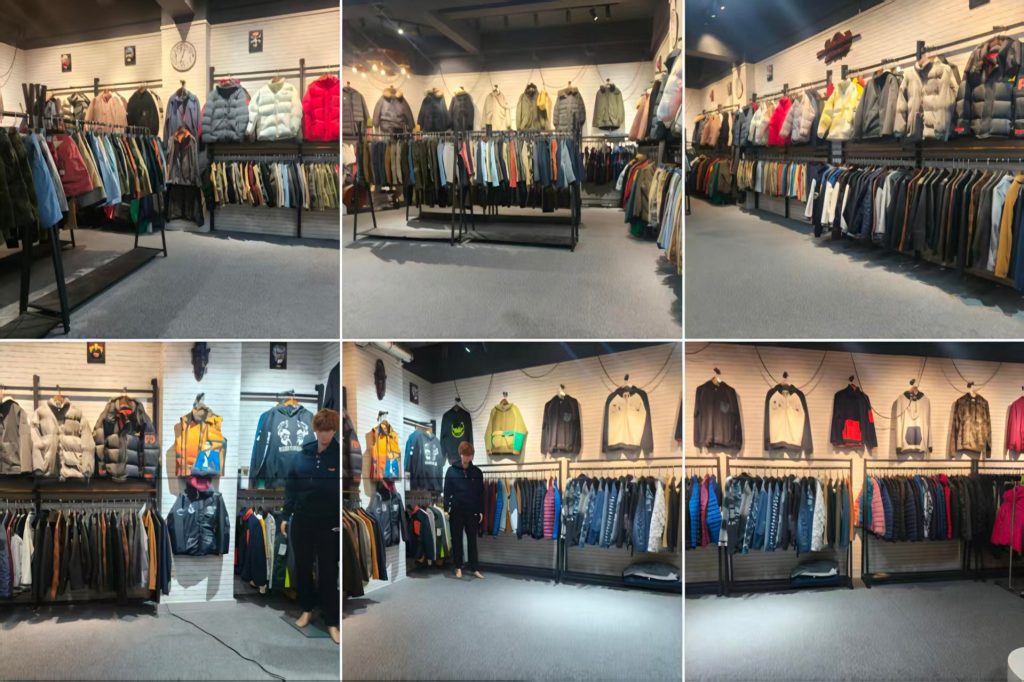
Shortlist first, then ship: a structured sample wall beats a suitcase of brochures.
Chargeable Weight: The Number That Decides the Bill
Express couriers price on the greater of actual weight and volumetric weight, and most tariffs divide the box’s volume in cubic centimetres by 5,000 — some contracts use 6,000. A worked example shows why packing matters more than negotiating. Six folded garments at roughly 0.6 kg each weigh 3.6 kg on the scale. Packed in a 60 × 40 × 30 cm carton, the same set computes to 72,000 cubic centimetres divided by 5,000, or 14.4 kg chargeable — four times the scale weight. The fix is physical: vacuum-bag the garments, remove hangers, poly bags and display packaging, and use the smallest cartons that still protect the goods. The same discipline carries into bulk, which is why carton and label rules are set out in apparel packaging compliance.
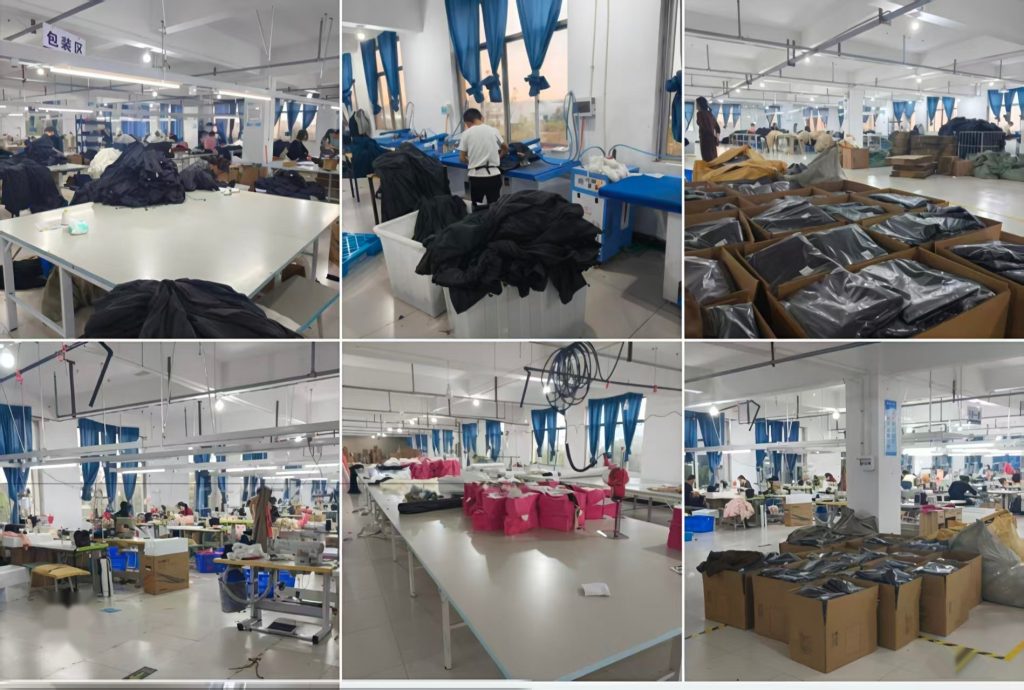
Chargeable weight starts at the packing table: folded garments, small cartons, no display packaging.
Paperwork That Clears Customs the First Time
Customs officers read the commercial invoice, not the email thread. A sample invoice should carry, for every garment in the box: a specific description (style name, composition, fabric weight), the HS code — knitted garments fall in Chapter 61 and woven garments in Chapter 62 of the international harmonized system — the quantity per style, a realistic unit value and total, and the country of origin. Marking the invoice “samples, not for resale” can speed inspection in many markets, but it does not make the parcel duty-free: samples are imported goods, and low-value relief thresholds differ by country and change over time, so they are not a planning basis. The practical answer is commercial, not legalistic: agree at the booth whether the sample ships DDP, with duty and clearance absorbed on the sender’s side, or on the buyer’s own courier account, and write the choice into the proforma. Buyers in the EU should have an EORI number ready for formal entries, and buyers everywhere should make sure the consignee name, address and phone number on the invoice match the delivery address exactly.
Run a Sample Desk in Your Last 48 Hours at the Fair
Treat the fair’s final two days as a shipping desk rather than a sourcing desk, and the whole topic collapses into one checklist. For every sample promised at a booth, confirm in writing: who ships (the factory or your courier account), which channel, DDP or buyer’s account, the declared value, and the exact delivery address with a contact name and phone number. Ask the factory to photograph the packed set and send the tracking number on the day the parcel is tendered, and ask for one duplicate set to stay in the factory as the sealed reference — the golden-sample discipline that protects both sides once bulk production starts. The booth routine that produces this shortlist is described in sourcing apparel at Canton Fair, and the sampling costs behind those promises in apparel sample cost breakdown.
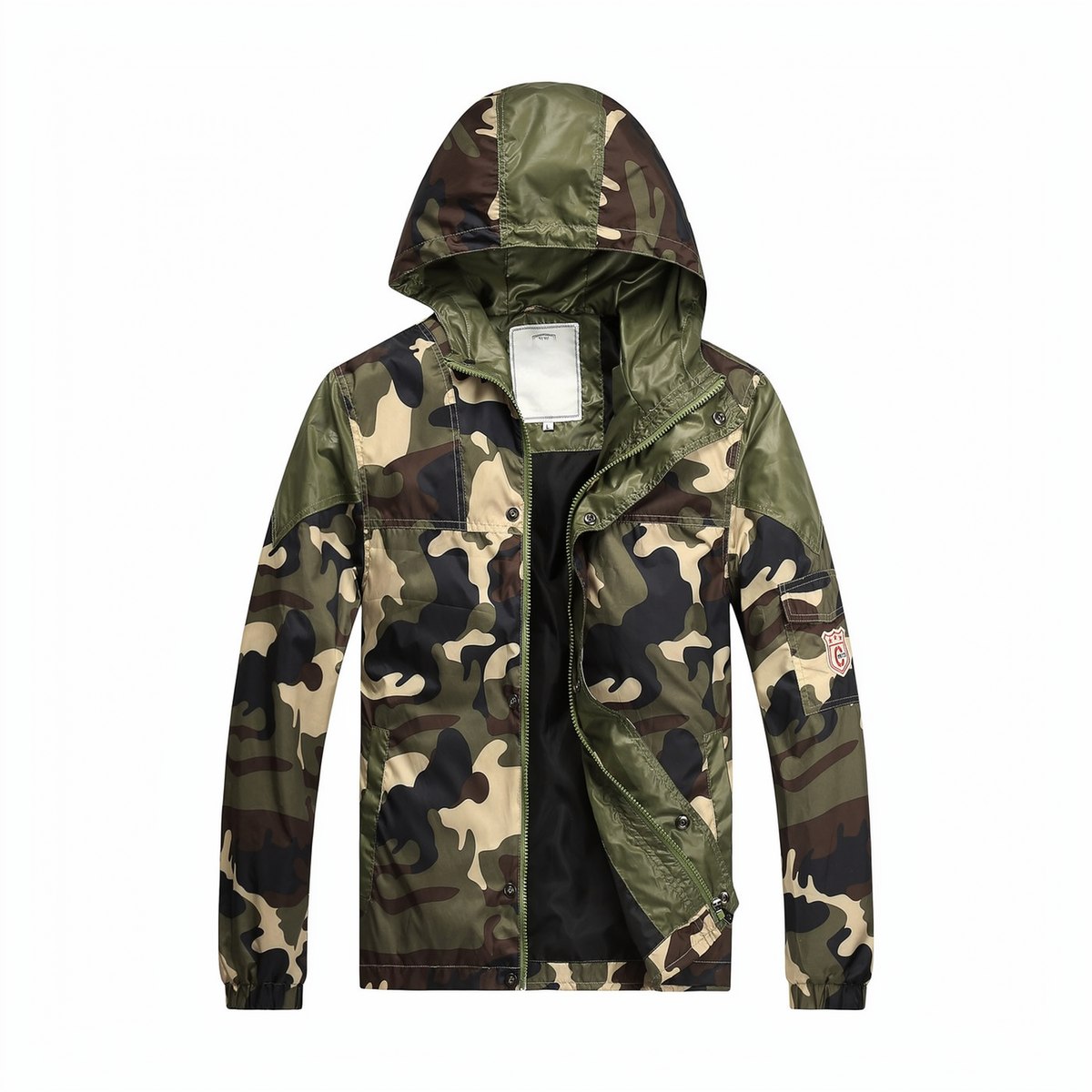
One set stays in Shishi, one goes in the courier box: the golden sample protects both sides.
How GorgeousBen Ships Sample Sets
GorgeousBen treats sample logistics as part of the sampling service rather than an afterthought. Sample sets are quoted with the shipping channel, the declared value and the duty term in writing before the buyer leaves the booth; sets are packed down small and tendered with complete invoices; and one duplicate set stays at the company’s cutting, sewing and packing floors in Shishi as the sealed reference while cargo pants and other flagship styles move into production. The company has manufactured menswear for more than 20 years and ships OEM and ODM programmes to buyers in 47 countries. Buyers planning a sample round this season can browse the GorgeousBen product catalogue or contact the team with styles, quantities and a delivery address, and receive a sample quotation that already includes the shipping answers above.
Frequently Asked Questions
Can a factory in China ship samples directly to my office?
Yes. Most manufacturers ship door to door through express couriers or a forwarder. Give the factory the exact delivery address with a contact name and phone number, confirm the declared value and the duty term in writing, and ask for the tracking number on the day the parcel is tendered so the shipment can be followed without chasing anyone.
How long do samples from China take to arrive?
Express couriers typically deliver sample parcels to major markets within a few working days of collection. The larger variable is upstream: if the sample must be produced after the fair rather than pulled from the booth shelf, the sampling lead time — commonly one to three weeks depending on the style — runs before the courier clock starts.
Do I have to pay duty on samples?
Samples are imported goods and must be declared with a realistic value. Some markets waive or reduce duty below a low-value threshold, but thresholds differ by country and change over time, so no buyer should plan around them. Agreeing DDP terms at the booth moves duty, clearance and brokerage onto the sender’s quotation.
Is it cheaper to consolidate samples from several suppliers?
Usually yes, when a trip covers several factories in one region. Consolidation combines the sets into one shipment, so fixed per-shipment costs, clearance and brokerage are paid once instead of three or four times. The requirements are a single delivery address and a packing list that shows which factory supplied each carton.


