A clothing factory visit is worth the trip when a wrong supplier choice would cost more than the flight: a first bulk order, a construction-heavy product, or a final choice between two shortlisted factories. Plan one full day per serious factory and spend most of the time on the production floor, not in the meeting room.
Most apparel sourcing from China happens remotely — samples, video calls, inspection reports. At some point, usually before a first bulk order or a major re-order, the question arrives: should I get on a plane and see this factory with my own eyes? GorgeousBen has hosted menswear buyers in Shishi, Fujian for more than 20 years and ships to customers in 47 countries, and the visits that actually change sourcing decisions share one habit: they were planned like an audit, not like a trip. This guide covers when a visit earns its cost, how to prepare, what a realistic day on site looks like, and the follow-up that converts notes into an order.
When a Factory Visit Is Worth the Trip — and When It Isn't
Three situations justify the cost of a clothing factory visit. First, a first bulk order with a new factory where the order value is large enough that a failed production run would dwarf the travel budget. Second, construction-heavy products — outerwear, cargo pants with many pockets and reinforcements, tailored pieces — where small workmanship differences compound. Third, a final decision between two or three factories that look equally good on paper: one day on each floor tells you more than another month of emails.
A visit is not the right tool when you are still at the sampling stage with a long list of candidates, or when the order is small. In those cases a third-party inspection or a structured video audit gives you most of the assurance at a fraction of the cost — see our guide on when to hire a third-party inspection. And if your shortlist was built at a trade fair, a booth conversation is a good start but it is not a factory evaluation; the 15-minute booth verification is step one, the visit is step two.
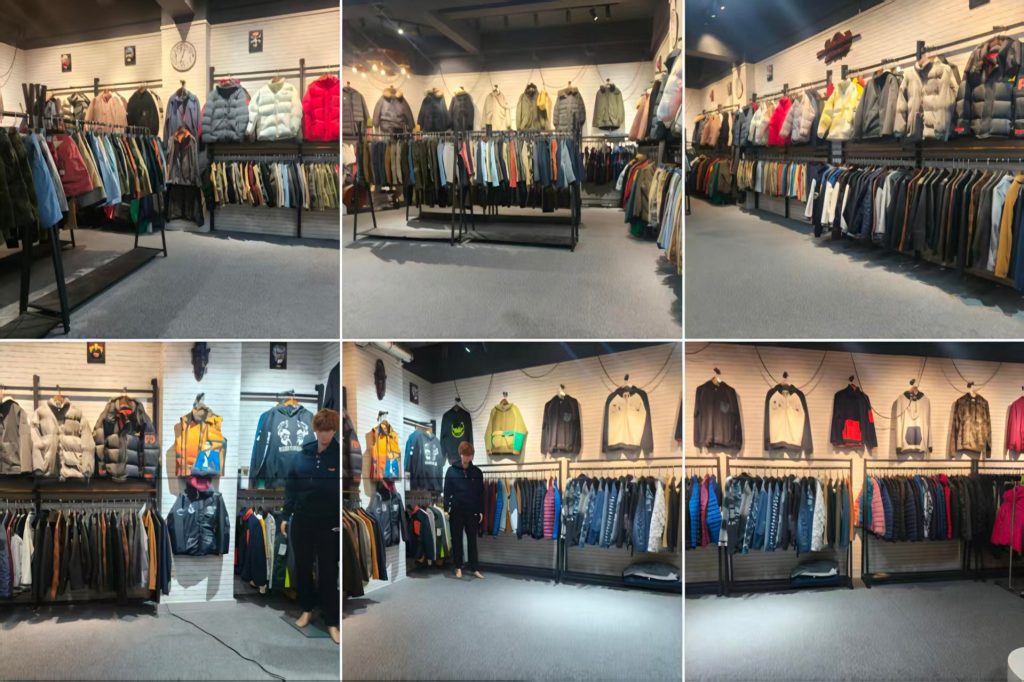
The visit usually starts in the showroom — but the real answers are on the floor behind it.
What a Sourcing Trip to China Actually Costs
The visible costs are predictable: international flights, domestic transport, hotels, and an interpreter if you need one. China's high-speed rail network makes factory clusters easy to combine — Guangdong (Guangzhou, Foshan, Dongguan) and Fujian (Quanzhou, Shishi, Jinjiang) are the two biggest menswear clusters, and each can be covered as its own one- or two-day loop. For most buyers the largest cost item is not money but time: three to five working days out of the office, plus jet lag. Frame the spend against the risk it retires. A single bulk order commonly runs from tens of thousands of dollars upward; if the visit prevents one wrong award of that order, it has paid for itself many times over.
Preparing Before You Fly
A visit only pays off if both sides prepare. Before booking flights:
- Shortlist two to three factories per region. More than that and each visit gets rushed; fewer and you have no comparison.
- Send your tech pack or target specs one to two weeks ahead and ask each factory to prepare relevant samples and a draft quote. You will learn a lot from how seriously they prepare.
- One factory per day. A serious visit — full tour plus working session — takes four to six hours. Stacking two factories in one day turns both into showroom tours.
- Bring your golden sample or a reference garment, so discussions happen over a physical object, not a rendering.
- Ask who will host you. A visit hosted by the owner or production manager signals a different level of interest than one handed to a junior salesperson.
A One-Day Factory Visit Schedule
A well-run visit follows a rhythm. Use this schedule as a template and adjust the working session to your product.
| Time |
What happens |
What you are checking |
| 09:00–09:30 |
Meet sales and merchandising, showroom walkthrough |
Do displayed samples match what you were quoted remotely? |
| 09:30–10:30 |
Production floor: cutting, spreading, sewing lines |
Line balance, order of operations, housekeeping |
| 10:30–11:00 |
QC area and finishing |
In-line inspection stations, measuring tools, defect handling |
| 11:00–12:00 |
Packing area and warehouse |
Carton specs, storage conditions, labelling discipline |
| 13:30–15:00 |
Working session with merchandiser over samples |
Communication quality, answers to technical questions |
| 15:00–16:00 |
Wrap-up: agree next steps |
Are commitments specific, owned and dated? |
What to Check on the Production Floor
The floor answers questions emails cannot. Ask whose orders are running on the lines you see — factories rarely name customers, but "European outerwear brands" or "domestic sportswear" tells you the scale they are used to. Compare the machine count and line layout against the capacity figures you were quoted, and ask them to walk you through the arithmetic on the spot; our article on how to check a factory's production capacity gives you the formula to apply. Watch how in-line QC actually works: whether inspectors measure garments at fixed stations or the phrase "quality control" refers to one person with a tape at the end of the line. And notice how supervisors react when a defect is found — a confident factory shows you the defect log, a nervous one changes the subject.
For a fuller red-flag list — from refuse-strewn fabric storage to management that will not let you near the lines — see our factory audit checklist with 12 red flags. The visit is where those red flags stop being theoretical.
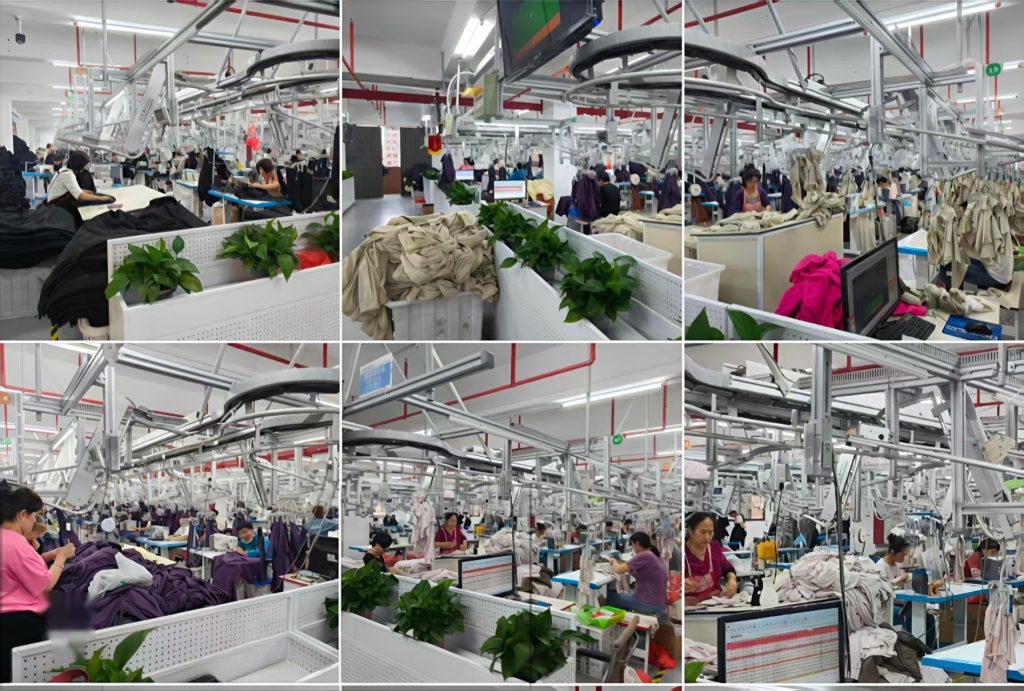
A hanging production line in operation: line balance and discipline are visible within minutes of walking the floor.
After the Visit: Turning Notes Into Decisions
The visit is only half the work. Within 48 hours, send each factory a recap email summarising what was discussed, what they committed to, and by when — this creates a written record and tests how precisely they were listening. Then score every factory on the same criteria: communication quality, floor condition, QC discipline, capacity evidence, and how realistic their timeline sounded. Invite the strongest one or two to produce a sampled round against your tech pack, and treat any capacity or lead-time numbers quoted during the visit as claims to be verified in production, not facts. A factory that welcomes verification is telling you something valuable about how it expects to work with you.
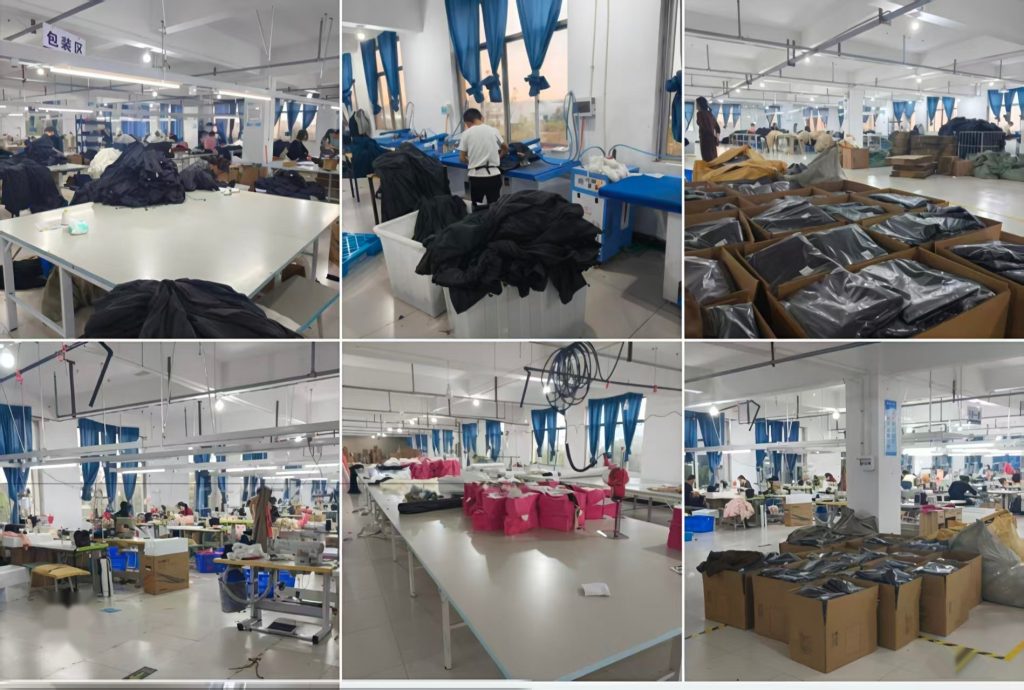
The packing area is the last stop of the tour — and often the most honest one.
Frequently Asked Questions
How many factories can I visit in one day?
Realistically two, and only if both visits are short. A serious clothing factory visit with a full production tour and a working session takes four to six hours including travel between sites in the same cluster. If a factory matters to your shortlist, give it a full day and use the second half of the day for the working session over samples.
Do I need an interpreter for a factory visit in China?
Most export-oriented factories have English-speaking sales staff, and everyday commercial conversation is rarely a problem. For deep technical discussion — seam construction, tolerances, fabric finishing — an interpreter earns their keep, and many factories will arrange one if asked in advance. Follow every visit with a written English summary so both sides work from the same record.
Is a factory visit necessary before a first order?
It is not mandatory, and plenty of successful first orders are placed remotely. A visit becomes worth it when the order value is high, the product is construction-heavy, or you must choose between two finalists. Otherwise a third-party pre-shipment inspection combined with a video factory tour covers most of the risk at a much lower cost.
Which regions should a menswear sourcing trip cover?
For menswear, the two strongest clusters are Guangdong around Guangzhou, Foshan and Dongguan, and Fujian around Quanzhou, Jinjiang and Shishi, which specialises in casual menswear such as jackets, cargo pants and chinos. Cluster your visits inside one region per loop to cut travel time, and match the region to your product rather than chasing the lowest quote across the country.
See the Floor for Yourself
A clothing factory visit compresses weeks of remote vetting into a single day, provided you plan it like an audit. GorgeousBen manufactures menswear — jackets, cargo pants, chinos and shorts — in Shishi, Fujian, and welcomes buyer visits with a full floor tour and a working session over your own tech pack. Browse the GorgeousBen product catalogue to see what we produce, or contact us to plan a visit and request samples before you fly.


