Home > Blog > Knit vs Woven Fabric: What Apparel Buyers Should Know
Knit vs Woven Fabric: What Apparel Buyers Should Know
By Ben LeeNovember 22nd, 202617 views
Knit vs woven fabric is the first decision that shapes a garment: knits are built from interlocking loops that stretch naturally, while wovens interlace yarns at right angles and hold a stable, non-stretch shape. That one difference drives shrinkage, cost structure, minimums and the way each fabric must be inspected.
Buyers who treat "fabric" as one category tend to meet the same three problems later: a knit programme that shrinks 5 to 8 percent while the spec assumed 1 to 3, a woven quote that doubles because it was costed like a knit, or a soft woven jacket reviewed with knit expectations and rejected at inspection. Structure explains all three. It is worth one hour before the first sample request.
The Structural Difference in One Minute
A knit is one yarn formed into loops, and each loop links to the next like a chain. Pull a loop sideways and it changes shape — which is why a single jersey t-shirt stretches without any elastane. A woven is two yarn systems — warp running lengthwise, weft crossing widthwise — interlaced over and under each other. The interlacing locks the yarns: a cotton poplin shirt barely stretches, which is exactly what a structured collar needs.
Everything practical follows from that. Knits stretch, recover, and relax in the wash; wovens hold dimension, keep a crisp line, and resist snagging. Stretch wovens — twills or poplins with 2 to 5 percent elastane — blur the line slightly, but the base structure still governs behaviour. Weight numbers do not translate between them either: a 260 gsm single jersey and a 260 gsm twill are different garments, one a mid-weight sweatshirt, the other a substantial trouser. The fabric weight guide covers how gsm maps to garment type on both sides.
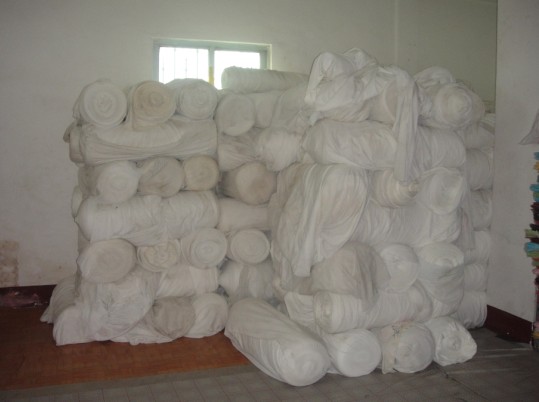
Rolls waiting for allocation: knit and woven programmes run on different machinery, different dye routes and different minimums. GorgeousBen fabric area.
What Structure Does to Cost, MOQ and Lead Time
The two structures are produced on different machines by different suppliers, so the commercial numbers differ as much as the hand-feel:
Factor
Knit
Woven
Yarn prep
Usually single yarn, often spun and knitted in one region
Warp sizing and beam preparation before weaving
Typical dye lot / MOQ driver
Body-width tube or open-width rolls; smaller lots common
5–8% untreated single jersey; controlled to 2–5% after wash
1–3% for finished cotton wovens
Weight tolerance in production
±5% typical, measured after relaxation
±3–5% typical, more stable roll to roll
Lead time driver
Knitting speed high; sampling fast
Warp prep adds days; complex weaves slower
None of these bands are standards — they are common industry practice ranges — but the pattern is consistent: knits move faster and flex more after production, wovens cost more to set up and hold dimension more predictably. A buyer running both structures should expect two different sets of tolerances in the tech pack, not one. Where colour is concerned, both structures follow the same lab dip discipline described in the lab dip to bulk guide, but dye uptake differs, so a colour matched on a knit swatch must be re-verified on the woven body fabric.
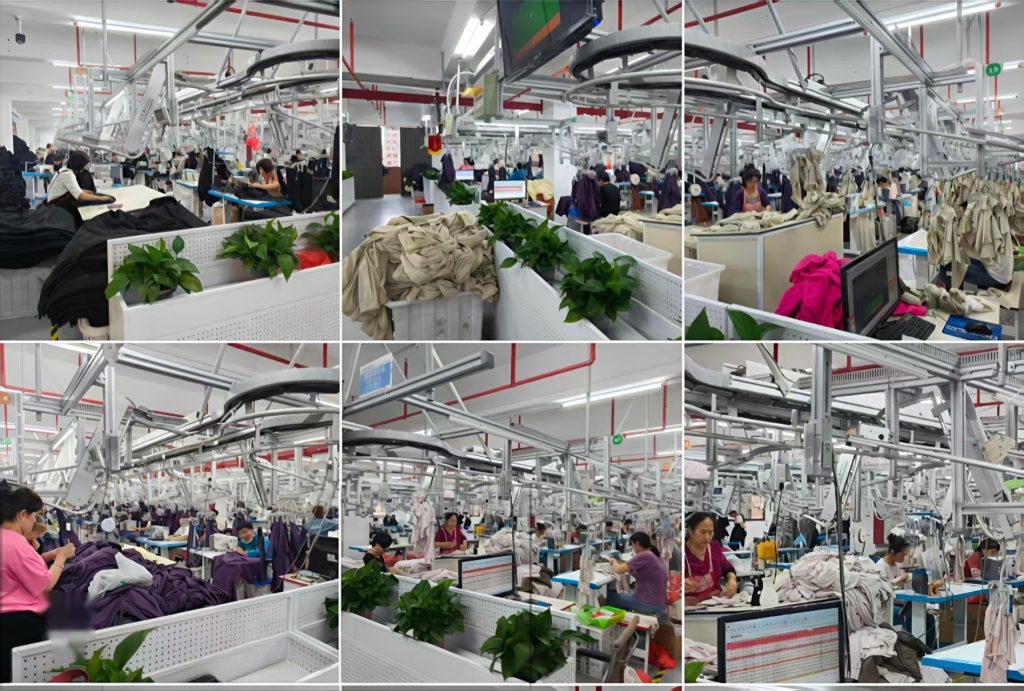
Same floor, two rulebooks: knit and woven programmes sew with different SPI, needles and handling. GorgeousBen hanging line.
Matching Structure to the Product Category
Most categories sit clearly on one side, and fighting the natural structure is where programmes get expensive:
Knit by nature: t-shirts, polos, sweatshirts and hoodies — anything that must stretch over the head or move with the body. The styling logic of a heavyweight hoodie in the hoodie guide only works because loops give the fabric both weight and give.
Woven by nature: shirts, chinos, cargo pants and jackets — anything that must hold a line, carry pockets under load, or read "tailored". Bellows pockets, bartacks and a stable seat panel are woven problems, as the cargo construction checklist walks through point by point.
Hybrid products: stretch chinos (woven + elastane), sweatshirt-fleece-trimmed jackets, woven bodies with knit collars and cuffs. Hybrids work, but every mixed panel needs a matched shrinkage spec, or the garment distorts after the first wash — the classic polo with a woven placket that waves.
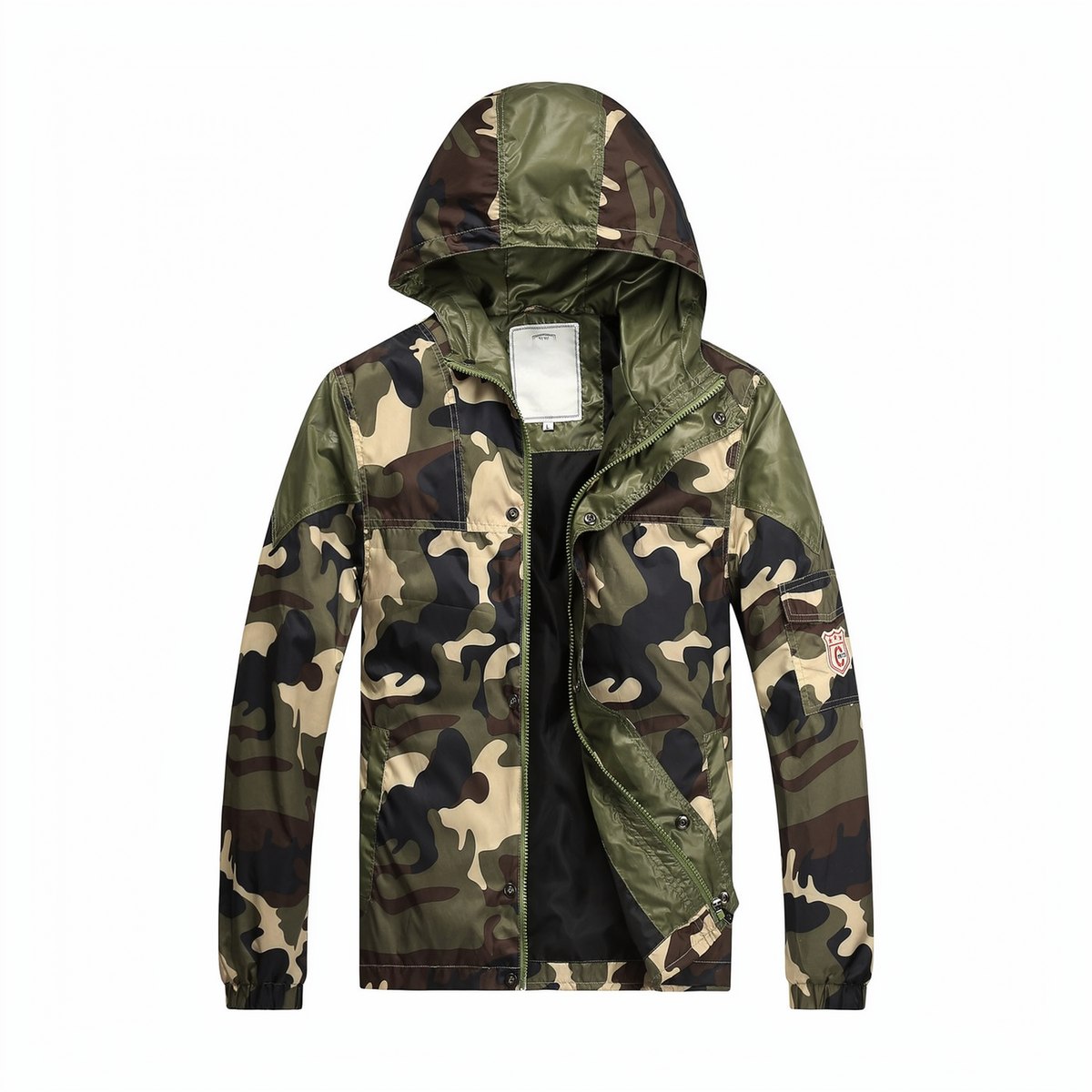
A woven jacket lays flat and holds its collar roll because interlaced yarns resist movement — the property buyers actually pay for. GorgeousBen jacket.
Inspection Checks That Differ by Structure
The inspection lens changes with the structure, and inspectors apply both under the same 4-point framework described in the 4-point fabric inspection guide. Four differences matter most:
When weight is measured: knit gsm is read after the fabric relaxes — a fresh-off-the-press roll reads heavier than the same roll 24 hours later. Woven gsm is stable almost immediately.
What "defect" looks like: knits show dropped stitches, laddering and barre marks; wovens show missing ends, picks and weft bars. The same inspector needs two vocabularies.
Shrinkage protocol: knits must be washed and relaxed before measuring; wovens are checked for residual shrinkage against the finish spec. Accepting a knit roll straight from finishing hides the real number.
Seam behaviour: knit seams must give with the fabric — needle damage that cuts loops shows up as laddering at stress points. Woven seams fail as broken stitches or seam slippage, checked with a seam-slippage pull.
Three Specification Mistakes That Cost Money
Most structure-related claims trace back to paperwork written for the wrong fabric. Three recur:
Woven tolerances on a knit programme. A ±2% weight tolerance is routine on finished wovens and unrealistic on single jersey, where ±5% after relaxation is normal. Buyers who insist on the tighter number pay for it in rejected rolls that were, in fact, in-spec.
One shrinkage figure for both structures. A mixed programme — knit tops, woven bottoms — needs two shrinkage allowances, or sizes drift apart in the wash and the set stops matching.
Sampling only one structure. When a product line spans both, sampling only the woven style teaches nothing about the knit's wash behaviour, and vice versa. Sample both, wash both, then write the spec.
The fix is administrative, not technical: state the structure on the first line of every fabric spec, and attach the matching tolerance set to it. Any factory quotation reviewed this way is harder to misjudge. If a current programme mixes both structures and the specs have drifted, the team at GorgeousBen reviews existing spec sheets against production reality as part of a standard quotation discussion — and both knit and woven menswear programmes are open to browse in the product catalogue.
Common Questions
What is the main difference between knit and woven fabric?
Knit fabric is made from one yarn formed into interlocking loops, which makes it stretchy, soft and relaxed in behaviour. Woven fabric interlaces two yarn systems at right angles, which makes it stable, structured and non-stretch. Structure — not fibre or weight — is what separates a t-shirt jersey from a poplin shirt fabric.
Does knit or woven fabric cost more?
It depends on the comparison, not the structure. Per kilogram, comparable cotton knits and wovens are often close, but wovens carry heavier set-up costs — warp preparation, per-colour weaving minimums — that raise unit cost on small runs. For small-volume programmes, knit minimums are usually easier to meet; for large structured orders, woven efficiency improves with scale.
Which structure shrinks more: knit or woven?
Knits shrink more. Untreated single jersey can shrink 5 to 8 percent, while finished cotton wovens typically settle at 1 to 3 percent. Both are controllable — knits through wash-and-finish processes, wovens through resin finishing — but a buyer should expect and spec different shrinkage allowances for the two structures rather than one shared figure.
Can one garment combine knit and woven fabric?
Yes, and many do: polo shirts with knit bodies and woven plackets, jackets with knit collars, sweatpants with woven trim panels. The requirement is a matched shrinkage spec across panels — if the knit body and woven trim shrink differently, seams warp after the first wash. Test both fabrics together in the same wash protocol before approving the sample.